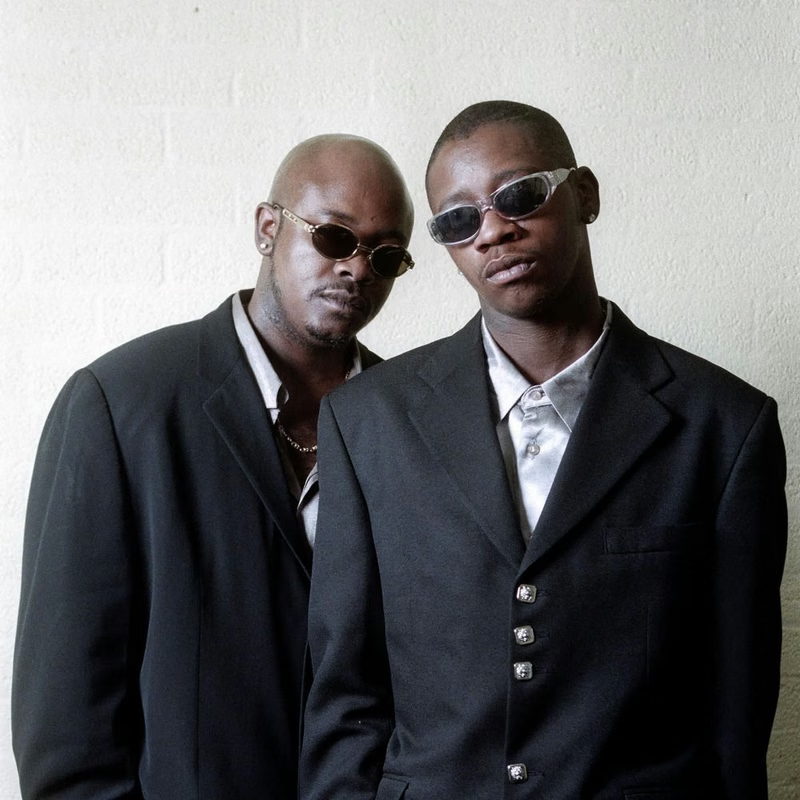
K-Ci & JoJo
They walked into a recording studio in the mid-1990s with a sound that did not fit the R&B landscape of the moment. K-Ci & JoJo were brothers from Charlotte, North Carolina, who had already spent years singing together in the church before they ever stepped into a professional booth. Cedric "K-Ci" Hailey was the raspy lead -- the voice that sounded like he had been up all night singing and had no intention of stopping until the song was finished. Joel "JoJo" Hailey was the smooth tenor, the harmonic anchor that made the rough edges feel intentional rather than accidental. Together they created a vocal chemistry that no manufactured R&B group could replicate.

The cost was the decade before the spotlight found them. The brothers were the core of Jodeci, one of the most influential R&B acts of the 1990s. Jodeci changed the sound of Black radio -- blending gospel harmonies with hip-hop production, wearing leather and bandanas, bringing a streetwise energy to a genre that had been polished smooth by years of quiet storm ballads. When K-Ci & JoJo broke off as a duo in 1996, they carried that energy with them but refined it into something more focused. The production was stripped back, built around their voices. No choreography, no gimmicks, just two brothers who had been singing together since childhood and knew exactly how to make the other sound better with nothing but breath and pitch.

All My Life is the one. Released in 1998, the song spent three weeks at number one and became one of the defining R&B ballads of its era. The opening line -- "I will never find another lover sweeter than you" -- is delivered with a vulnerability that feels earned rather than performed. K-Ci's voice cracks at the edges where the emotion peaks.

JoJo's harmony fills the space that the crack leaves open, creating a completeness that neither voice could achieve alone. The song was written for their mother and became a wedding standard, a prom anthem, a song that people reached for at moments they needed to mean something permanent. The album Love Always went triple platinum on the strength of that single and its follow-ups.

The brothers kept recording through lineup changes, solo projects, and personal struggles that included addiction and legal troubles that periodically pulled them apart. The voices weathered. The cracks deepened. But the chemistry never fully dissolved because it was forged too early and too deeply to break. K-Ci & JoJo proved that R&B did not need choreography or visual gimmicks. It needed two people who had been singing together since they were children, who knew each other's breathing patterns well enough to anticipate every run and every pause before it arrived. That is not a skill you can learn in a studio with a vocal coach. That is a lifetime of harmonizing, and you cannot fake it no matter how much production you throw at it.

K-Ci & JoJo were profiled in the documentary, Jodeci: The Movie, in 2014.

Image Credits

1,414 artist portraits across 5 genres (Rock, Jazz, Soul, Blues, Folk). 1,363 sourced from Wikipedia (Creative Commons / Public Domain), 50 from Deezer (promotional artwork).

Full attribution breakdown →

K-Ci & JoJo

They walked into a recording studio in the mid-1990s with a sound that did not fit the R&B landscape of the moment. K-Ci & JoJo were brothers from Charlotte, North Carolina, who had already spent years singing together in the church before they ever stepped into a professional booth. Cedric "K-Ci" Hailey was the raspy lead -- the voice that sounded like he had been up all night singing and had no intention of stopping until the song was finished. Joel "JoJo" Hailey was the smooth tenor, the harmonic anchor that made the rough edges feel intentional rather than accidental. Together they created a vocal chemistry that no manufactured R&B group could replicate.

The cost was the decade before the spotlight found them. The brothers were the core of Jodeci, one of the most influential R&B acts of the 1990s. Jodeci changed the sound of Black radio -- blending gospel harmonies with hip-hop production, wearing leather and bandanas, bringing a streetwise energy to a genre that had been polished smooth by years of quiet storm ballads. When K-Ci & JoJo broke off as a duo in 1996, they carried that energy with them but refined it into something more focused. The production was stripped back, built around their voices. No choreography, no gimmicks, just two brothers who had been singing together since childhood and knew exactly how to make the other sound better with nothing but breath and pitch.

All My Life is the one. Released in 1998, the song spent three weeks at number one and became one of the defining R&B ballads of its era. The opening line -- "I will never find another lover sweeter than you" -- is delivered with a vulnerability that feels earned rather than performed. K-Ci's voice cracks at the edges where the emotion peaks.

JoJo's harmony fills the space that the crack leaves open, creating a completeness that neither voice could achieve alone. The song was written for their mother and became a wedding standard, a prom anthem, a song that people reached for at moments they needed to mean something permanent. The album Love Always went triple platinum on the strength of that single and its follow-ups.

The brothers kept recording through lineup changes, solo projects, and personal struggles that included addiction and legal troubles that periodically pulled them apart. The voices weathered. The cracks deepened. But the chemistry never fully dissolved because it was forged too early and too deeply to break. K-Ci & JoJo proved that R&B did not need choreography or visual gimmicks. It needed two people who had been singing together since they were children, who knew each other's breathing patterns well enough to anticipate every run and every pause before it arrived. That is not a skill you can learn in a studio with a vocal coach. That is a lifetime of harmonizing, and you cannot fake it no matter how much production you throw at it.

K-Ci & JoJo were profiled in the documentary, Jodeci: The Movie, in 2014.

The Sunday Drop
One song. One story. Every Sunday.

No algorithms. No trending sections. Just a song someone loved and the story behind it. Delivered Sunday morning.

Free. No spam. Unsubscribe anytime.

Image Credits

1,414 artist portraits across 5 genres (Rock, Jazz, Soul, Blues, Folk). 1,363 sourced from Wikipedia (Creative Commons / Public Domain), 50 from Deezer (promotional artwork).

Full attribution breakdown →

0:00
0:00
The Sunday Drop One song. One story. Every Sunday.