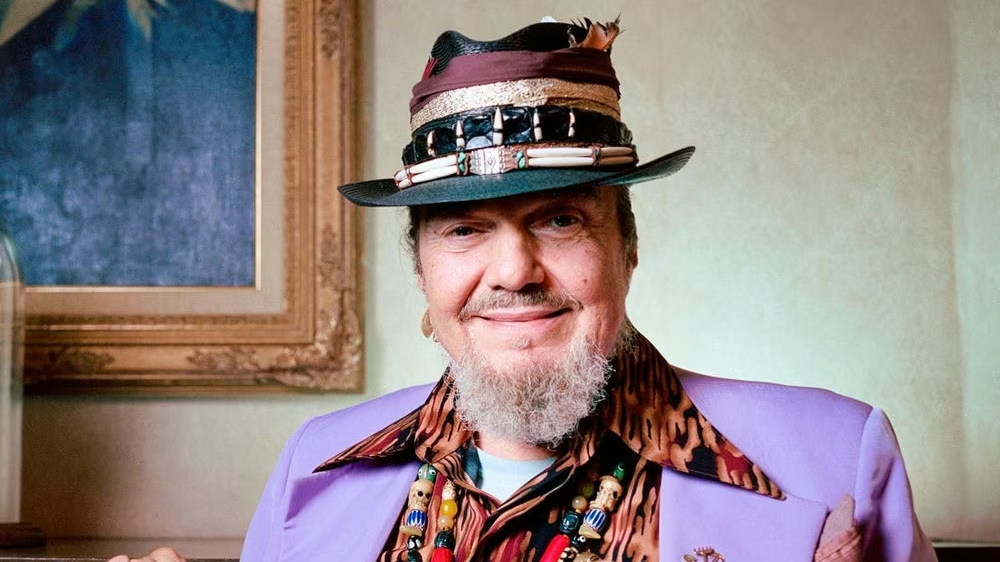
Dr. John
1940 – 2019 (79)
He walked into the studio in the 1960s with a grin, a gravelly voice, and a piano style that blended barrelhouse blues with the second-line rhythms of New Orleans in a way nobody had thought to do before. Dr. John was born Malcolm John Rebennack in 1941, grew up in the music halls of the French Quarter, and learned piano from Professor Longhair himself before he was old enough to drive.
He started as a session guitarist, moved to piano after a finger injury left him unable to play guitar, and developed a persona so large it overshadowed the serious musician underneath the feathers and voodoo face paint. The character of Dr. John the Night Tripper was born in the late 1960s, a blend of hoodoo showmanship and New Orleans rhythm that nobody had ever put on a record before.

The cost of that persona was years lost to addiction. Dr. John struggled with heroin through the 1960s, spent time in prison on drug charges in Texas, and watched his career stall while his peers moved ahead without him. He got clean in the early 1970s and released Dr. John's Gumbo in 1972, an album that reimagined New Orleans classics and introduced a new generation to the city's deep musical heritage. The album included Iko Iko, a version that became definitive and is still played at celebrations across the city decades later. He followed it with In the Right Place in 1973, produced by Allen Toussaint and featuring the Meters as the backing band.

Right Place, Wrong Time is the one. The song became his biggest hit, a funky, off-kilter track that captured the Murphy's Law energy of its title perfectly and still sounds fresh decades later. The album that bore it featured one of the great rhythm sections in American music. He won six Grammys across five decades and recorded with everyone from the Rolling Stones to Ryan Adams to B.
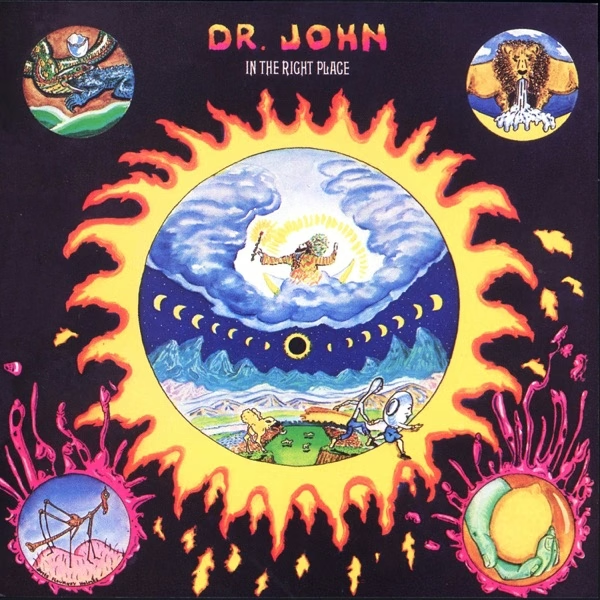
In the Right Place (1973)

B. King. He was inducted into the Rock and Roll Hall of Fame in 2011. He never stopped sounding like New Orleans, no matter where his career took him, and the Crescent City poured through every note he played until his death in 2019 at seventy-seven.
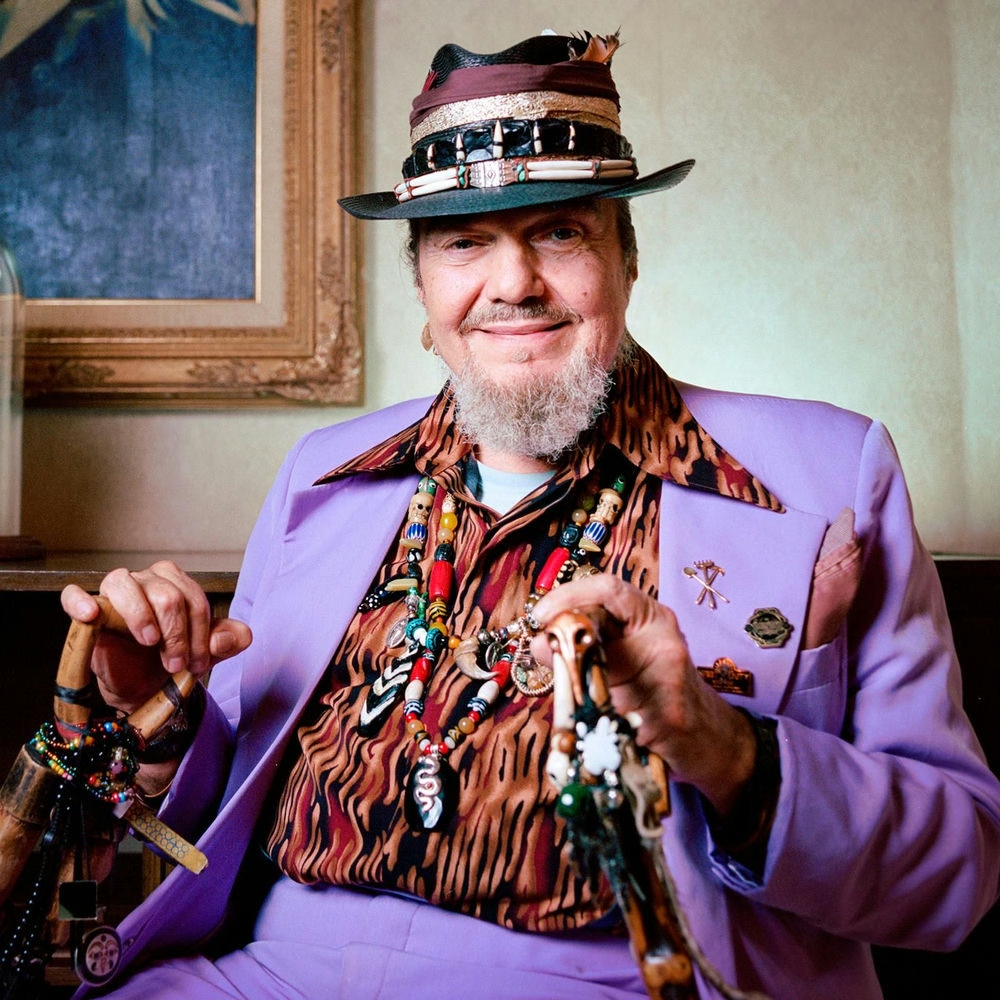
Image Credits

1,414 artist portraits across 5 genres (Rock, Jazz, Soul, Blues, Folk). 1,363 sourced from Wikipedia (Creative Commons / Public Domain), 50 from Deezer (promotional artwork).

Full attribution breakdown →

Dr. John

1940 – 2019 (79)
He walked into the studio in the 1960s with a grin, a gravelly voice, and a piano style that blended barrelhouse blues with the second-line rhythms of New Orleans in a way nobody had thought to do before. Dr. John was born Malcolm John Rebennack in 1941, grew up in the music halls of the French Quarter, and learned piano from Professor Longhair himself before he was old enough to drive.
He started as a session guitarist, moved to piano after a finger injury left him unable to play guitar, and developed a persona so large it overshadowed the serious musician underneath the feathers and voodoo face paint. The character of Dr. John the Night Tripper was born in the late 1960s, a blend of hoodoo showmanship and New Orleans rhythm that nobody had ever put on a record before.

The cost of that persona was years lost to addiction. Dr. John struggled with heroin through the 1960s, spent time in prison on drug charges in Texas, and watched his career stall while his peers moved ahead without him. He got clean in the early 1970s and released Dr. John's Gumbo in 1972, an album that reimagined New Orleans classics and introduced a new generation to the city's deep musical heritage. The album included Iko Iko, a version that became definitive and is still played at celebrations across the city decades later. He followed it with In the Right Place in 1973, produced by Allen Toussaint and featuring the Meters as the backing band.

Right Place, Wrong Time is the one. The song became his biggest hit, a funky, off-kilter track that captured the Murphy's Law energy of its title perfectly and still sounds fresh decades later. The album that bore it featured one of the great rhythm sections in American music. He won six Grammys across five decades and recorded with everyone from the Rolling Stones to Ryan Adams to B.

In the Right Place (1973)

B. King. He was inducted into the Rock and Roll Hall of Fame in 2011. He never stopped sounding like New Orleans, no matter where his career took him, and the Crescent City poured through every note he played until his death in 2019 at seventy-seven.

In the Right Place (1973) In the Right Place (1973)
Gris-Gris (1968)
Babylon (1969)
Remedies (1970)
The Sun
Moon & Herbs (1971)
Dr. John’s Gumbo (1972)
In the Right Place (1973)
Zu Zu Man (1973)
Anytime
Anyplace (1974)
Desitively Bonnaroo (1974)
One Night Late (1977)
The Night Tripper (1977)
City Lights (1978)
Tango Palace (1979)
Dr. John Plays Mac Rebennack (1981)
Take Me Back to New Orleans (1981)
The Brightest Smile in Town (1983)
You Got Me (1988)
In a Sentimental Mood (1989)
Goin’ Back to New Orleans (1992)
Brer Rabbit And Boss Lion (1992)
Indian Blues (1992)
Television (1994)
Afterglow (1995)
Crawfish Sóiree (1996)
A Night in New Orleans (1998)
funkbluesnew orleans
The Sunday Drop
One song. One story. Every Sunday.

No algorithms. No trending sections. Just a song someone loved and the story behind it. Delivered Sunday morning.

Free. No spam. Unsubscribe anytime.

Image Credits

1,414 artist portraits across 5 genres (Rock, Jazz, Soul, Blues, Folk). 1,363 sourced from Wikipedia (Creative Commons / Public Domain), 50 from Deezer (promotional artwork).

Full attribution breakdown →

0:00
0:00
The Sunday Drop One song. One story. Every Sunday.