Donny Hathaway
1945 – 1979 (34)
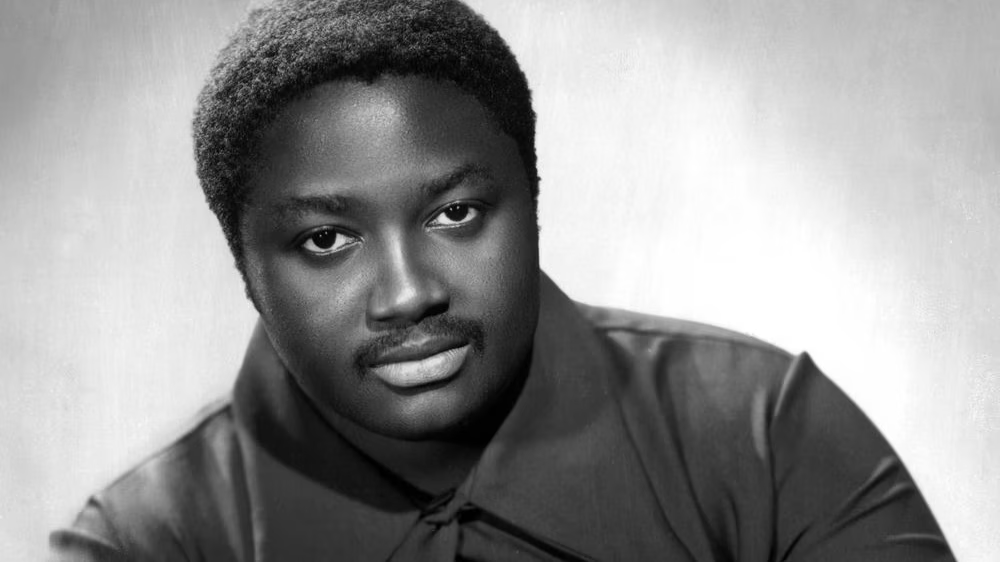
He walked into a recording studio in the late 1960s with a voice that sounded like it had already lived three lifetimes, and the engineers knew they were recording something rare. Donny Hathaway was born in Chicago in 1945, raised in St. Louis by his grandmother, and discovered singing gospel in church as a child.
A Song for You
Someday We'll All Be Free
The Ghetto
Little Ghetto Boy
Giving Up
Valdez in the Country
I Believe to My Soul

Donny Hathaway tracklist updated 07/2026

He studied music at Howard University on a scholarship, met Roberta Flack in a Washington D.C. club where both were performing, and together they recorded some of the most intimate duets in R&B history. His voice was an instrument of incredible range -- it could soar, it could break, it could whisper, and it did all three in the same song without ever sounding like a technical exercise.

The cost was the depression that shadowed every achievement. Hathaway struggled with mental illness throughout his career, a condition that was not discussed openly in the music industry at the time. He would cancel tours, miss sessions, disappear for weeks without explanation. The music he made in between those absences was so brilliant that everyone kept hoping the next project would be the one that stabilized him. A Song for You, his version of A Change Is Gonna Come, and The Ghetto each sounded like a man fighting to stay present in a world that kept trying to push him out of the frame.

Where Is the Love is the one. The duet with Roberta Flack won a Grammy and became a standard that still gets played decades later. The two voices circle each other like old friends who know each other's secrets but refuse to tell them, with Flack's restraint balancing Hathaway's emotional reach. The song proved that R&B could be both intimate and technically precise, that two singers could share a microphone without competing for space. He died in 1979 at thirty-three, falling from a hotel window in New York. The official cause was suicide, and the loss sent shockwaves through the R&B community that are still felt. The catalog is heartbreakingly small -- three solo albums, two duet albums with Flack -- but the influence on every male R&B vocalist who learned to let the pain show through their singing is immeasurable and remains visible in contemporary music.
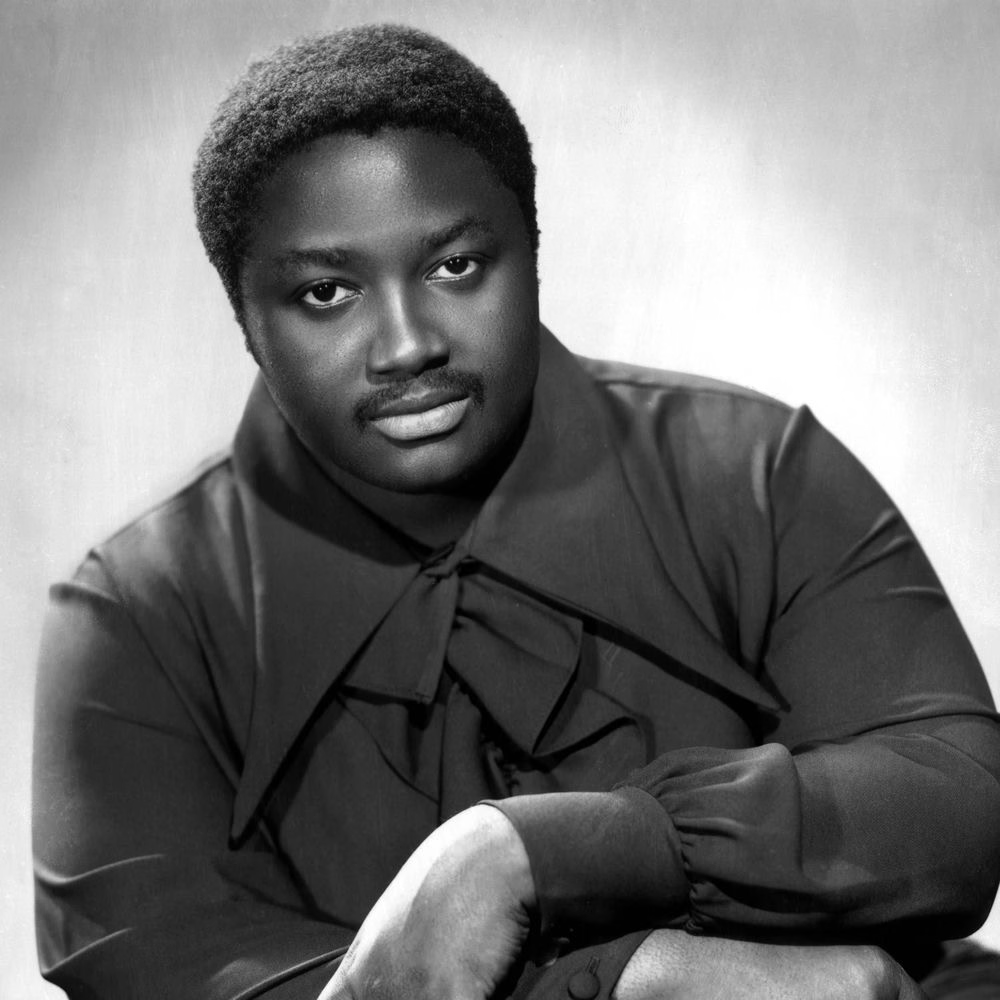
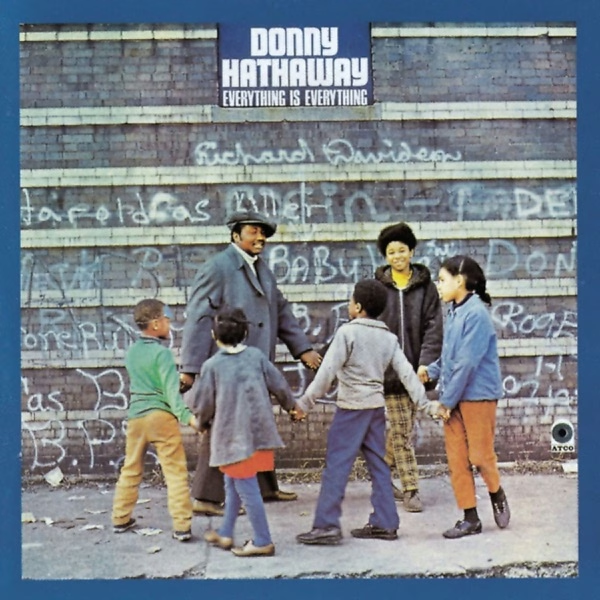
Image Credits

1,449 artist portraits across 5 genres (Rock, Jazz, Soul, Blues, Folk). 1,363 sourced from Wikipedia (Creative Commons / Public Domain), 50 from Deezer (promotional artwork).

Full attribution breakdown →

Donny Hathaway

1945 – 1979 (34)
He walked into a recording studio in the late 1960s with a voice that sounded like it had already lived three lifetimes, and the engineers knew they were recording something rare. Donny Hathaway was born in Chicago in 1945, raised in St. Louis by his grandmother, and discovered singing gospel in church as a child.
A Song for You
Someday We'll All Be Free
The Ghetto
Little Ghetto Boy
Giving Up
Valdez in the Country
I Believe to My Soul

Donny Hathaway tracklist updated 07/2026

He studied music at Howard University on a scholarship, met Roberta Flack in a Washington D.C. club where both were performing, and together they recorded some of the most intimate duets in R&B history. His voice was an instrument of incredible range -- it could soar, it could break, it could whisper, and it did all three in the same song without ever sounding like a technical exercise.

The cost was the depression that shadowed every achievement. Hathaway struggled with mental illness throughout his career, a condition that was not discussed openly in the music industry at the time. He would cancel tours, miss sessions, disappear for weeks without explanation. The music he made in between those absences was so brilliant that everyone kept hoping the next project would be the one that stabilized him. A Song for You, his version of A Change Is Gonna Come, and The Ghetto each sounded like a man fighting to stay present in a world that kept trying to push him out of the frame.

Where Is the Love is the one. The duet with Roberta Flack won a Grammy and became a standard that still gets played decades later. The two voices circle each other like old friends who know each other's secrets but refuse to tell them, with Flack's restraint balancing Hathaway's emotional reach. The song proved that R&B could be both intimate and technically precise, that two singers could share a microphone without competing for space.

Everything Is Everything (1970)

He died in 1979 at thirty-three, falling from a hotel window in New York. The official cause was suicide, and the loss sent shockwaves through the R&B community that are still felt. The catalog is heartbreakingly small -- three solo albums, two duet albums with Flack -- but the influence on every male R&B vocalist who learned to let the pain show through their singing is immeasurable and remains visible in contemporary music.
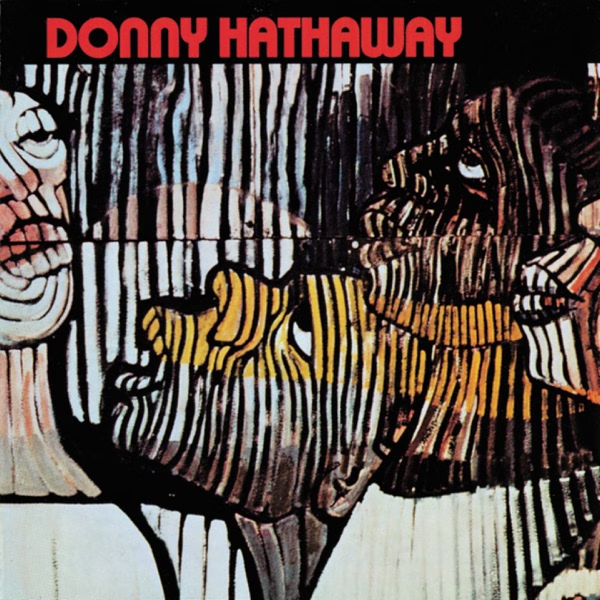
Everything Is Everything (1970) Everything Is Everything (1970)
Donny Hathaway (1971) Donny Hathaway (1971)
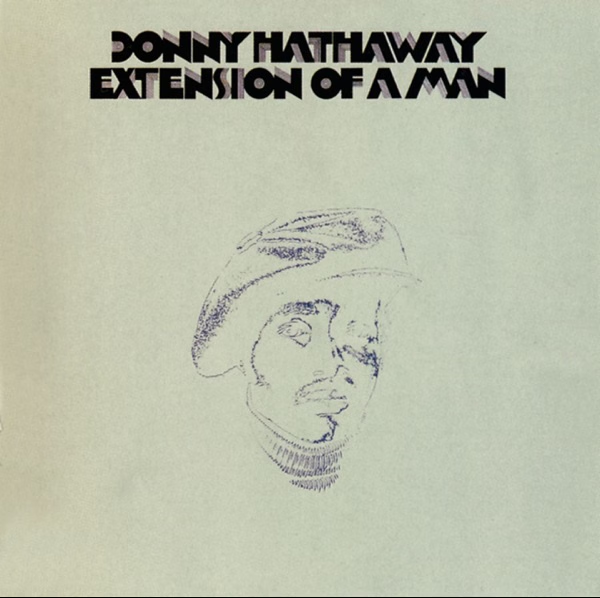
Extension of a Man (1973) Extension of a Man (1973)
Everything Is Everything (1970)
Donny Hathaway (1971)
Roberta Flack & Donny Hathaway (1972)
Extension Of A Man (1973)
Roberta Flack Featuring Donny Hathaway (1979)
Flashback With Donny Hathaway
soulr&b
The Sunday Drop
One song. One story. Every Sunday.

No algorithms. No trending sections. Just a song someone loved and the story behind it. Delivered Sunday morning.

Free. No spam. Unsubscribe anytime.

Image Credits

1,449 artist portraits across 5 genres (Rock, Jazz, Soul, Blues, Folk). 1,363 sourced from Wikipedia (Creative Commons / Public Domain), 50 from Deezer (promotional artwork).

Full attribution breakdown →

0:00
0:00
The Sunday Drop One song. One story. Every Sunday.
Click any song to hear it in full or in part.