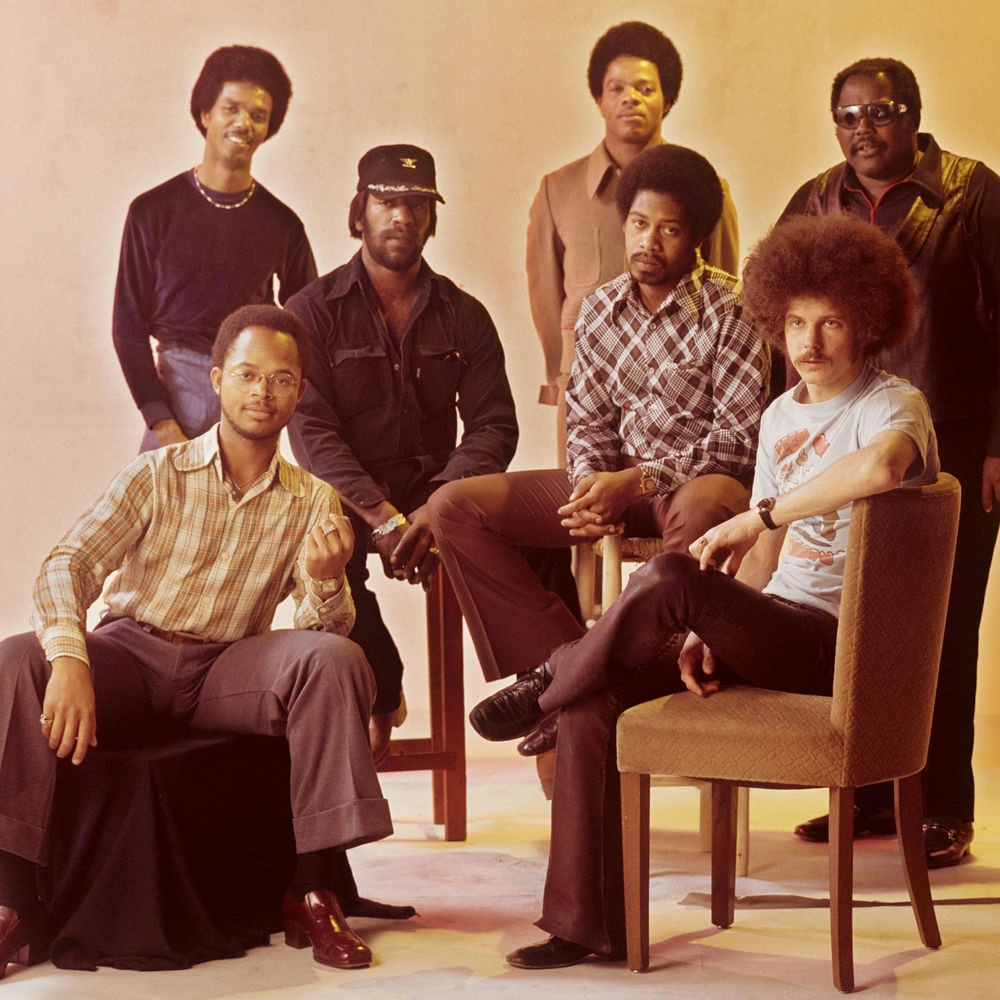
War
1969 –
Why Can't We Be Friends
The horn section hits like a right hook and then the groove opens up like Southern California freeway. War formed in Long Beach in 1969 out of the collision between funk, Latin, R&B, and rock -- a mixture that shouldn't have held together but did, because the pocket they found was wide enough for all of it. Eric Burdon discovered them early and put his name on the first records, but War was already its own thing: a multiracial band from the LA streets making music that sounded like the city itself.
Low Rider
Why Can't We Be Friends?
The Cisco Kid
Summer
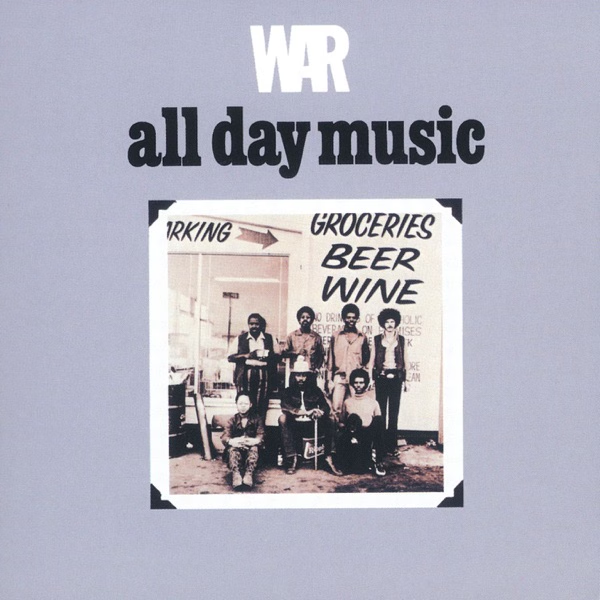
All Day Music
City, Country, City

War tracklist updated 07/2026

They embodied the diversity of Long Beach before anyone had a word for what that meant. The sound was a conversation between cultures that usually didn't talk.

The cost was identity. They were too black for rock radio, too rock for R&B, too Latin for either -- the industry didn't know where to put them, so War just kept playing and let the audience decide. Lonnie Jordan carried the Hammond organ, Harold Brown held the drums, and the horn section of Charles Miller and others gave the sound its signature growl. They built a following the hard way -- one show, one head-nod, one convert at a time. The message was unity, but the work was the message. They refused to be categorized and that refusal cost them radio play but earned them a loyalty that radio couldn't touch. The audience found them anyway.

"Low Rider" is the mothership. That horn riff is the most recognizable two seconds in funk -- a statement so complete it barely needs the rest of the song, though the rest of the song is perfect too. The track became an anthem for car culture, for Chicano pride, for anyone who understood that a groove could be a vehicle for something bigger than music. "Why Can't We Be Friends?" with its plea for peace, "The World Is a Ghetto" with its gritty realism, "Cisco Kid" with its storytelling swagger -- War stacked hits that each sounded different because the band's identity was always bigger than a single sound. They could be political or playful, heavy or light, and the pocket never dropped. Every song was a different door into the same house.

The band is still active, still touring, still proving that the original formula has legs. War's sound became the DNA of West Coast funk, sampled and borrowed and referenced by generations that came after. They made the crate that held everything: funk, soul, rock, jazz, Latin. They made the one that didn't care about color or category. Low rider, high road -- War took it all and made it breathe. That horn riff will outlast everything because it was never just a riff -- it was a statement about what happens when you refuse to choose one identity.
War interviewed about his career — 2019

The band is still active, still touring, still proving that the original formula has legs. War's sound became the DNA of West Coast funk, sampled and borrowed and referenced by generations that came after. They made the crate that held everything: funk, soul, rock, jazz, Latin. They made the one that didn't care about color or category. Low rider, high road -- War took it all and made it breathe. That horn riff will outlast everything because it was never just a riff -- it was a statement about what happens when you refuse to choose one identity.
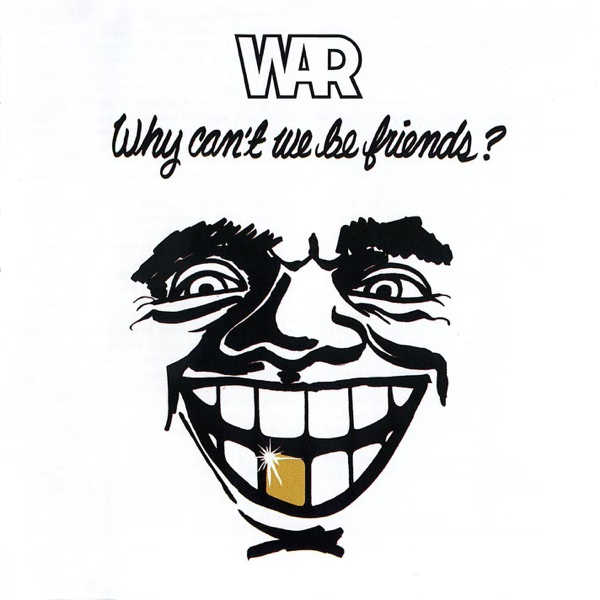
Image Credits

1,449 artist portraits across 5 genres (Rock, Jazz, Soul, Blues, Folk). 1,363 sourced from Wikipedia (Creative Commons / Public Domain), 50 from Deezer (promotional artwork).

Full attribution breakdown →

War

1969 –
Why Can't We Be Friends
The horn section hits like a right hook and then the groove opens up like Southern California freeway. War formed in Long Beach in 1969 out of the collision between funk, Latin, R&B, and rock -- a mixture that shouldn't have held together but did, because the pocket they found was wide enough for all of it. Eric Burdon discovered them early and put his name on the first records, but War was already its own thing: a multiracial band from the LA streets making music that sounded like the city itself.
Low Rider
Why Can't We Be Friends?
The Cisco Kid
Summer
All Day Music
City, Country, City

War tracklist updated 07/2026

They embodied the diversity of Long Beach before anyone had a word for what that meant. The sound was a conversation between cultures that usually didn't talk.

The cost was identity. They were too black for rock radio, too rock for R&B, too Latin for either -- the industry didn't know where to put them, so War just kept playing and let the audience decide. Lonnie Jordan carried the Hammond organ, Harold Brown held the drums, and the horn section of Charles Miller and others gave the sound its signature growl. They built a following the hard way -- one show, one head-nod, one convert at a time. The message was unity, but the work was the message. They refused to be categorized and that refusal cost them radio play but earned them a loyalty that radio couldn't touch. The audience found them anyway.

War interview 2019

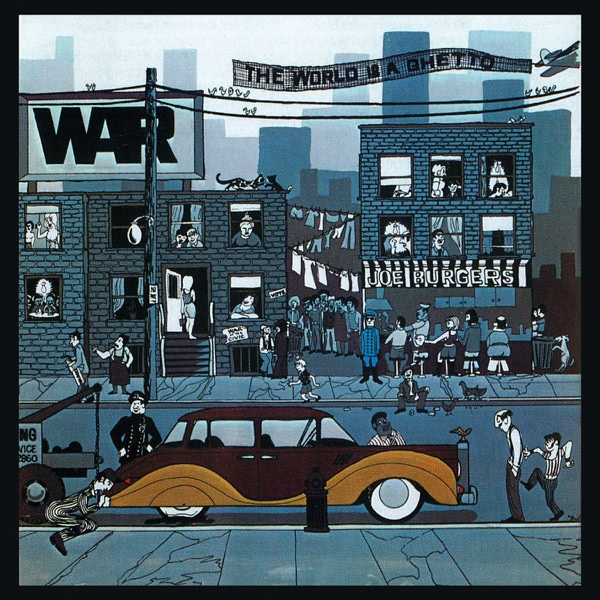
"Low Rider" is the mothership. That horn riff is the most recognizable two seconds in funk -- a statement so complete it barely needs the rest of the song, though the rest of the song is perfect too. The track became an anthem for car culture, for Chicano pride, for anyone who understood that a groove could be a vehicle for something bigger than music. "Why Can't We Be Friends?" with its plea for peace, "The World Is a Ghetto" with its gritty realism, "Cisco Kid" with its storytelling swagger -- War stacked hits that each sounded different because the band's identity was always bigger than a single sound.

All Day Music (1971)

They could be political or playful, heavy or light, and the pocket never dropped. Every song was a different door into the same house.

The band is still active, still touring, still proving that the original formula has legs. War's sound became the DNA of West Coast funk, sampled and borrowed and referenced by generations that came after. They made the crate that held everything: funk, soul, rock, jazz, Latin. They made the one that didn't care about color or category. Low rider, high road -- War took it all and made it breathe. That horn riff will outlast everything because it was never just a riff -- it was a statement about what happens when you refuse to choose one identity.
All Day Music (1971) All Day Music (1971)
The World Is a Ghetto (1972) The World Is a Ghetto (1972)
Why Can’t We Be Friends? (1975) Why Can’t We Be Friends? (1975)
Eric Burdon Declares "War" (1970)
The Black‐Man’S Burdon (1970)
All Day Music (1971)
War (1971)
The World Is A Ghetto (1972)
Deliver The Word (1973)
Why Can’T We Be Friends? (1975)
Love Is All Around (1976)
Galaxy (1977)
The Music Band (1979)
The Music Band 2 (1979)
The Music Band Live (1980)
Outlaw (1982)
Life (Is So Strange) (1983)
The Music Band Jazz (1983)
funklatinr&brock
The Sunday Drop
One song. One story. Every Sunday.

No algorithms. No trending sections. Just a song someone loved and the story behind it. Delivered Sunday morning.

Free. No spam. Unsubscribe anytime.

Image Credits

1,449 artist portraits across 5 genres (Rock, Jazz, Soul, Blues, Folk). 1,363 sourced from Wikipedia (Creative Commons / Public Domain), 50 from Deezer (promotional artwork).

Full attribution breakdown →

0:00
0:00
The Sunday Drop One song. One story. Every Sunday.
Click any song to hear it in full or in part.