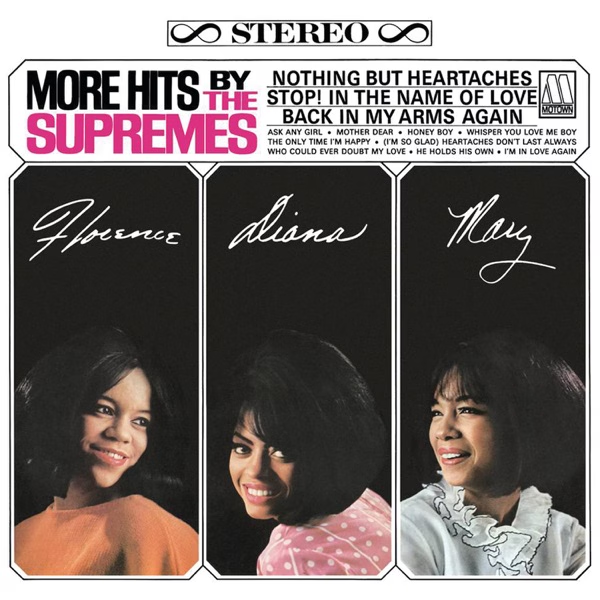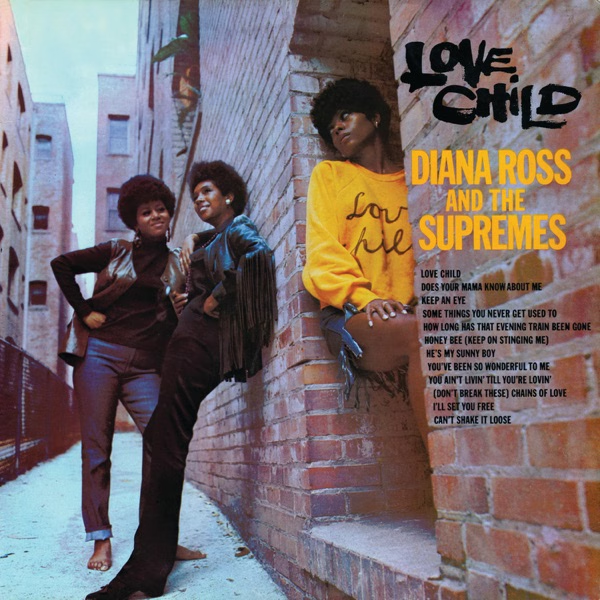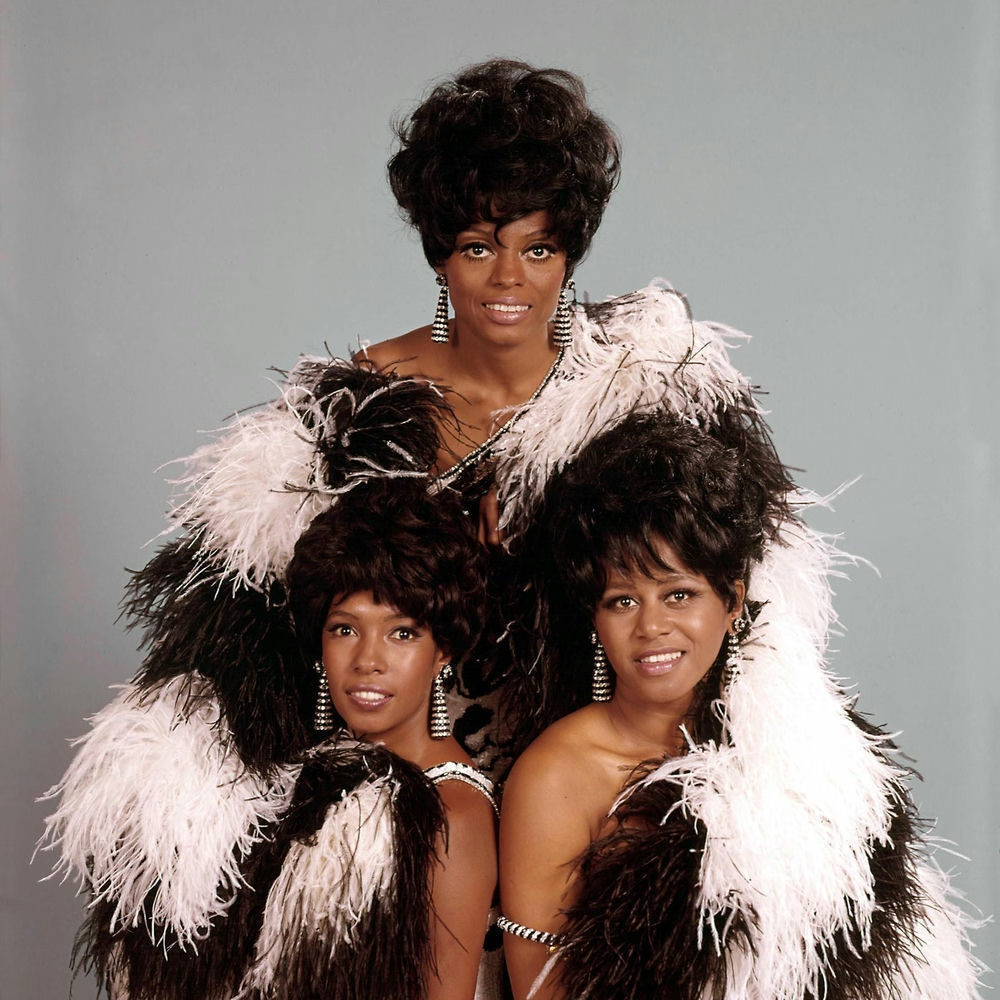
The cost landed hardest on Florence Ballard. She was the original lead singer, a voice with weight and church training, but Gordy decided Diana Ross was the one who would take them across the color line into white living rooms. Ballard was pushed to the background, then pushed out entirely, replaced by Cindy Birdsong in 1967. The story of the Supremes is also the story of Motown's assembly line philosophy -- the product came first, and the people inside the product were interchangeable when the formula required it. Mary Wilson held the group together through the changes while Ross became the face that sold the records. The tension between the three women was real and it never fully resolved, but the music kept coming because the machine kept running, relentless and polished.
"Stop! In the Name of Love 0:30" is the one. That spoken-word intro, the choreographed arm gesture, the harmonies that stack like a staircase -- it's Motown perfection in two and a half minutes. The Supremes racked up twelve number-one singles, including "Where Did Our Love Go 0:30," "Baby Love 0:30," and "You Can't Hurry Love 0:30." The Holland-Dozier-Holland songwriting machine gave them the material, but it was the delivery that made the difference. Ross's light soprano, Wilson's grounding harmonies, the precision of the performance -- they became the template for how a girl group should move and sound.
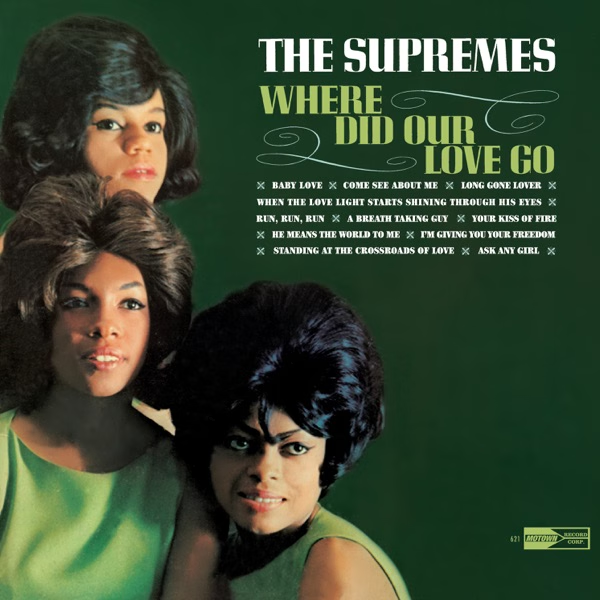
The gowns, the synchronized head tilts, the hand movements -- every detail was calculated and every detail worked. The sound was immaculate.
The group disbanded in 1977, but the image never faded. Diana Ross became a solo icon, Mary Wilson wrote the history, and the Supremes' silhouette -- three women in sequins, frozen in a dance move -- remains the defining photograph of the Motown era. They were the ones who proved that a black girl group could be the biggest act in America. They walked so Destiny's Child could run. They were the pocket, the one, the mothership call that every girl group since has been trying to answer. The gowns changed, but the blueprint stayed the same.