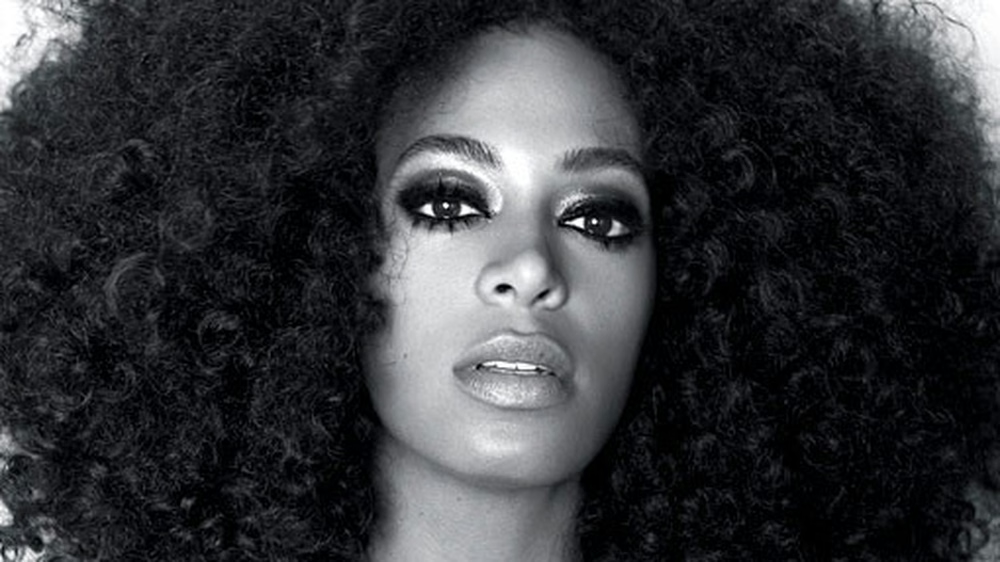
Solange
1986 –
The Artist Who Built Her Own Table
Solange Knowles did not wait for an invitation. She built the room, designed the lighting, curated the guest list, and then sat down at the head of a table she constructed herself. That table is both literal and structural.
Don't Wish Me Well
Cranes in the Sky
Weary
Locked In Closets

Solange tracklist updated 07/2026

The title of her 2016 album A Seat at the Table was not a request but a declaration, the work of an artist who had spent a decade being told she did not belong and decided to build belonging from scratch.

She was born in 1986 in Houston's Third Ward, the daughter of a music executive and a hairdresser, the younger sister of someone who would become the biggest pop star on the planet. That proximity shaped her early career in a way she spent her twenties unlearning. She danced as a child in Destiny's Child performances, released her first album at sixteen, and spent her early twenties inside the machinery of an industry that saw her as a satellite to a larger body. The music she made during that period was competent and forgettable. She knew it.

The turn came slowly and then suddenly. Sol-Angel and the Hadley St. Dreams (2008) was her first attempt at a real artistic statement -- a 1960s-inflected soul record that signaled a direction but not a destination. She moved to Brooklyn, started collaborating with independent producers, and began the slow work of separating her name from her family's mythology. The process took nearly a decade.

True (2012), an EP produced with Dev Hynes, was the bridge. The music was minimalist, cool, built around a drum machine and a voice that had stopped trying to prove anything. It did not sell millions. It was not supposed to. It was the sound of an artist finding her velocity.

When A Seat at the Table arrived in 2016, it landed like a thesis that had been in progress for thirty years. The album was about Black womanhood, anger, fatigue, healing, and the specific labor of existing in spaces that were not designed for you. "Cranes in the Sky" opened the record with a song about the impossibility of escape. "Don't Touch My Hair" turned a personal boundary into a political statement.
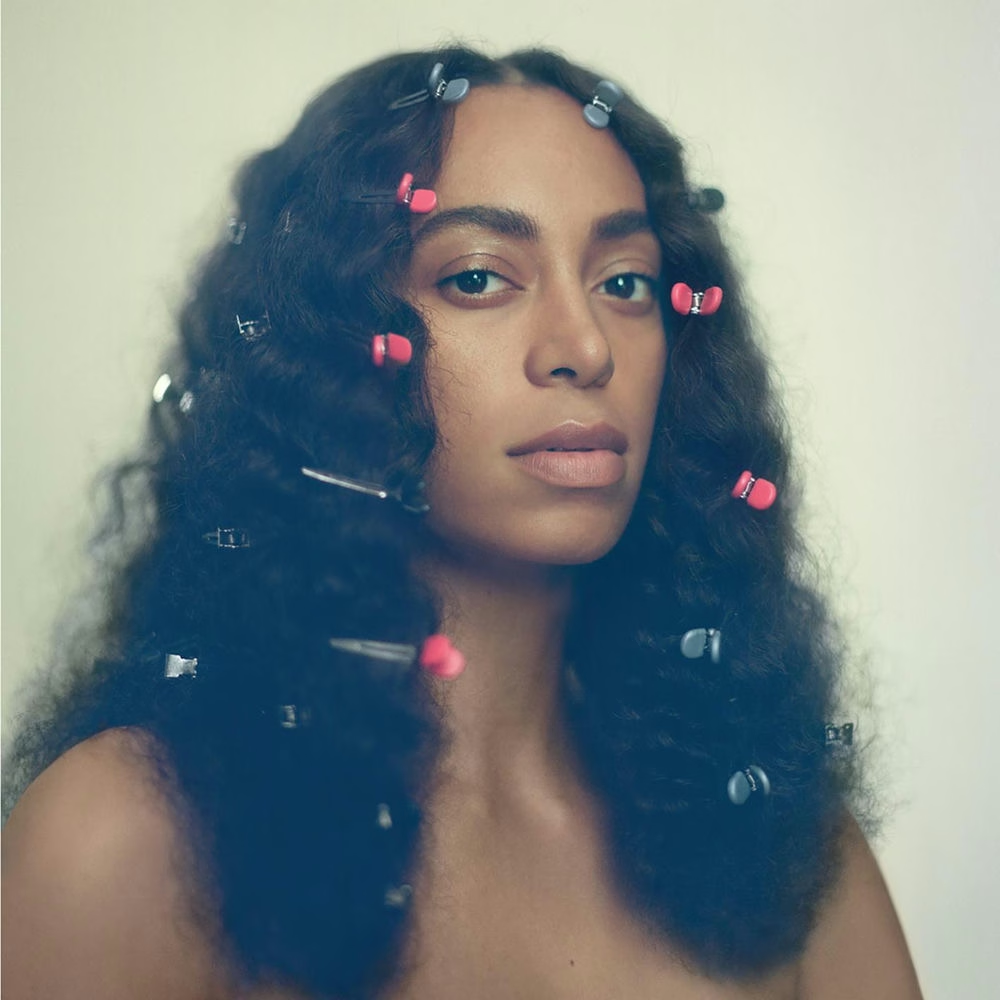
A Seat at the Table (2016)

The album featured interludes with Master P and her parents -- not as gimmicks but as documentation of a real conversation.

True (2012), an EP produced with Dev Hynes, was the bridge. The music was minimalist, cool, built around a drum machine and a voice that had stopped trying to prove anything. It did not sell millions. It was not supposed to. It was the sound of an artist finding her velocity.

When A Seat at the Table arrived in 2016, it landed like a thesis that had been in progress for thirty years. The album was about Black womanhood, anger, fatigue, healing, and the specific labor of existing in spaces that were not designed for you. "Cranes in the Sky" opened the record with a song about the impossibility of escape. "Don't Touch My Hair" turned a personal boundary into a political statement. The album featured interludes with Master P and her parents -- not as gimmicks but as documentation of a real conversation.

It won a Grammy for Best R&B Performance. It went platinum. It was played everywhere. But more than the awards, the album did what its title promised: it asserted a place.

She followed it with When I Get Home in 2019, an album that moved in the opposite direction. Where A Seat at the Table was direct and declarative, When I Get Home was oblique, atmospheric, a return to Houston that existed partly in reality and partly in memory. The accompanying short film, which she directed and choreographed herself, was a meditation on Black cowboy culture, the architecture of the Third Ward, and the feeling of a place that changes every time you revisit it.

Pitchfork described the album as one that had "ditched traditional song structure and world-weary lyrics for a sonically and thematically ambiguous record." It was not a retreat from the politics of its predecessor. It was a different language for the same conversation.

Between albums, she built Saint Heron, a curatorial platform that functions as an alternative infrastructure for Black artists working across music, visual art, dance, and design.

Through Saint Heron, she programmed the Eldorado Ballroom series at BAM, named after a historic Black music hall in her native Third Ward. She organized exhibitions, commissioned installations, and created spaces for artists who, like her, had been told their work did not fit. The platform was not a side project. It was the logical extension of the same principle that drove her albums: if the existing system does not have room for you, build a new one.

She lives in New Orleans now, still making work across mediums, still refusing to be categorized in a way that makes the industry comfortable. She has never been just a singer. She is a choreographer who makes albums, a curator who makes songs, an installation artist who works in rhythm and bass. The table she built was never about music. It was about space -- the kind you take, and the kind you leave for the people who come after.

Sources: Hotsupper research, NPR (Ari Shapiro interview), Pitchfork (When I Get Home review), W Magazine (Tavi Gevinson conversation), Harper's Bazaar (2024 interview), BAM (Eldorado Ballroom/Saint Heron), The Guardian ---
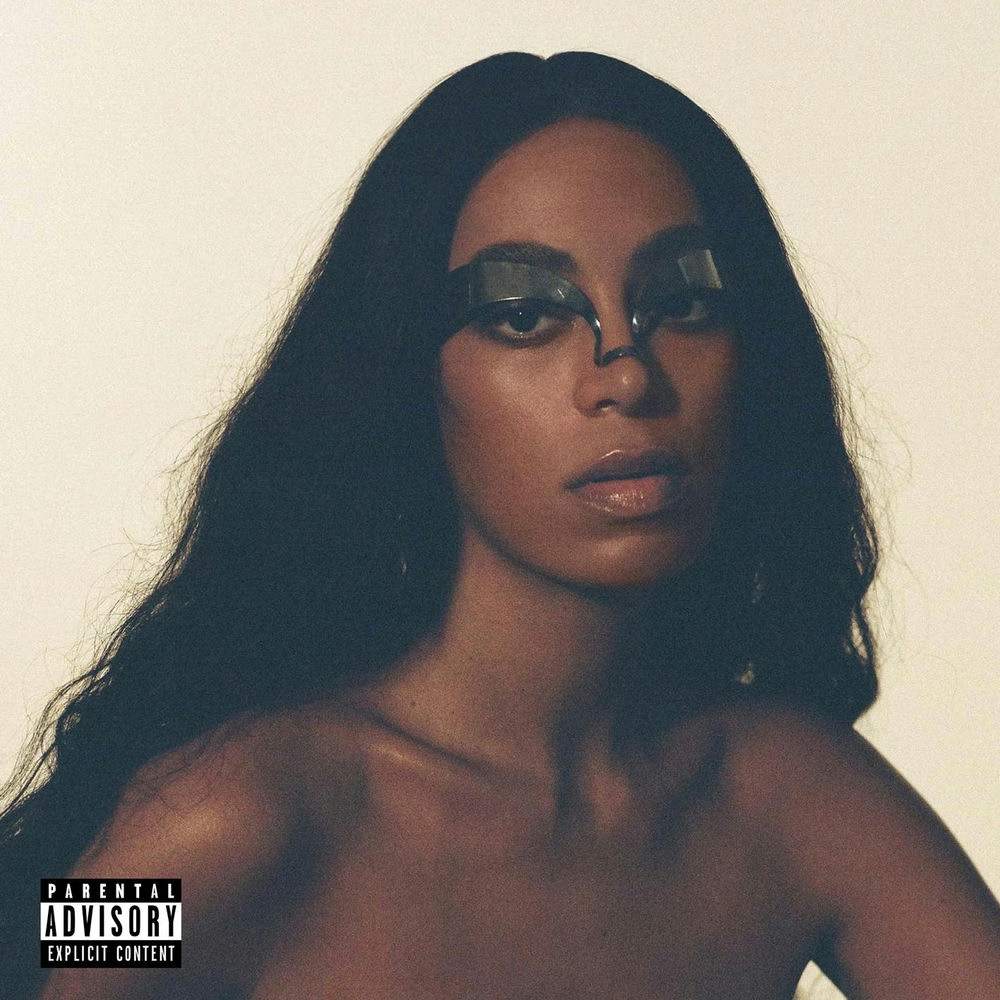

Image Credits

1,449 artist portraits across 5 genres (Rock, Jazz, Soul, Blues, Folk). 1,363 sourced from Wikipedia (Creative Commons / Public Domain), 50 from Deezer (promotional artwork).

Full attribution breakdown →

Solange

1986 –
The Artist Who Built Her Own Table
Solange Knowles did not wait for an invitation. She built the room, designed the lighting, curated the guest list, and then sat down at the head of a table she constructed herself. That table is both literal and structural.
Don't Wish Me Well
Cranes in the Sky
Weary
Locked In Closets

Solange tracklist updated 07/2026

The title of her 2016 album A Seat at the Table was not a request but a declaration, the work of an artist who had spent a decade being told she did not belong and decided to build belonging from scratch.

She was born in 1986 in Houston's Third Ward, the daughter of a music executive and a hairdresser, the younger sister of someone who would become the biggest pop star on the planet. That proximity shaped her early career in a way she spent her twenties unlearning. She danced as a child in Destiny's Child performances, released her first album at sixteen, and spent her early twenties inside the machinery of an industry that saw her as a satellite to a larger body. The music she made during that period was competent and forgettable. She knew it.

The turn came slowly and then suddenly. Sol-Angel and the Hadley St. Dreams (2008) was her first attempt at a real artistic statement -- a 1960s-inflected soul record that signaled a direction but not a destination. She moved to Brooklyn, started collaborating with independent producers, and began the slow work of separating her name from her family's mythology.

A Seat at the Table (2016)

The process took nearly a decade.

True (2012), an EP produced with Dev Hynes, was the bridge. The music was minimalist, cool, built around a drum machine and a voice that had stopped trying to prove anything. It did not sell millions. It was not supposed to. It was the sound of an artist finding her velocity.

When A Seat at the Table arrived in 2016, it landed like a thesis that had been in progress for thirty years. The album was about Black womanhood, anger, fatigue, healing, and the specific labor of existing in spaces that were not designed for you. "Cranes in the Sky" opened the record with a song about the impossibility of escape. "Don't Touch My Hair" turned a personal boundary into a political statement. The album featured interludes with Master P and her parents -- not as gimmicks but as documentation of a real conversation.

It won a Grammy for Best R&B Performance. It went platinum. It was played everywhere. But more than the awards, the album did what its title promised: it asserted a place.

She followed it with When I Get Home in 2019, an album that moved in the opposite direction. Where A Seat at the Table was direct and declarative, When I Get Home was oblique, atmospheric, a return to Houston that existed partly in reality and partly in memory. The accompanying short film, which she directed and choreographed herself, was a meditation on Black cowboy culture, the architecture of the Third Ward, and the feeling of a place that changes every time you revisit it.

Pitchfork described the album as one that had "ditched traditional song structure and world-weary lyrics for a sonically and thematically ambiguous record." It was not a retreat from the politics of its predecessor. It was a different language for the same conversation.

Between albums, she built Saint Heron, a curatorial platform that functions as an alternative infrastructure for Black artists working across music, visual art, dance, and design.

Through Saint Heron, she programmed the Eldorado Ballroom series at BAM, named after a historic Black music hall in her native Third Ward. She organized exhibitions, commissioned installations, and created spaces for artists who, like her, had been told their work did not fit. The platform was not a side project. It was the logical extension of the same principle that drove her albums: if the existing system does not have room for you, build a new one.

She lives in New Orleans now, still making work across mediums, still refusing to be categorized in a way that makes the industry comfortable. She has never been just a singer. She is a choreographer who makes albums, a curator who makes songs, an installation artist who works in rhythm and bass. The table she built was never about music. It was about space -- the kind you take, and the kind you leave for the people who come after.

Sources: Hotsupper research, NPR (Ari Shapiro interview), Pitchfork (When I Get Home review), W Magazine (Tavi Gevinson conversation), Harper's Bazaar (2024 interview), BAM (Eldorado Ballroom/Saint Heron), The Guardian ---

A Seat at the Table (2016) A Seat at the Table (2016)
When I Get Home (2019) When I Get Home (2019)
A Seat At The Table (2016)
When I Get Home (2019)
soulneo soulcontemporary r&b
The Sunday Drop
One song. One story. Every Sunday.

No algorithms. No trending sections. Just a song someone loved and the story behind it. Delivered Sunday morning.

Free. No spam. Unsubscribe anytime.

Image Credits

1,449 artist portraits across 5 genres (Rock, Jazz, Soul, Blues, Folk). 1,363 sourced from Wikipedia (Creative Commons / Public Domain), 50 from Deezer (promotional artwork).

Full attribution breakdown →

0:00
0:00
The Sunday Drop One song. One story. Every Sunday.
Click any song to hear it in full or in part.