Sammy Davis Jr. tracklist updated 07/2026
And for all that, he was paid less than any white entertainer of his caliber, denied rooms he could fill, and told repeatedly that the color of his skin mattered more than the size of his gift.
"Who can take a sunrise
Sprinkle it with dew"
-- from The Candy Man
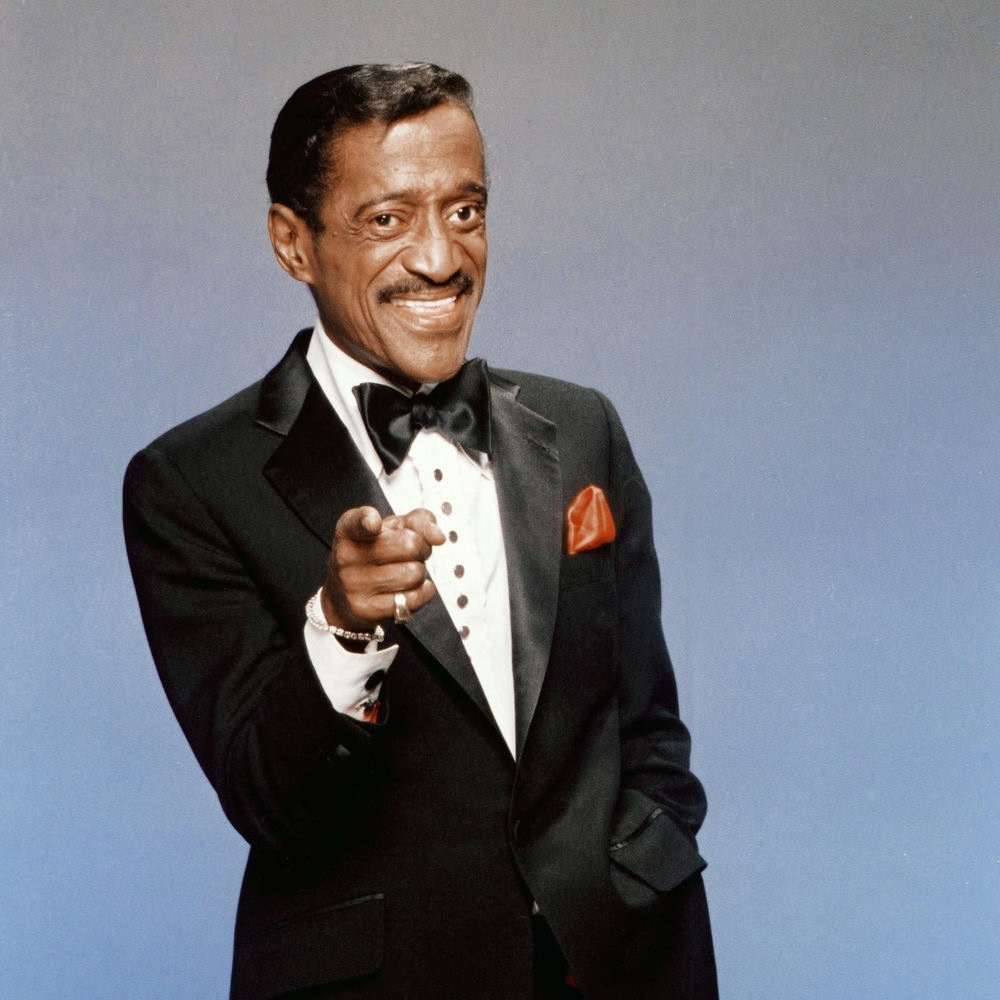
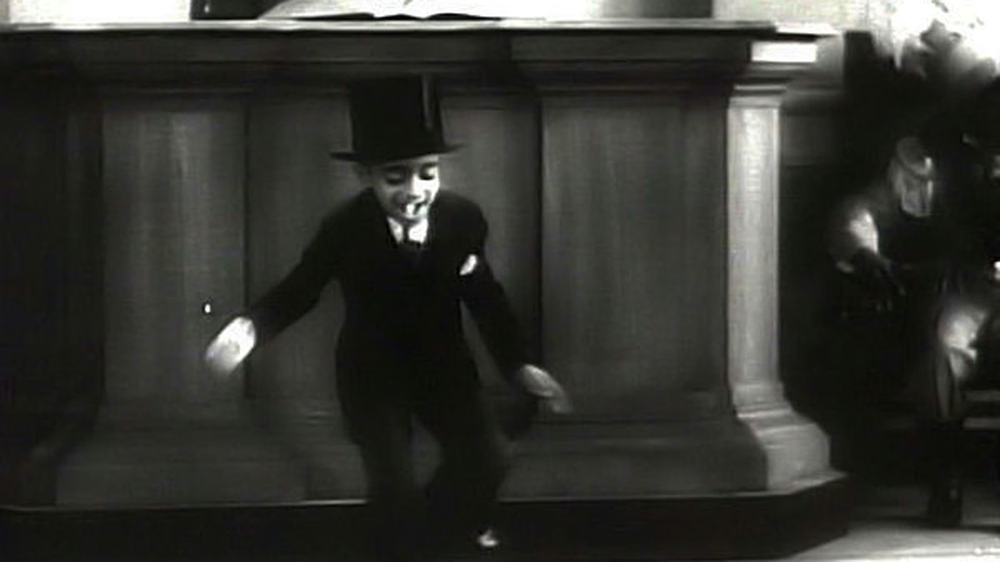
He was born in Harlem in 1925 to two vaudeville dancers -- an African American father and a Cuban American mother who could not raise him together. By age three he was onstage with his father and uncle in the Will Mastin Trio, tapping in small-time clubs before he could read. The Army drafted him at eighteen, and he spent his service learning judo and fighting off the daily racial humiliations of a segregated military. He came out of it faster, sharper, and determined to never let anyone else define his limits.
-- from The Candy Man
He was born in Harlem in 1925 to two vaudeville dancers -- an African American father and a Cuban American mother who could not raise him together. By age three he was onstage with his father and uncle in the Will Mastin Trio, tapping in small-time clubs before he could read. The Army drafted him at eighteen, and he spent his service learning judo and fighting off the daily racial humiliations of a segregated military. He came out of it faster, sharper, and determined to never let anyone else define his limits.
In 1954, driving through the California desert after a gig, he lost his left eye in a near-fatal car accident. During his recovery he read a history of the Jewish people, felt the echo of his own, and converted. He wore an eye patch for a year, then a glass eye, and still danced better than anyone who could see with both.
When he married the Swedish actress May Britt in 1960, the backlash was violent -- death threats, hate mail, and a phone call from John F. Kennedy's people uninviting him from the inauguration gala because his interracial marriage was considered too controversial. Frank Sinatra refused to drop him. The Rat Pack stayed together. But the message was received: talent alone was not enough.
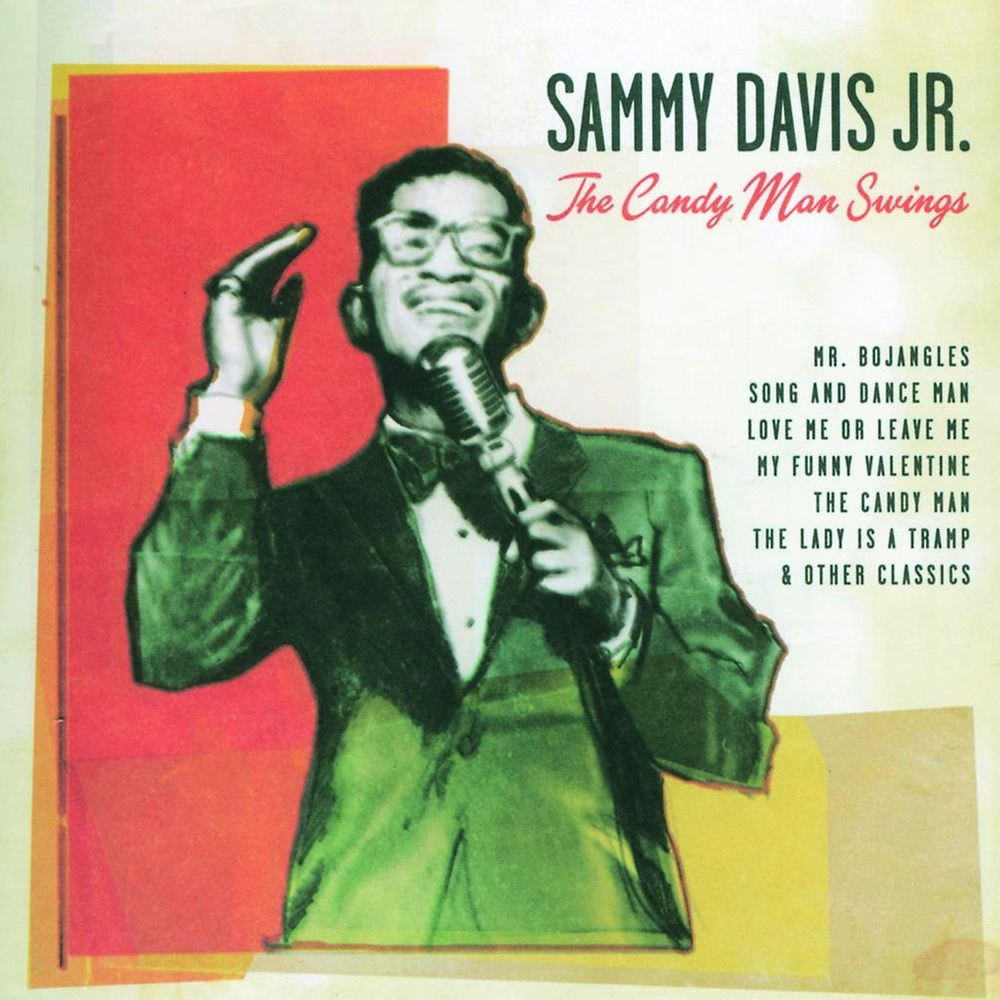
What his music did to a room was not subtle. "The Candy Man" hit number one in 1972, a song so sweet it should have been disposable, but Sammy sang it like he meant every word -- because he did. His "Mr. Bojangles" turned a white Southern songwriter's story of an old tap dancer into something that sounded like autobiography: the dog who died, the man who kept dancing.
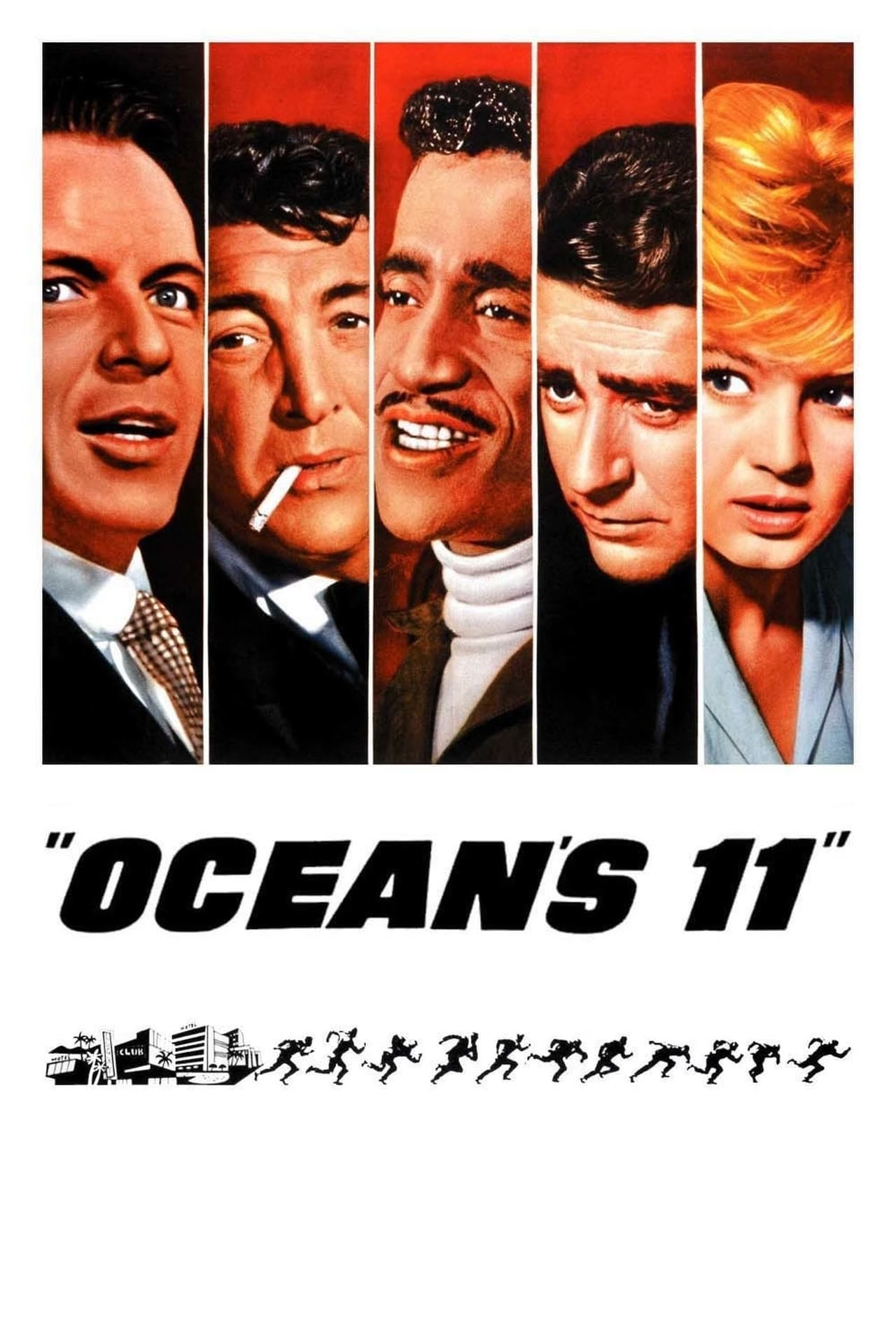
He had a dancer's gift for making the hard thing look like the only thing. He starred in Mr. Wonderful on Broadway at age thirty, carried Ocean's 11 alongside Sinatra and Dean Martin without looking like he was carrying anything, and hosted a network variety show in 1966 despite network fears that America would not watch a Black man host prime time. He integrated the Copa Room in Las Vegas, the Fontainebleau in Miami Beach, and any other room that tried to book him without booking Black patrons. He did not argue. He just did not show up unless they changed the policy.
He died in 1990 of throat cancer at sixty-four, in Los Angeles. A month before he died, Sinatra and Martin threw him a seventy-fifth birthday party that felt like a coronation and a goodbye in one room. The verdict is not complicated: Sammy Davis Jr. was the most talented entertainer of the twentieth century who never got to be the most famous. He carried joy as a survival mechanism, and the joy was real. Every dancer who ever made a crowd forget their troubles is carrying a piece of his ghost.
Sammy Davis Jr. was profiled in the documentary, Sammy Davis Jr.: I've Gotta Be Me, in 2017.