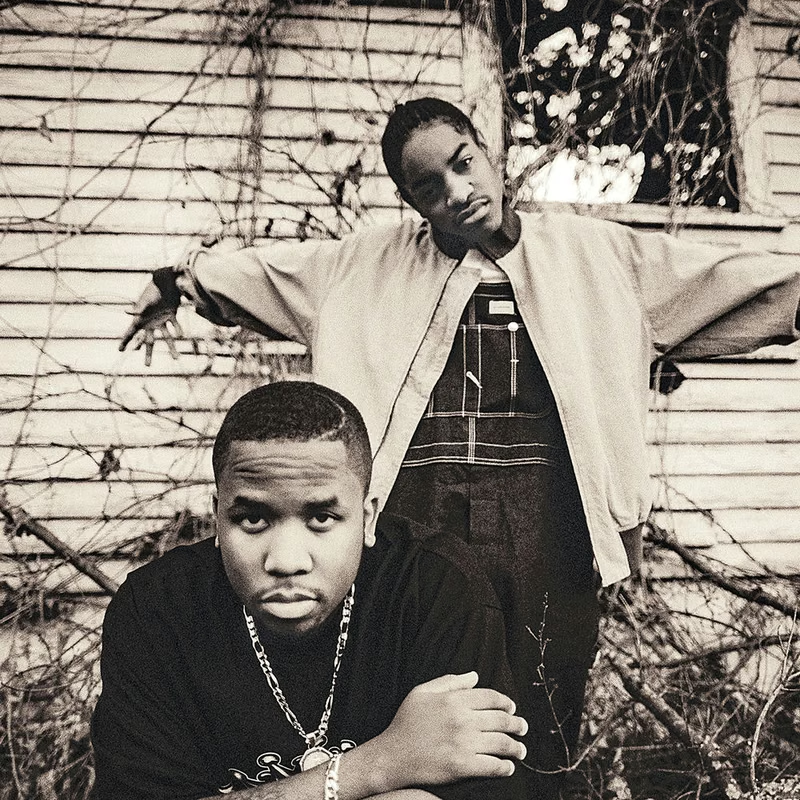
OutKast
They walked into a recording studio in the mid-1990s wearing clothes that did not match, talking about subjects that did not fit the rap template, and sounding like nothing that had ever come out of Atlanta before them. OutKast was Andre 3000 and Big Boi, two teenagers from East Point who met in high school and decided that Southern hip-hop needed a vocabulary of its own, one that did not imitate New York or Los Angeles. The East Coast had storytelling. The West Coast had G-funk. The South had bounce, bass, and a drawl that the industry treated as regional rather than universal. OutKast changed that calculation permanently by refusing to be regional.

The cost was being misunderstood by their own label before they were understood by the world. Their debut album Southernplayalisticadillacmuzik in 1994 went platinum, but the industry treated it as a regional novelty rather than a sign of what was coming. Andre and Big Boi were not interested in being novel. They were building a cosmology that the South had never articulated in hip-hop. ATLiens in 1996 expanded the sound -- spacey, psychedelic, Southern Gothic, full of references that made no sense to anyone outside Atlanta and perfect sense to everyone inside it. Aquemini in 1998 was the masterpiece, an album that proved Southern hip-hop could be as intellectually ambitious as anything from New York without losing the regional identity that made it distinct. The album featured Rosa Parks, which led to a lawsuit from Parks herself. The controversy only made the album sell more copies.

Hey Ya! is the one everyone knows, a song that became inescapable in 2003. But it is not the one that defines OutKast. That honor belongs to Aquemini or B.O.B. (Bombs Over Baghdad) -- tracks that showed what the duo could do when they stopped trying to fit any genre at all.

The album Speakerboxxx/The Love Below in 2003 was a double album that treated Andre and Big Boi as separate artists who happened to share a name. Andre's half was a funk-pop-psychedelic experiment that included Hey Ya! and The Way You Move. Big Boi's half was a Southern rap masterclass that reminded listeners where the duo had started. The album won Album of the Year at the Grammys, making OutKast the first hip-hop act ever to win that category.

The legacy of OutKast is that they made room for every Southern rapper who came after them. Before OutKast, the South was a market that New York sold records into. After OutKast, it was a voice that the rest of the country had to learn to understand. Andre 3000 and Big Boi never made the same album twice because they were not interested in repeating themselves. They were interested in seeing how far the form could stretch before it broke, and it never broke because they were too busy holding it together with nothing but imagination, stubbornness, and the conviction that the South had something to say that nobody had said yet.
Image Credits

1,414 artist portraits across 5 genres (Rock, Jazz, Soul, Blues, Folk). 1,363 sourced from Wikipedia (Creative Commons / Public Domain), 50 from Deezer (promotional artwork).

Full attribution breakdown →

OutKast

They walked into a recording studio in the mid-1990s wearing clothes that did not match, talking about subjects that did not fit the rap template, and sounding like nothing that had ever come out of Atlanta before them. OutKast was Andre 3000 and Big Boi, two teenagers from East Point who met in high school and decided that Southern hip-hop needed a vocabulary of its own, one that did not imitate New York or Los Angeles. The East Coast had storytelling. The West Coast had G-funk. The South had bounce, bass, and a drawl that the industry treated as regional rather than universal. OutKast changed that calculation permanently by refusing to be regional.

The cost was being misunderstood by their own label before they were understood by the world. Their debut album Southernplayalisticadillacmuzik in 1994 went platinum, but the industry treated it as a regional novelty rather than a sign of what was coming. Andre and Big Boi were not interested in being novel. They were building a cosmology that the South had never articulated in hip-hop. ATLiens in 1996 expanded the sound -- spacey, psychedelic, Southern Gothic, full of references that made no sense to anyone outside Atlanta and perfect sense to everyone inside it. Aquemini in 1998 was the masterpiece, an album that proved Southern hip-hop could be as intellectually ambitious as anything from New York without losing the regional identity that made it distinct. The album featured Rosa Parks, which led to a lawsuit from Parks herself. The controversy only made the album sell more copies.

Hey Ya! is the one everyone knows, a song that became inescapable in 2003. But it is not the one that defines OutKast. That honor belongs to Aquemini or B.O.B. (Bombs Over Baghdad) -- tracks that showed what the duo could do when they stopped trying to fit any genre at all.

The album Speakerboxxx/The Love Below in 2003 was a double album that treated Andre and Big Boi as separate artists who happened to share a name. Andre's half was a funk-pop-psychedelic experiment that included Hey Ya! and The Way You Move. Big Boi's half was a Southern rap masterclass that reminded listeners where the duo had started. The album won Album of the Year at the Grammys, making OutKast the first hip-hop act ever to win that category.

The legacy of OutKast is that they made room for every Southern rapper who came after them. Before OutKast, the South was a market that New York sold records into. After OutKast, it was a voice that the rest of the country had to learn to understand. Andre 3000 and Big Boi never made the same album twice because they were not interested in repeating themselves. They were interested in seeing how far the form could stretch before it broke, and it never broke because they were too busy holding it together with nothing but imagination, stubbornness, and the conviction that the South had something to say that nobody had said yet.

The Sunday Drop
One song. One story. Every Sunday.

No algorithms. No trending sections. Just a song someone loved and the story behind it. Delivered Sunday morning.

Free. No spam. Unsubscribe anytime.

Image Credits

1,414 artist portraits across 5 genres (Rock, Jazz, Soul, Blues, Folk). 1,363 sourced from Wikipedia (Creative Commons / Public Domain), 50 from Deezer (promotional artwork).

Full attribution breakdown →

0:00
0:00
The Sunday Drop One song. One story. Every Sunday.