
Musiq Soulchild
1977 –
He walked onto the scene in the early 2000s with a name that sounded like a question and a voice that sounded like an answer that had been waiting for the right question to arrive. Musiq Soulchild was born Taalib Johnson in Philadelphia in 1977, the youngest of nine children, and grew up in a household where gospel and classic soul played constantly from morning until night. He adopted the name Musiq because he believed that music should be felt rather than intellectually explained, a philosophy that guided every recording he made.
His debut album Aijuswanaseing in 2000 introduced a vocalist who could croon, scat, and plead without sounding like he was trying to impress anyone.

The cost was arriving after the neo-soul wave had already crested and the industry was turning toward harder commercial sounds. D'Angelo, Erykah Badu, and Lauryn Hill had already defined the movement by the time Musiq broke through, and radio programmers were losing interest in the quiet intensity that defined the sound. He kept making the music he believed in regardless of where the trends were heading. His second album Juslisen in 2002 went platinum and produced Halfcrazy and Don't Change. Just Friends (Sunny) became a slow-jam standard that radio played for years.

Halfcrazy is the one. The song is built around a sample of Donny Hathaway's Little Ghetto Boy, a choice that signals Musiq's deep awareness of his musical lineage and the artists who came before him. His vocal is unhurried and conversational, like a man explaining to his partner why love makes him feel irrational and vulnerable at once. He released eight studio albums across two decades.
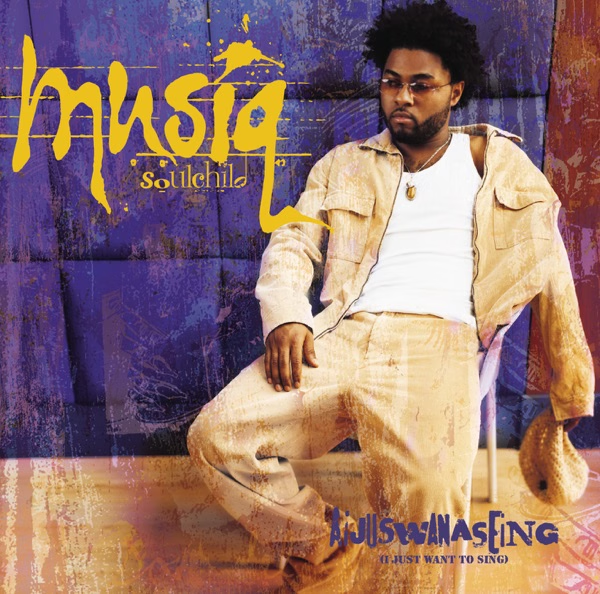
Aijuswanaseing (2000)

He never became a household name outside the neo-soul faithful, but within that audience he was essential. He proved that a Black male vocalist could be tender without being weak and romantic without being corny.
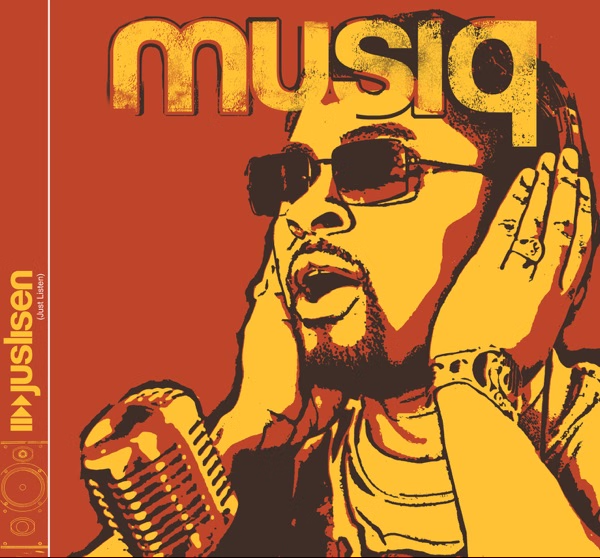
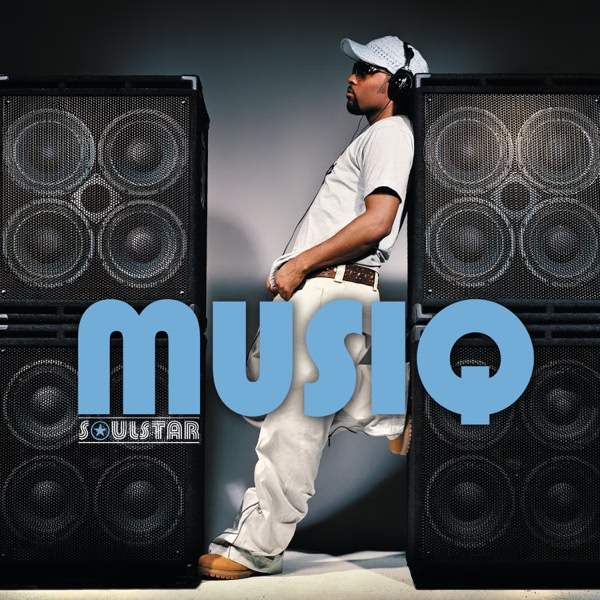
Image Credits

1,414 artist portraits across 5 genres (Rock, Jazz, Soul, Blues, Folk). 1,363 sourced from Wikipedia (Creative Commons / Public Domain), 50 from Deezer (promotional artwork).

Full attribution breakdown →

Musiq Soulchild

1977 –
He walked onto the scene in the early 2000s with a name that sounded like a question and a voice that sounded like an answer that had been waiting for the right question to arrive. Musiq Soulchild was born Taalib Johnson in Philadelphia in 1977, the youngest of nine children, and grew up in a household where gospel and classic soul played constantly from morning until night. He adopted the name Musiq because he believed that music should be felt rather than intellectually explained, a philosophy that guided every recording he made.
His debut album Aijuswanaseing in 2000 introduced a vocalist who could croon, scat, and plead without sounding like he was trying to impress anyone.

The cost was arriving after the neo-soul wave had already crested and the industry was turning toward harder commercial sounds. D'Angelo, Erykah Badu, and Lauryn Hill had already defined the movement by the time Musiq broke through, and radio programmers were losing interest in the quiet intensity that defined the sound. He kept making the music he believed in regardless of where the trends were heading. His second album Juslisen in 2002 went platinum and produced Halfcrazy and Don't Change. Just Friends (Sunny) became a slow-jam standard that radio played for years.

Halfcrazy is the one. The song is built around a sample of Donny Hathaway's Little Ghetto Boy, a choice that signals Musiq's deep awareness of his musical lineage and the artists who came before him. His vocal is unhurried and conversational, like a man explaining to his partner why love makes him feel irrational and vulnerable at once. He released eight studio albums across two decades.

Aijuswanaseing (2000)

He never became a household name outside the neo-soul faithful, but within that audience he was essential. He proved that a Black male vocalist could be tender without being weak and romantic without being corny.

Aijuswanaseing (2000) Aijuswanaseing (2000)
Juslisen (2002) Juslisen (2002)
Soulstar (2003) Soulstar (2003)
Aijuswanaseing (2000)
Juslisen (2002)
Soulstar (2003)
Luvanmusiq (2007)
Onmyradio (2008)
MusiqInTheMagiq (2011)
9ine (2013)
Life on Earth (2016)
Feel the Real (2017)
Victims & Villains (2023)
neo-soulr&bsoul
The Sunday Drop
One song. One story. Every Sunday.

No algorithms. No trending sections. Just a song someone loved and the story behind it. Delivered Sunday morning.

Free. No spam. Unsubscribe anytime.

Image Credits

1,414 artist portraits across 5 genres (Rock, Jazz, Soul, Blues, Folk). 1,363 sourced from Wikipedia (Creative Commons / Public Domain), 50 from Deezer (promotional artwork).

Full attribution breakdown →

0:00
0:00
The Sunday Drop One song. One story. Every Sunday.