Minnie Riperton
1947 – 1979 (32)
She walked into a recording studio at Chess Records in the 1960s, and the engineers had to adjust their levels because they had never heard a voice that could hit seven octaves. Minnie Riperton was born in Chicago in 1947, the youngest of eight children, and her voice was a gift that did not make sense until you heard it in person. She could sing in a range that most humans cannot hear, let alone produce.
At Chess, she learned the blues from Muddy Waters himself -- not by taking lessons, but by being in the room while the masters worked.

"You are my life
And I'm so glad you're in my life"

-- from Lovin' You

The cost was being too singular for the industry to market. Chess Records did not know what to do with a Black female vocalist who could sing coloratura soprano and wanted to blend soul with classical and psychedelic elements. They put her in Rotary Connection, a experimental ensemble that gave her room to stretch, but the albums sold modestly. She moved to Epic Records in the mid-1970s, and it was there that she recorded the song that would define her career. Lovin' You, released in 1975, was a love song written for her daughter Maya. The whistle register at the end -- the bird-like notes that seemed to come from somewhere outside the human voice -- became her calling card, and the song became a global hit.

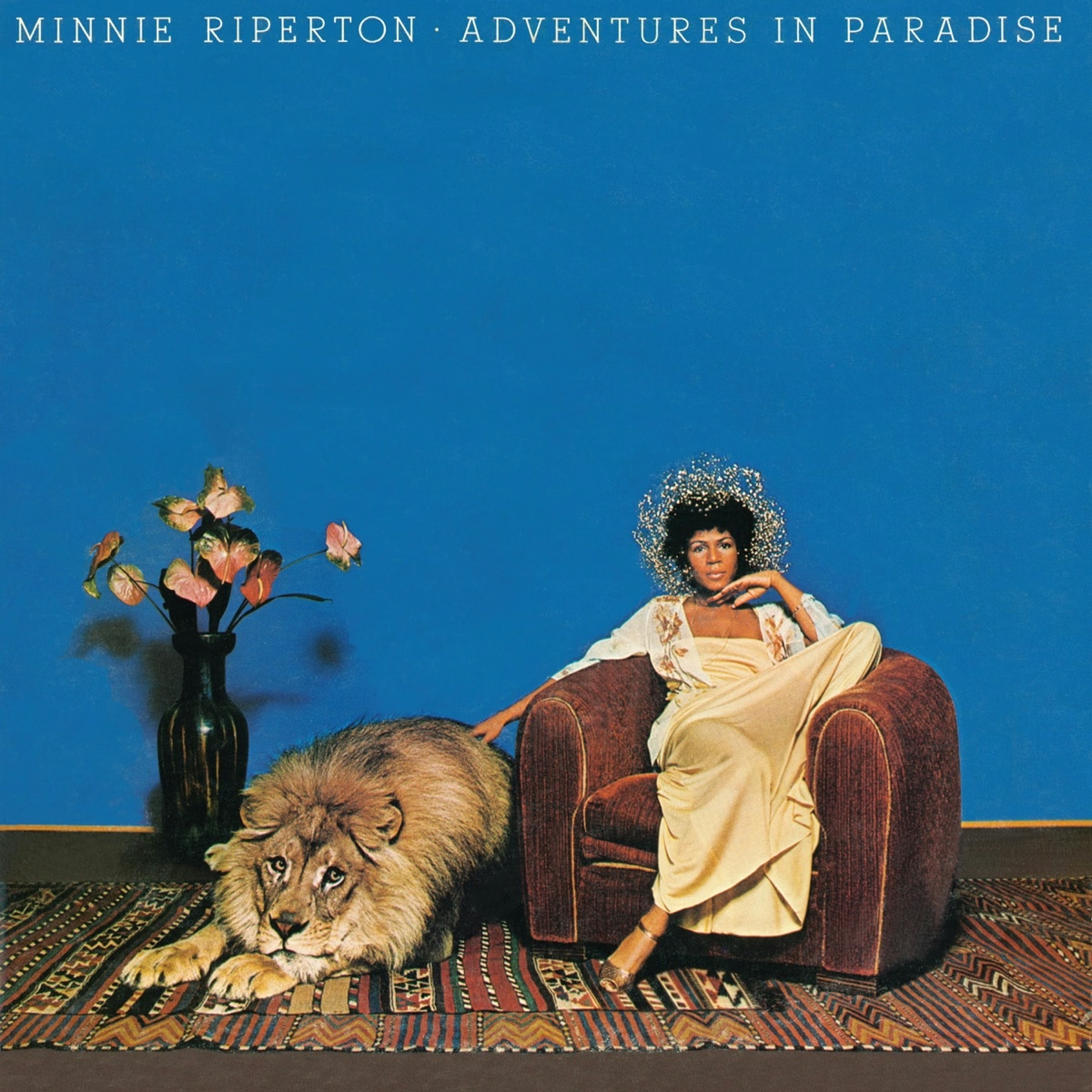
The song that followed Lovin' You proved she was not a one-hit wonder. Inside My Love, Memories of You, and Adventures in Paradise showed a vocalist who could move between tenderness and power without effort. She performed on Soul Train, toured internationally, and became a favorite of critics who compared her to no one because there was no one to compare her to. She was diagnosed with breast cancer in 1976 and continued performing through treatment. She died in 1979 at thirty-one, leaving behind a catalog that was too brief to be fair and too beautiful to forget.

Minnie Riperton's voice was not a technical anomaly. It was a form of communication that operated above the frequency of ordinary speech. She sang in registers that most people cannot reach, let alone control, and she did it with a warmth that made the virtuosity feel natural rather than showy. Thirty-two years old is too young to leave, but the work she left behind -- especially Lovin' You -- remains one of the most singular vocal performances in American music. Every time a singer hits a note that seems impossible, they are standing on ground that Minnie Riperton cleared first.
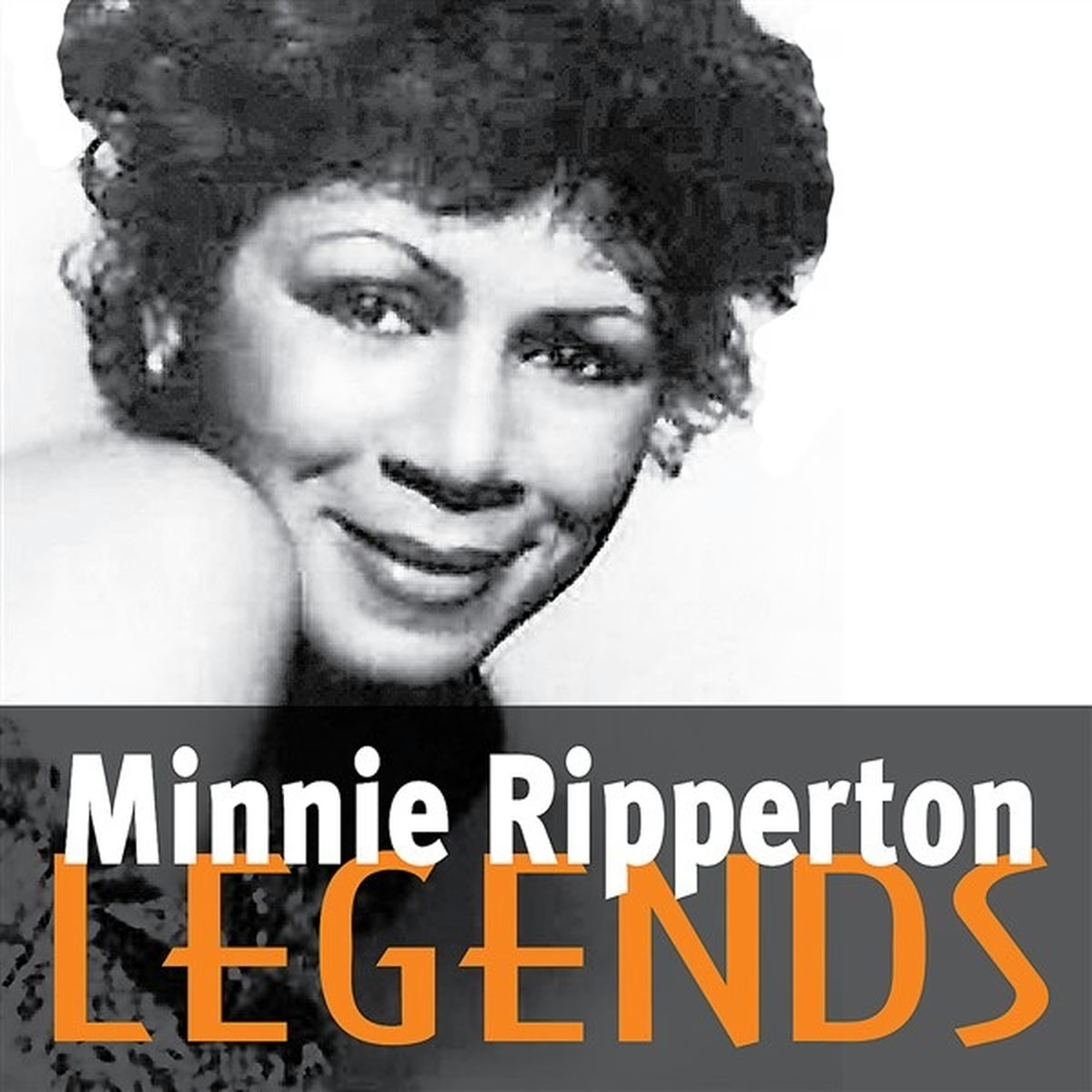
Image Credits

1,414 artist portraits across 5 genres (Rock, Jazz, Soul, Blues, Folk). 1,363 sourced from Wikipedia (Creative Commons / Public Domain), 50 from Deezer (promotional artwork).

Full attribution breakdown →

Minnie Riperton

1947 – 1979 (32)
She walked into a recording studio at Chess Records in the 1960s, and the engineers had to adjust their levels because they had never heard a voice that could hit seven octaves. Minnie Riperton was born in Chicago in 1947, the youngest of eight children, and her voice was a gift that did not make sense until you heard it in person. She could sing in a range that most humans cannot hear, let alone produce.
At Chess, she learned the blues from Muddy Waters himself -- not by taking lessons, but by being in the room while the masters worked.

"You are my life
And I'm so glad you're in my life"

-- from Lovin' You

The cost was being too singular for the industry to market. Chess Records did not know what to do with a Black female vocalist who could sing coloratura soprano and wanted to blend soul with classical and psychedelic elements. They put her in Rotary Connection, a experimental ensemble that gave her room to stretch, but the albums sold modestly. She moved to Epic Records in the mid-1970s, and it was there that she recorded the song that would define her career. Lovin' You, released in 1975, was a love song written for her daughter Maya. The whistle register at the end -- the bird-like notes that seemed to come from somewhere outside the human voice -- became her calling card, and the song became a global hit.

The song that followed Lovin' You proved she was not a one-hit wonder. Inside My Love, Memories of You, and Adventures in Paradise showed a vocalist who could move between tenderness and power without effort. She performed on Soul Train, toured internationally, and became a favorite of critics who compared her to no one because there was no one to compare her to. She was diagnosed with breast cancer in 1976 and continued performing through treatment. She died in 1979 at thirty-one, leaving behind a catalog that was too brief to be fair and too beautiful to forget.

Minnie Riperton's voice was not a technical anomaly. It was a form of communication that operated above the frequency of ordinary speech. She sang in registers that most people cannot reach, let alone control, and she did it with a warmth that made the virtuosity feel natural rather than showy. Thirty-two years old is too young to leave, but the work she left behind -- especially Lovin' You -- remains one of the most singular vocal performances in American music. Every time a singer hits a note that seems impossible, they are standing on ground that Minnie Riperton cleared first.
Oh By The Way (2015) Oh By The Way (2015)
Minnie Ripperton: Legends (2010) Minnie Ripperton: Legends (2010)
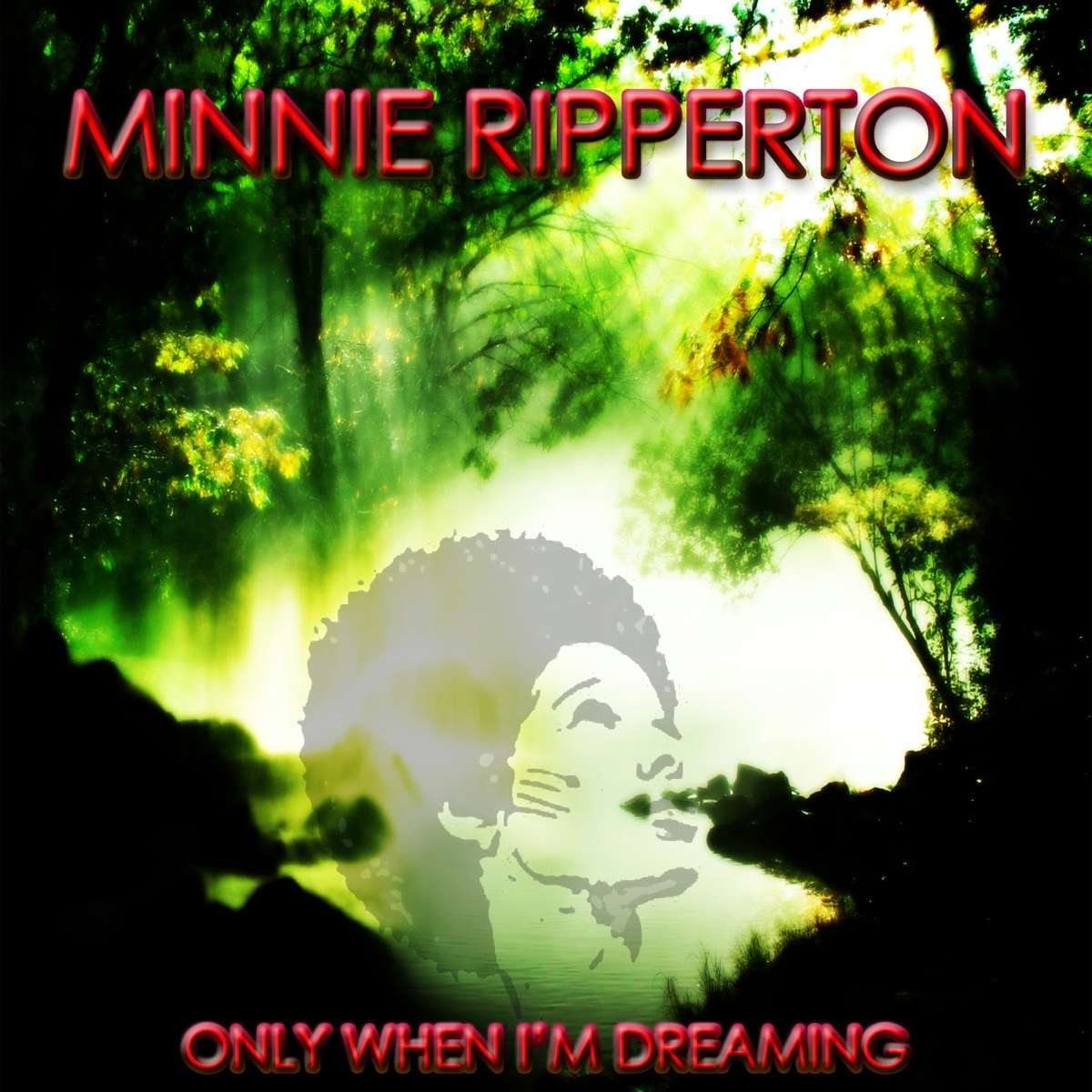
Only When I'm Dreaming (2012) Only When I'm Dreaming (2012)
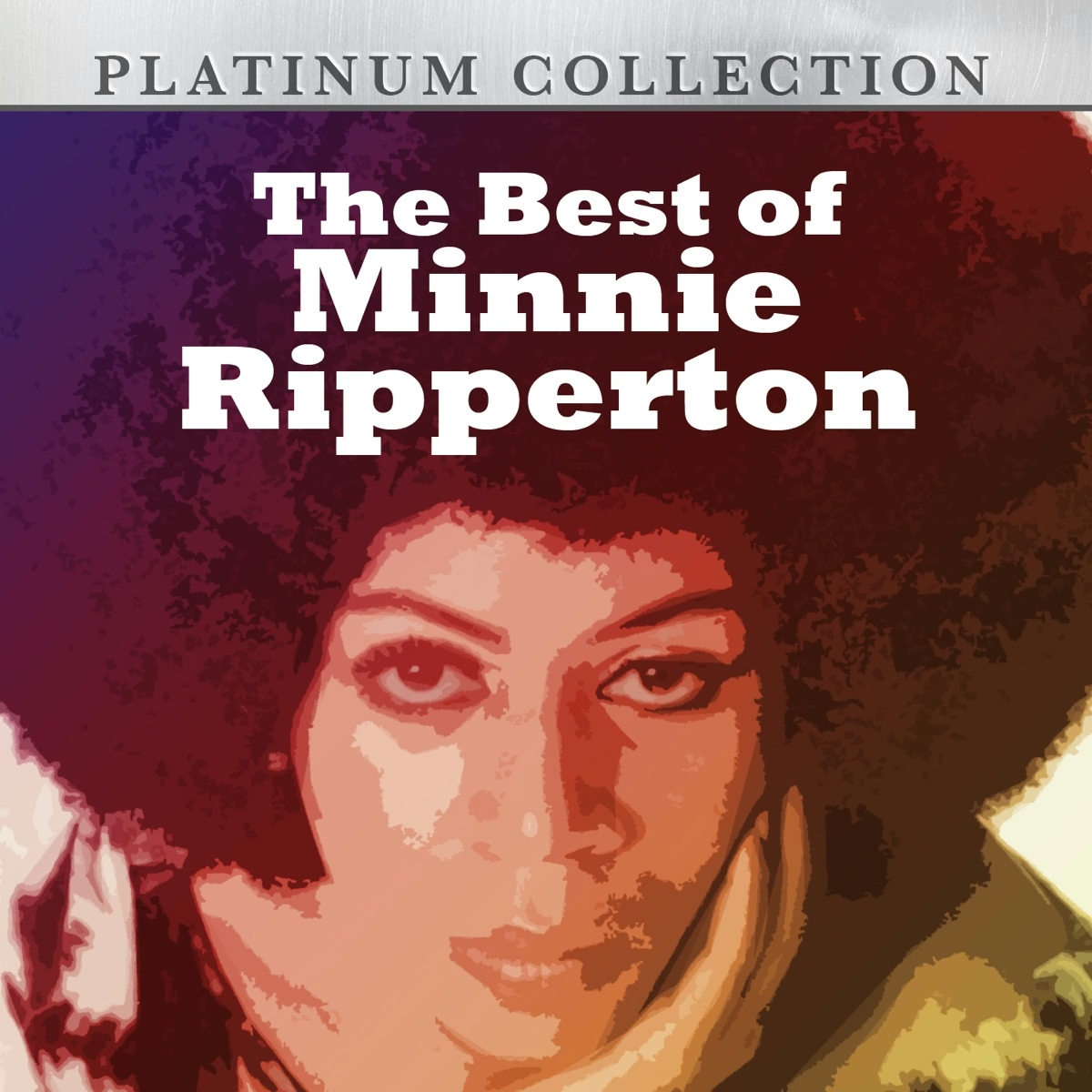
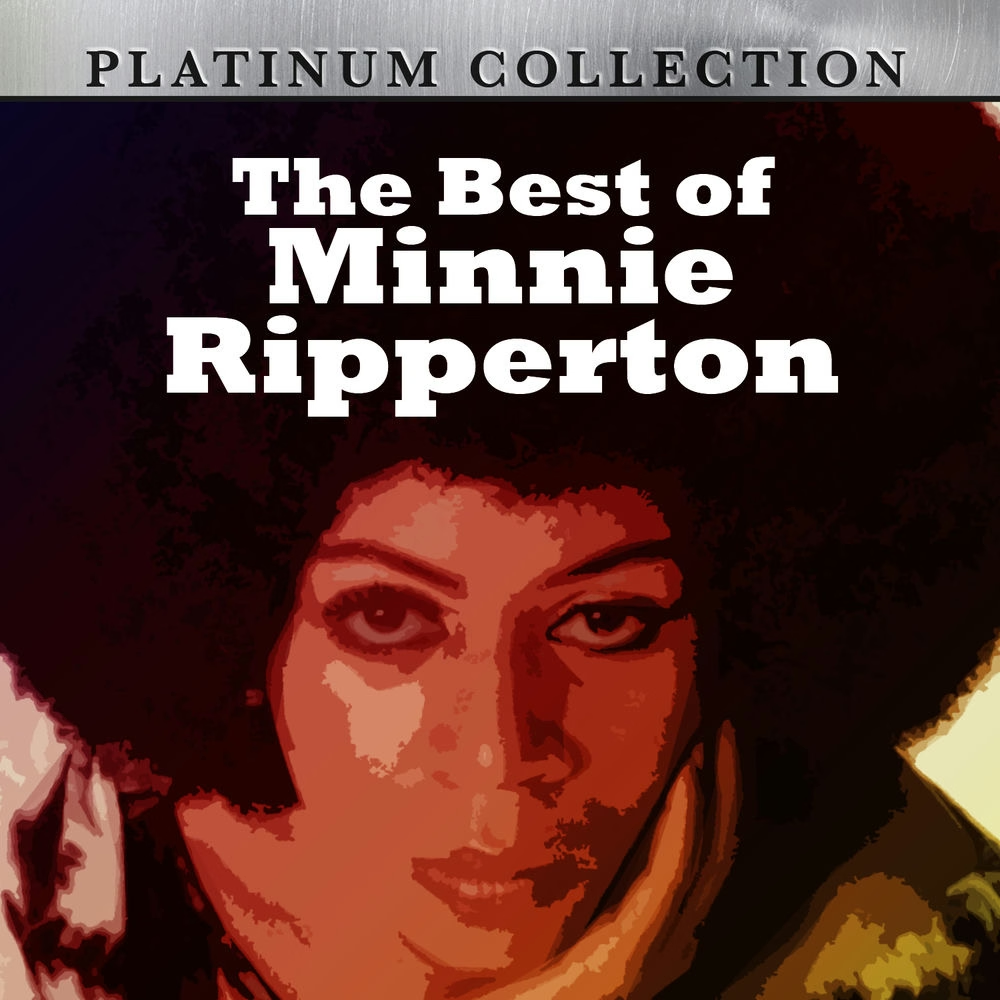
The Best of Minnie Ripperton (2012) The Best of Minnie Ripperton (2012)
Timeless Jazz: Minnie Ripperton (2011) Timeless Jazz: Minnie Ripperton (2011)
Minnie Ripperton's Close Your Eyes And Remember (2006) Minnie Ripperton's Close Your Eyes And Remember (2006)
Les Fleurs / Oh! By The Way (2021) Les Fleurs / Oh! By The Way (2021)
Back 2 Back Divas (2015)
Oh By The Way (2015)
Minnie Ripperton: Legends (2010)
Only When I'm Dreaming (2012)
The Best of Minnie Ripperton (2012)
Timeless Jazz: Minnie Ripperton (2011)
Minnie Ripperton's Close Your Eyes And Remember (2006)
Les Fleurs / Oh! By The Way (2021)
The Classy Lady Singers of Jazz, Vol. 5 (2012)
The Classy Lady Singers of Jazz, Vol. 6 (2012)
The Classy Lady Singers of Jazz, Vol. 4 (2012)
The Classy Lady Singers of Jazz, Vol. 3 (2012)
contemporary r&br&brhythm & blues
The Sunday Drop
One song. One story. Every Sunday.

No algorithms. No trending sections. Just a song someone loved and the story behind it. Delivered Sunday morning.

Free. No spam. Unsubscribe anytime.

Image Credits

1,414 artist portraits across 5 genres (Rock, Jazz, Soul, Blues, Folk). 1,363 sourced from Wikipedia (Creative Commons / Public Domain), 50 from Deezer (promotional artwork).

Full attribution breakdown →

0:00
0:00
The Sunday Drop One song. One story. Every Sunday.