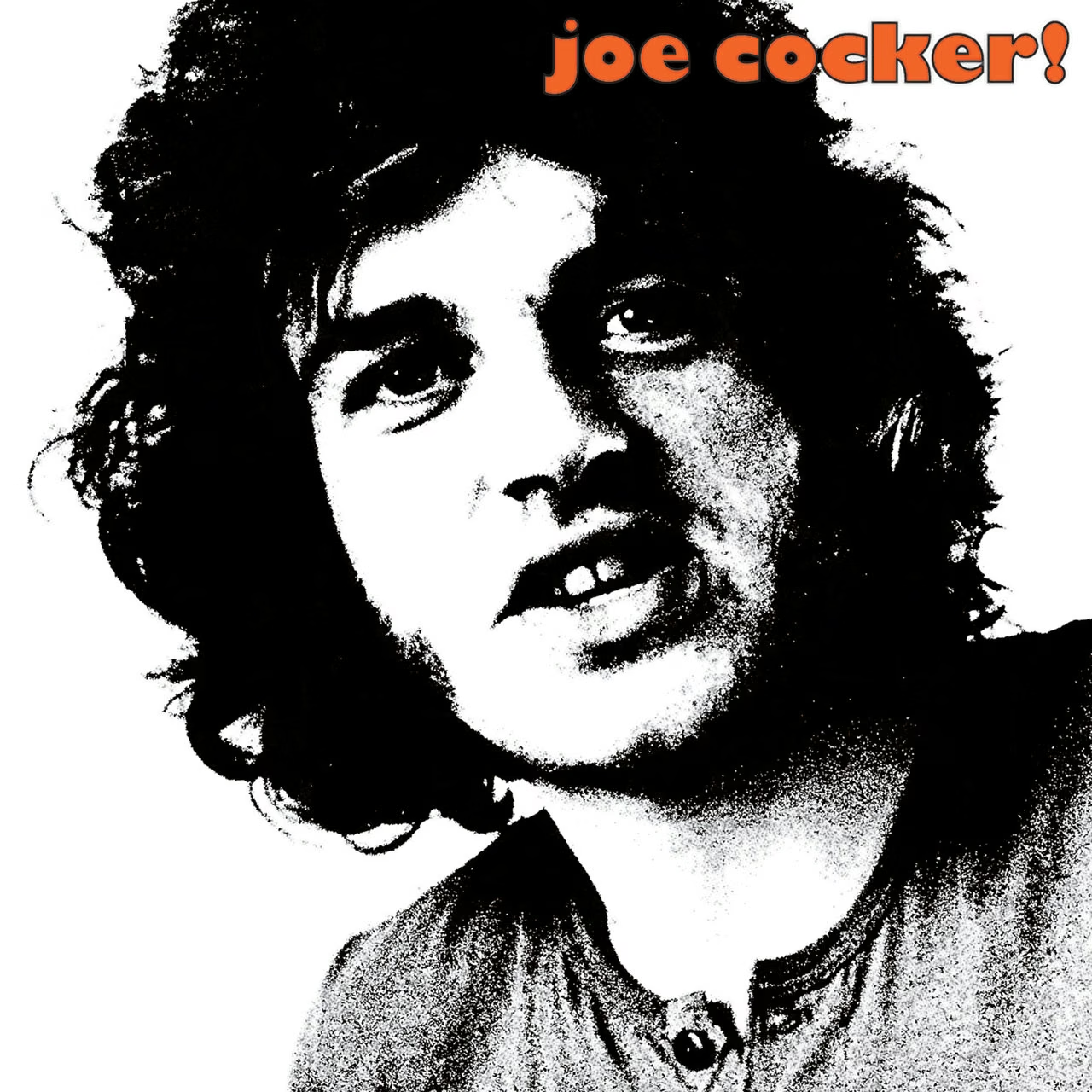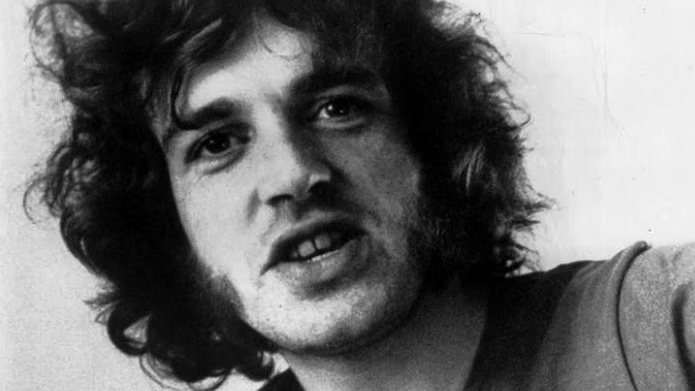
Joe Cocker's voice didn't come from his throat. It came from somewhere deeper — a place where whiskey, cigarettes, and the hard life of the English working class had worn the edges smooth. He was born John Robert Cocker on May 20, 1944, in Sheffield, England, a steel town where the factories belched smoke and the music halls gave the workers somewhere to feel alive.
His father was a coal miner who sang around the house, and young Joe absorbed the blues and soul records that drifted across the Atlantic like messages from a world he couldn't yet touch — Ray Charles, James Brown, the gospel shouters who turned pain into power. He left school at 15, worked as a gas fitter, and played in local bands called the Cavaliers and Vance Arnold and the Avengers, learning his craft in the working men's clubs of northern England. The voice was already there, raw and unpolished, a thing that seemed too big for his slight frame.
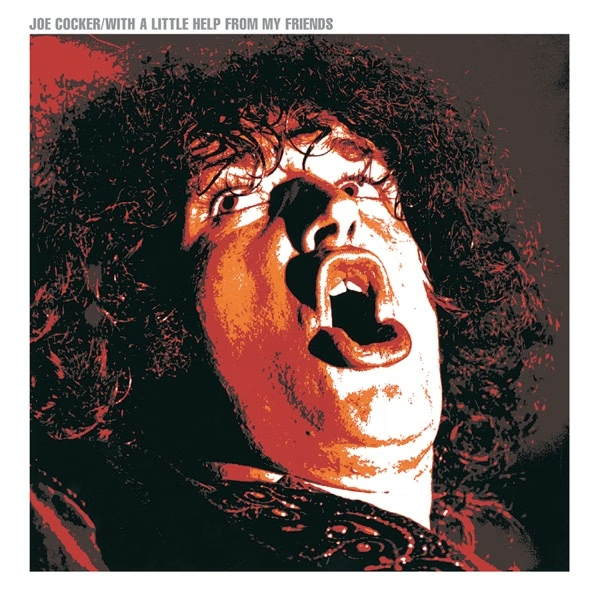
In 1968, Joe Cocker recorded a cover of the Beatles' "With a Little Help from My Friends" at the suggestion of his producer Denny Cordell. He took the sunny singalong and transformed it into something desperate and holy — a slow-burning, brass-laden plea that built to a cathartic howl. The arrangement was borrowed from Booker T. Jones, but the feeling was all Cocker. His body convulsed, his arms flailed, his eyes squeezed shut like he was in physical struggle with the music. The single reached No. 1 in the UK and cracked the US Top 40. Then came Woodstock. At 3 a.m. in the rain, on a festival stage that had already seen more music than any three-day event had a right to, Cocker walked out and redefined himself forever. His performance of "With a Little Help from My Friends" — legs shaking, neck veins bulging, the whole band locked into a groove that felt like a revival meeting — became the defining image of the festival. Half a million people, exhausted and soaked, rose to meet him.
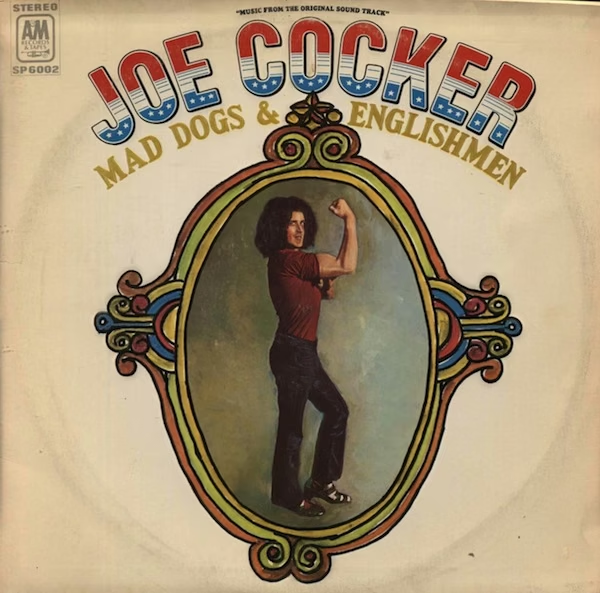
The Woodstock performance made him a star, but fame in the late 60s was a double-edged sword. Cocker was diagnosed with Bell's Palsy shortly after, which twisted half his face and made his stage contortions look even more dramatic. He leaned into the chaos. The 1970 "Mad Dogs & Englishmen" tour — a 48-show, 62-day American odyssey organized by Leon Russell — was a legendary circus of excess, featuring a revolving cast of 40 musicians and singers, including Rita Coolidge and a young Bobby Keys.
The tour was a triumph and a disaster: the live album went gold, but the grind nearly destroyed him. Cocker fell into heavy drinking and drug use, and the years that followed were a blur of lost momentum, tax troubles, and commercial decline. He moved to America, settled in Colorado, and fought his way back to sobriety through the 1970s and early 80s, a period when the hits stopped coming and the industry forgot what to do with a voice that couldn't be polished.
Cocker's comeback was a slow, steady climb. In 1982, he duetted with Jennifer Warnes on "Up Where We Belong" for the film An Officer and a Gentleman, winning a Grammy and an Academy Award for Best Original Song. The hit restored his visibility, and he followed it with a series of well-chosen covers that showcased his ability to make any song his own — "You Are So Beautiful" (a hushed, reverent reading of Billy Preston's song), "Unchain My Heart" (a raspy, horn-driven workout), and "When the Night Comes." He never stopped touring, and his live shows remained passionate and unpredictable. In 2007, he closed his final album, Hymn for My Soul, with a version of "Love Is Here to Stay" that sounded like a man making peace with his legend. He died of lung cancer on December 22, 2014, at the age of 70. The voice — gravelly, unsteady, impossibly soulful — had finally found its rest.