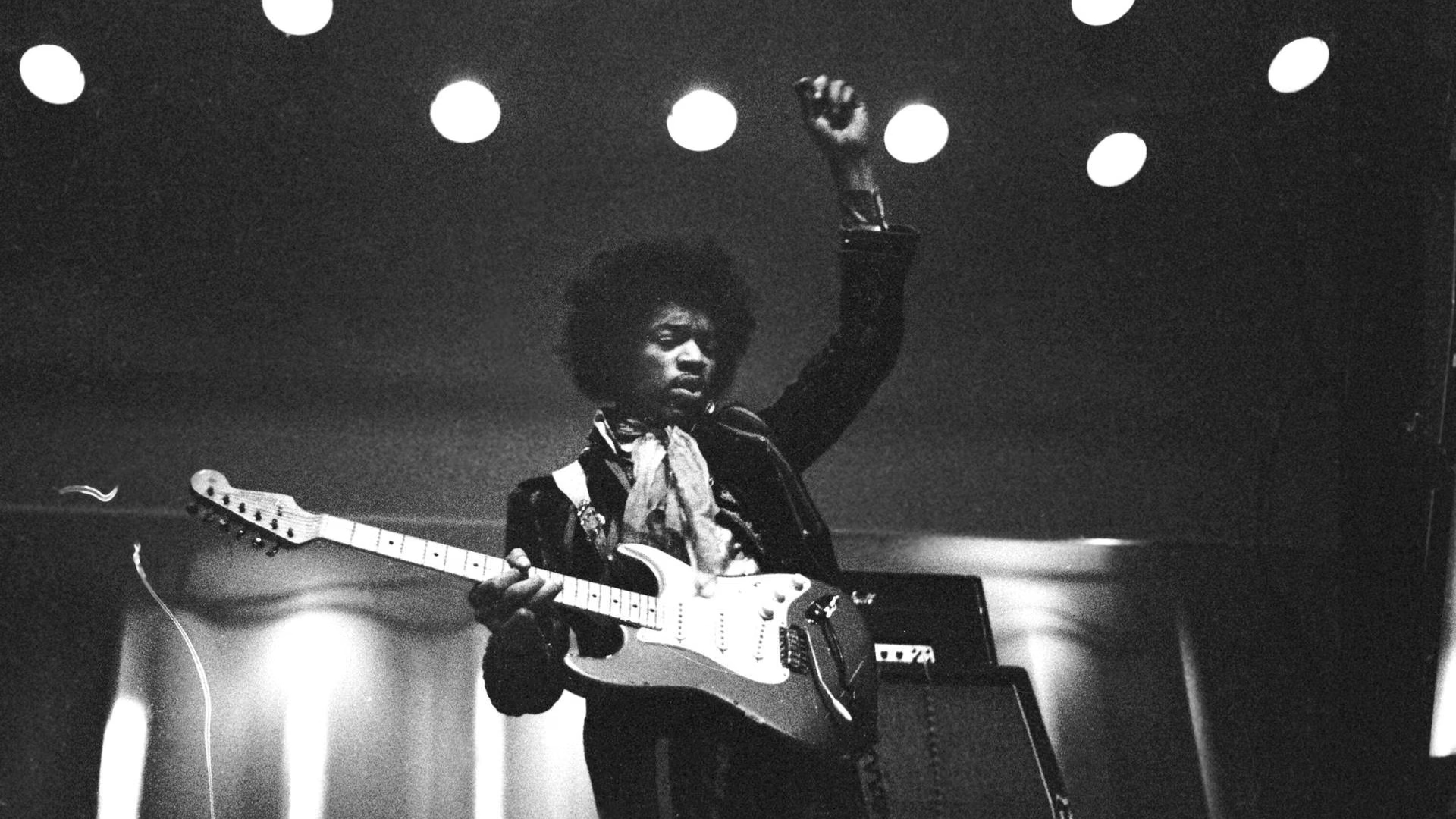
Jimi Hendrix

Before Jimi Hendrix, the electric guitar was an instrument you played. After him, it was something you became. James Marshall Hendrix from Seattle, Washington, learned to play by listening to B.B.

King, Muddy Waters, and Robert Johnson on his father's record player, holding the guitar upside down and backward because he was left-handed and couldn't afford a restrung instrument. He played it the wrong way and made it sound like the right way. The army discharged him after a year -- he kept falling asleep on guard duty. He played backup guitar for the Isley Brothers, Little Richard, and Sam Cooke as 'Jimmy James,' a hired hand whose solos made audiences ask who that was in the background.

The cost was England. Chas Chandler of the Animals found him playing at the Cafe Wha? in Greenwich Village in 1966 and brought him to London because nobody in America knew what to do with him. The Jimi Hendrix Experience was formed in a week: Mitch Mitchell on drums, Noel Redding on bass, and Jimi standing in front of a Marshall stack playing sounds that British guitarists had never imagined. Eric Clapton watched his first show and went home to reconsider his own playing. Pete Townshend watched and felt the ground shift. The British music press called him a gimmick because he played with his teeth and behind his back, but the gimmick was just the delivery system for something much stranger. The feedback, the wah-wah pedal, the whole-body approach to the instrument -- it was not showmanship. It was language.

Are You Experienced came out in 1967 and changed everything. Purple Haze, Foxy Lady, Manic Depression, The Wind Cries Mary -- songs that sounded like they were being invented in the moment, which they often were. Jimi recorded his vocals lying on the floor of the studio because he thought it sounded better. He stacked guitar tracks upon guitar tracks in an era when nobody stacked guitar tracks.
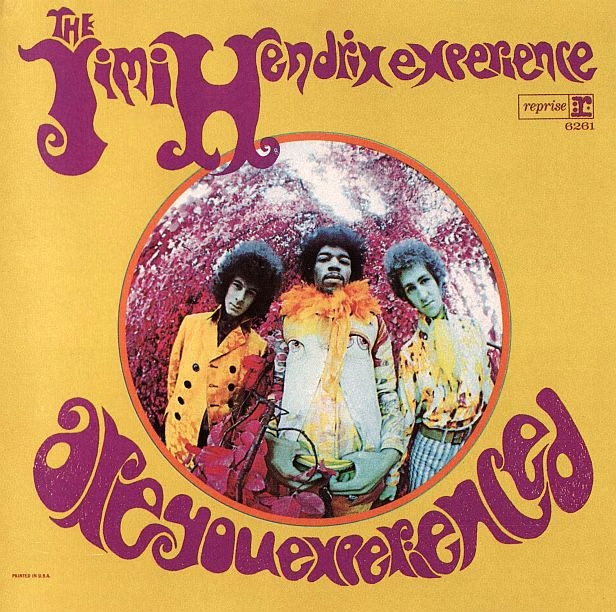
Are You Experienced (1967)

He made feedback musical, turned amp hum into melody, and wrote lyrics that read like Beat poetry filtered through a transistor radio. At Monterey Pop he set his guitar on fire. At Woodstock he played The Star-Spangled Banner as a howl of distortion that became the soundtrack to a generation trying to decide whether America was worth saving.

What Purple Haze did to the single note cannot be overstated. He introduced the world to the flat-five interval -- the 'tritone' that medieval church officials called 'the devil's interval' -- as an opening chord, turning dissonance into pop radio. He was the bridge between black blues and white rock, between the Delta and outer space, between the physical act of playing and the spiritual act of becoming. Every guitarist since has had to decide whether to follow where he went or pretend he never happened. He died in London at 27 from asphyxiation after taking sleeping pills and wine -- officially misadventure, symbolically the price of being too bright for this world. Four years, three studio albums, and a sound that still has no name.
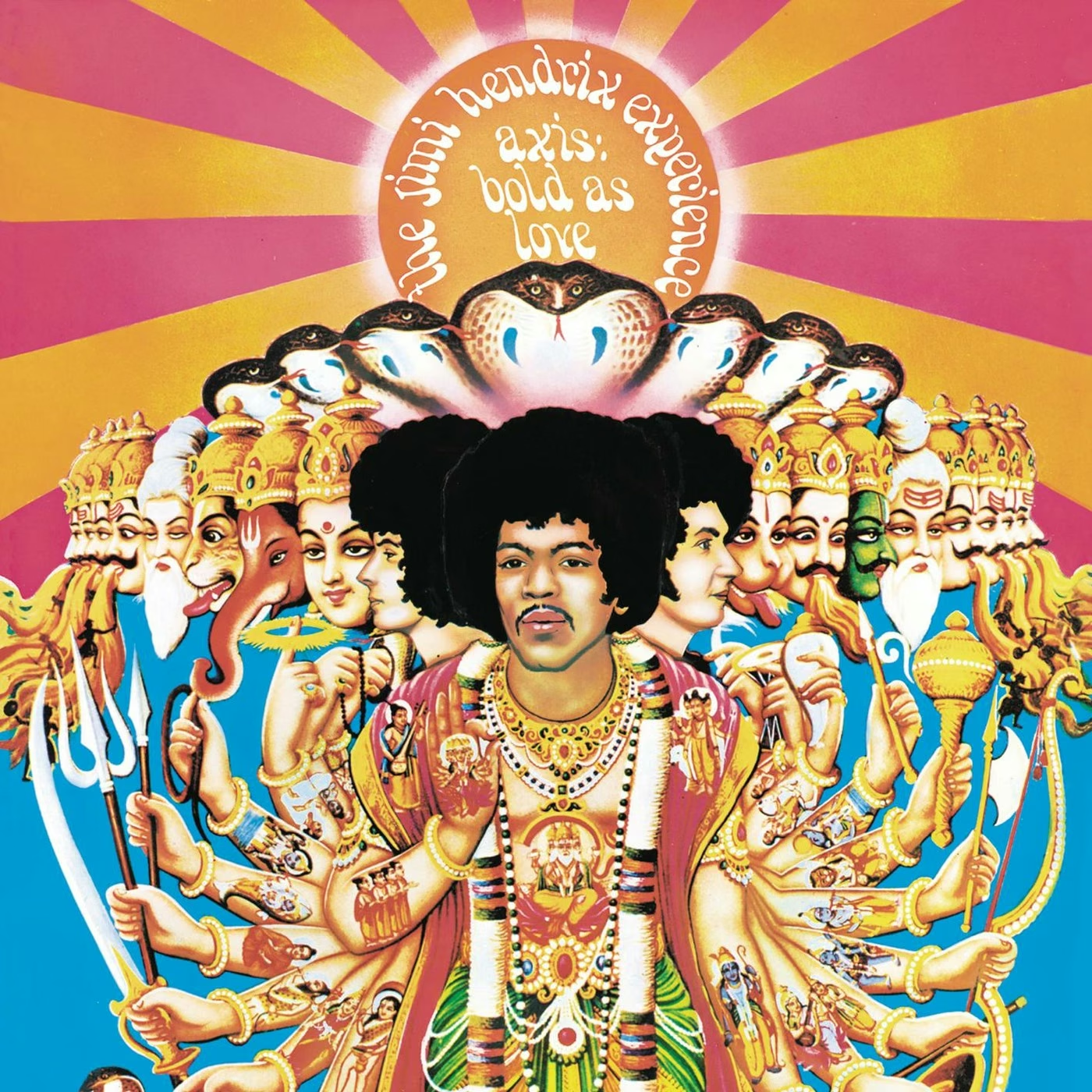
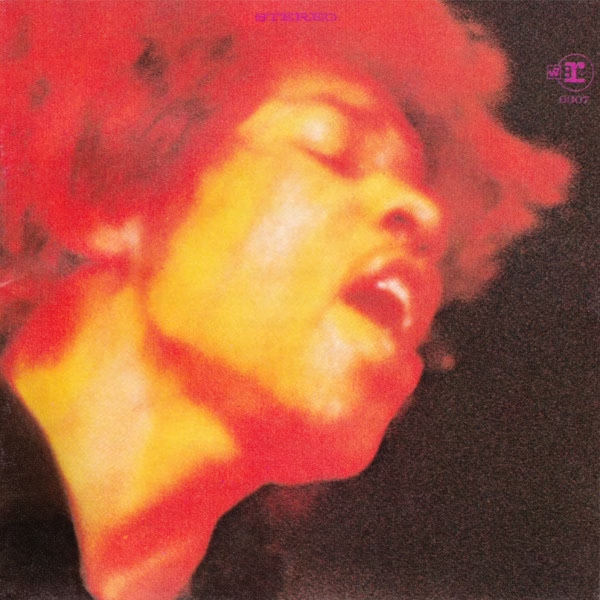
Image Credits

1,414 artist portraits across 5 genres (Rock, Jazz, Soul, Blues, Folk). 1,363 sourced from Wikipedia (Creative Commons / Public Domain), 50 from Deezer (promotional artwork).

Full attribution breakdown →

Jimi Hendrix

Before Jimi Hendrix, the electric guitar was an instrument you played. After him, it was something you became. James Marshall Hendrix from Seattle, Washington, learned to play by listening to B.B.

King, Muddy Waters, and Robert Johnson on his father's record player, holding the guitar upside down and backward because he was left-handed and couldn't afford a restrung instrument. He played it the wrong way and made it sound like the right way. The army discharged him after a year -- he kept falling asleep on guard duty. He played backup guitar for the Isley Brothers, Little Richard, and Sam Cooke as 'Jimmy James,' a hired hand whose solos made audiences ask who that was in the background.

The cost was England. Chas Chandler of the Animals found him playing at the Cafe Wha? in Greenwich Village in 1966 and brought him to London because nobody in America knew what to do with him. The Jimi Hendrix Experience was formed in a week: Mitch Mitchell on drums, Noel Redding on bass, and Jimi standing in front of a Marshall stack playing sounds that British guitarists had never imagined. Eric Clapton watched his first show and went home to reconsider his own playing. Pete Townshend watched and felt the ground shift. The British music press called him a gimmick because he played with his teeth and behind his back, but the gimmick was just the delivery system for something much stranger. The feedback, the wah-wah pedal, the whole-body approach to the instrument -- it was not showmanship. It was language.

Are You Experienced came out in 1967 and changed everything. Purple Haze, Foxy Lady, Manic Depression, The Wind Cries Mary -- songs that sounded like they were being invented in the moment, which they often were. Jimi recorded his vocals lying on the floor of the studio because he thought it sounded better. He stacked guitar tracks upon guitar tracks in an era when nobody stacked guitar tracks.

Are You Experienced (1967)

He made feedback musical, turned amp hum into melody, and wrote lyrics that read like Beat poetry filtered through a transistor radio. At Monterey Pop he set his guitar on fire. At Woodstock he played The Star-Spangled Banner as a howl of distortion that became the soundtrack to a generation trying to decide whether America was worth saving.

What Purple Haze did to the single note cannot be overstated. He introduced the world to the flat-five interval -- the 'tritone' that medieval church officials called 'the devil's interval' -- as an opening chord, turning dissonance into pop radio. He was the bridge between black blues and white rock, between the Delta and outer space, between the physical act of playing and the spiritual act of becoming. Every guitarist since has had to decide whether to follow where he went or pretend he never happened. He died in London at 27 from asphyxiation after taking sleeping pills and wine -- officially misadventure, symbolically the price of being too bright for this world. Four years, three studio albums, and a sound that still has no name.

Are You Experienced (1967) Are You Experienced (1967)
Axis: Bold as Love (1967) Axis: Bold as Love (1967)
Electric Ladyland (1968) Electric Ladyland (1968)
Are You Experienced (1967)
Axis: Bold as Love (1967)
Electric Ladyland (1968)
psychedelic rockblues rockhard rock
The Sunday Drop
One song. One story. Every Sunday.

No algorithms. No trending sections. Just a song someone loved and the story behind it. Delivered Sunday morning.

Free. No spam. Unsubscribe anytime.

Image Credits

1,414 artist portraits across 5 genres (Rock, Jazz, Soul, Blues, Folk). 1,363 sourced from Wikipedia (Creative Commons / Public Domain), 50 from Deezer (promotional artwork).

Full attribution breakdown →

0:00
0:00