Earth Wind & Fire
This profile includes Maurice White.
1969 –
The Elements Personified
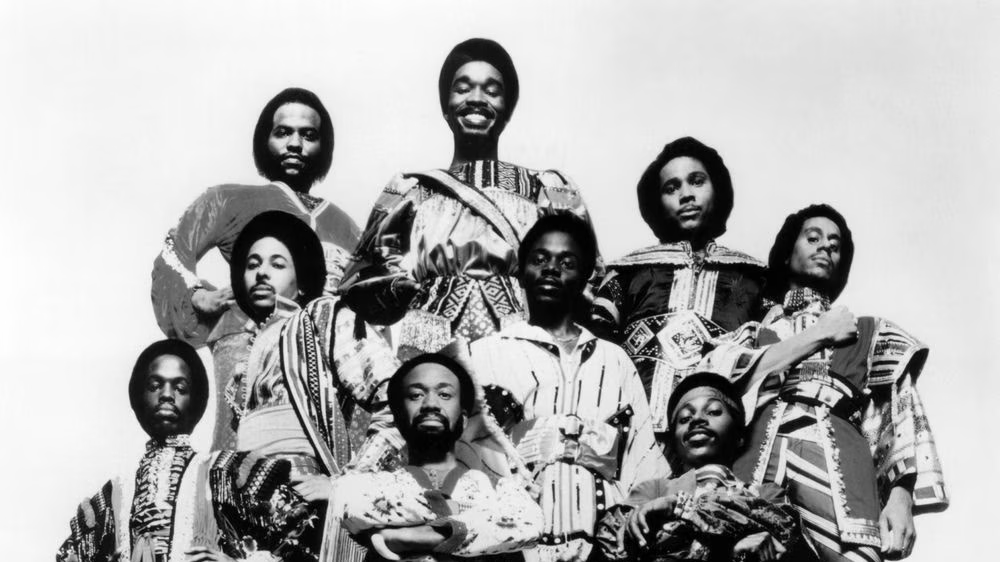
They came out of Chicago in 1969 with horns, a harp, and a cosmology that no other funk band had thought to bring. Earth Wind & Fire did not just make music for the dance floor. They made funk with a thesis, a spiritual argument you could move your body to. The band was the vision of Maurice White, a former Chess Records session drummer who had played behind Muddy Waters and Etta James before deciding that what Black music needed was not another singer but a tribe. He assembled a collective that included his brother Verdine on bass, Philip Bailey on percussion and falsetto, and a horn section that sounded like a sunrise arriving on schedule.

The cost of that vision was a revolving door that never stopped turning. Earth Wind & Fire was a big band in the literal sense -- at its peak, over a dozen musicians on stage, and the logistics of keeping that many people moving, recording, and sane was a full-time job that White never complained about publicly. His perfectionism was the stuff of studio legend. He demanded discipline from every member, and the ones who could not keep up were replaced without sentiment. The band's sound remained impossibly tight because White was ruthless about the pocket. The groove had to hit like a pulse. The harmonies had to lock like a door closing. The spiritual message had to land on a soul that was not necessarily looking for one.

Earth Wind & Fire interview 1990

That September in 1978, Earth Wind & Fire released the album that would define them. September was not just a single -- it was a feeling that has not faded. The opening riff, the horns that sweep in like a welcome, the call-and-response that made every listener feel like they were in the room. The song has become the most streamed funk track in history, a standard that every generation rediscovers on their own.
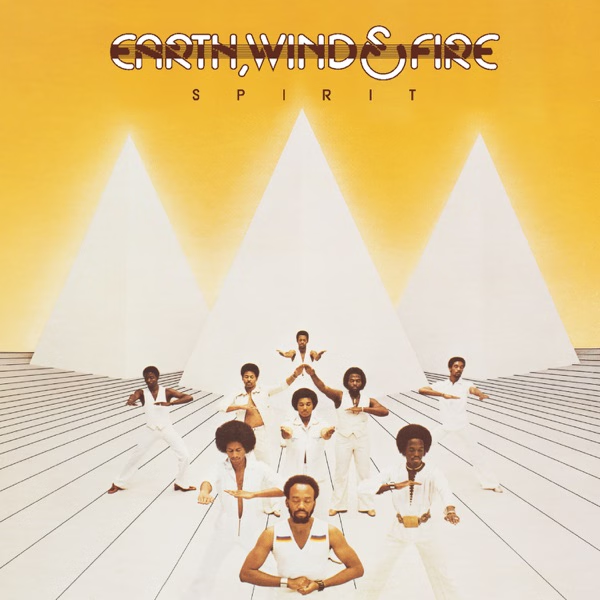
Spirit (1976)

Shining Star won a Grammy, Let's Groove turned the dance floor into a revival, and After the Love Has Gone proved that funk could break your heart as easily as it could move your feet. The peak years, 1974 to 1981, produced a catalog that no funk group since has matched in depth or reach.

Earth Wind & Fire did not just make records. They built a universe that listeners could live inside. The Egyptian imagery, the spiritual lyrics, the belief that the groove was a path to something higher -- Maurice White was not making pop records. He was making statements about what Black music could be when it refused to be small. The band has sold over ninety million albums, won six Grammys, and been inducted into the Rock and Roll Hall of Fame. But the real legacy is simpler. It is the moment in 1978 when a song called September came on the radio, and every person within earshot stopped what they were doing to nod their head. That is not a statistic. That is the cosmos in a groove.

Earth Wind & Fire were profiled in the documentary, Earth, Wind & Fire: Shedding Light, in 2022.
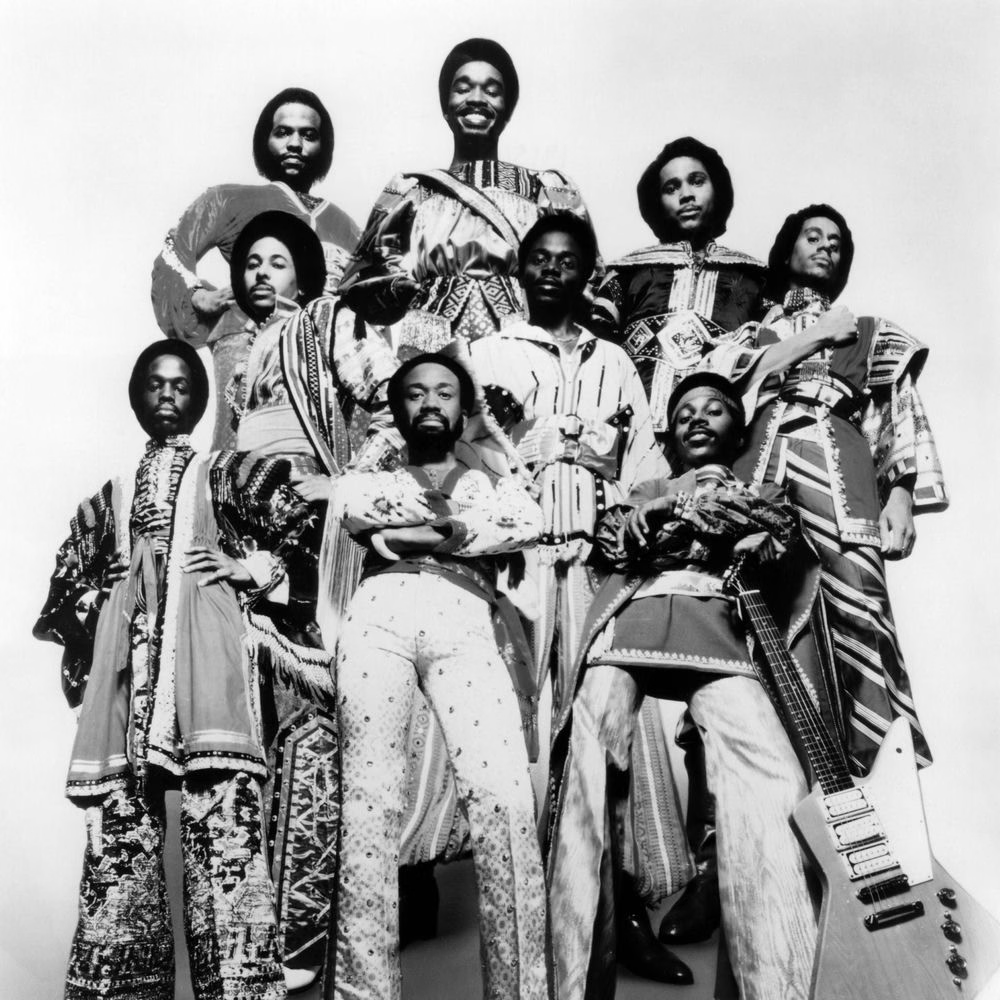
Image Credits

1,414 artist portraits across 5 genres (Rock, Jazz, Soul, Blues, Folk). 1,363 sourced from Wikipedia (Creative Commons / Public Domain), 50 from Deezer (promotional artwork).

Full attribution breakdown →

Earth Wind & Fire

This profile includes Maurice White.
1969 –
The Elements Personified
They came out of Chicago in 1969 with horns, a harp, and a cosmology that no other funk band had thought to bring. Earth Wind & Fire did not just make music for the dance floor. They made funk with a thesis, a spiritual argument you could move your body to. The band was the vision of Maurice White, a former Chess Records session drummer who had played behind Muddy Waters and Etta James before deciding that what Black music needed was not another singer but a tribe. He assembled a collective that included his brother Verdine on bass, Philip Bailey on percussion and falsetto, and a horn section that sounded like a sunrise arriving on schedule.

The cost of that vision was a revolving door that never stopped turning. Earth Wind & Fire was a big band in the literal sense -- at its peak, over a dozen musicians on stage, and the logistics of keeping that many people moving, recording, and sane was a full-time job that White never complained about publicly. His perfectionism was the stuff of studio legend. He demanded discipline from every member, and the ones who could not keep up were replaced without sentiment. The band's sound remained impossibly tight because White was ruthless about the pocket. The groove had to hit like a pulse. The harmonies had to lock like a door closing. The spiritual message had to land on a soul that was not necessarily looking for one.

Earth Wind & Fire interview 1990

That September in 1978, Earth Wind & Fire released the album that would define them. September was not just a single -- it was a feeling that has not faded. The opening riff, the horns that sweep in like a welcome, the call-and-response that made every listener feel like they were in the room. The song has become the most streamed funk track in history, a standard that every generation rediscovers on their own.

Spirit (1976)

Shining Star won a Grammy, Let's Groove turned the dance floor into a revival, and After the Love Has Gone proved that funk could break your heart as easily as it could move your feet. The peak years, 1974 to 1981, produced a catalog that no funk group since has matched in depth or reach.

Earth Wind & Fire did not just make records. They built a universe that listeners could live inside. The Egyptian imagery, the spiritual lyrics, the belief that the groove was a path to something higher -- Maurice White was not making pop records. He was making statements about what Black music could be when it refused to be small. The band has sold over ninety million albums, won six Grammys, and been inducted into the Rock and Roll Hall of Fame. But the real legacy is simpler. It is the moment in 1978 when a song called September came on the radio, and every person within earshot stopped what they were doing to nod their head. That is not a statistic. That is the cosmos in a groove.

Earth Wind & Fire were profiled in the documentary, Earth, Wind & Fire: Shedding Light, in 2022.
Spirit (1976) Spirit (1976)
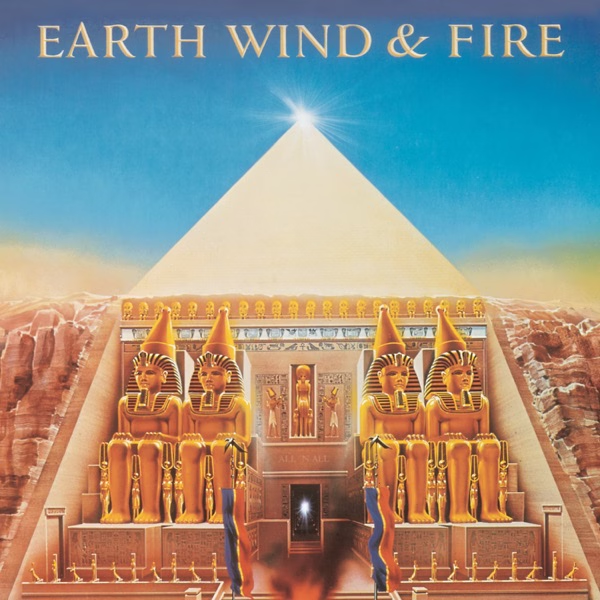
All And X27 N All (1977) All And X27 N All (1977)
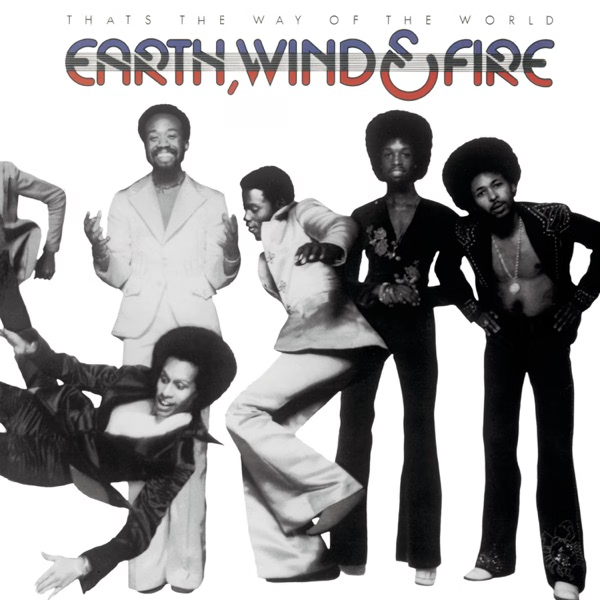
Thatand X27 S The Way Of The World (1975) Thatand X27 S The Way Of The World (1975)
Earth
Wind & Fire (1971)
The Need of Love (1971)
Last Days and Time (1972)
Head to the Sky (1973)
Open Our Eyes (1974)
Spirit (1976)
All ’n All (1977)
I Am (1979)
Faces (1980)
Raise! (1981)
Electric Universe (1983)
Powerlight (1983)
Touch the World (1987)
Heritage (1990)
Millennium (1993)
All And X27 N All (1977)
Thatand X27 S The Way Of The World (1975)
funksoulr&bjazz fusion
The Sunday Drop
One song. One story. Every Sunday.

No algorithms. No trending sections. Just a song someone loved and the story behind it. Delivered Sunday morning.

Free. No spam. Unsubscribe anytime.

Image Credits

1,414 artist portraits across 5 genres (Rock, Jazz, Soul, Blues, Folk). 1,363 sourced from Wikipedia (Creative Commons / Public Domain), 50 from Deezer (promotional artwork).

Full attribution breakdown →

0:00
0:00
The Sunday Drop One song. One story. Every Sunday.