De La Soul

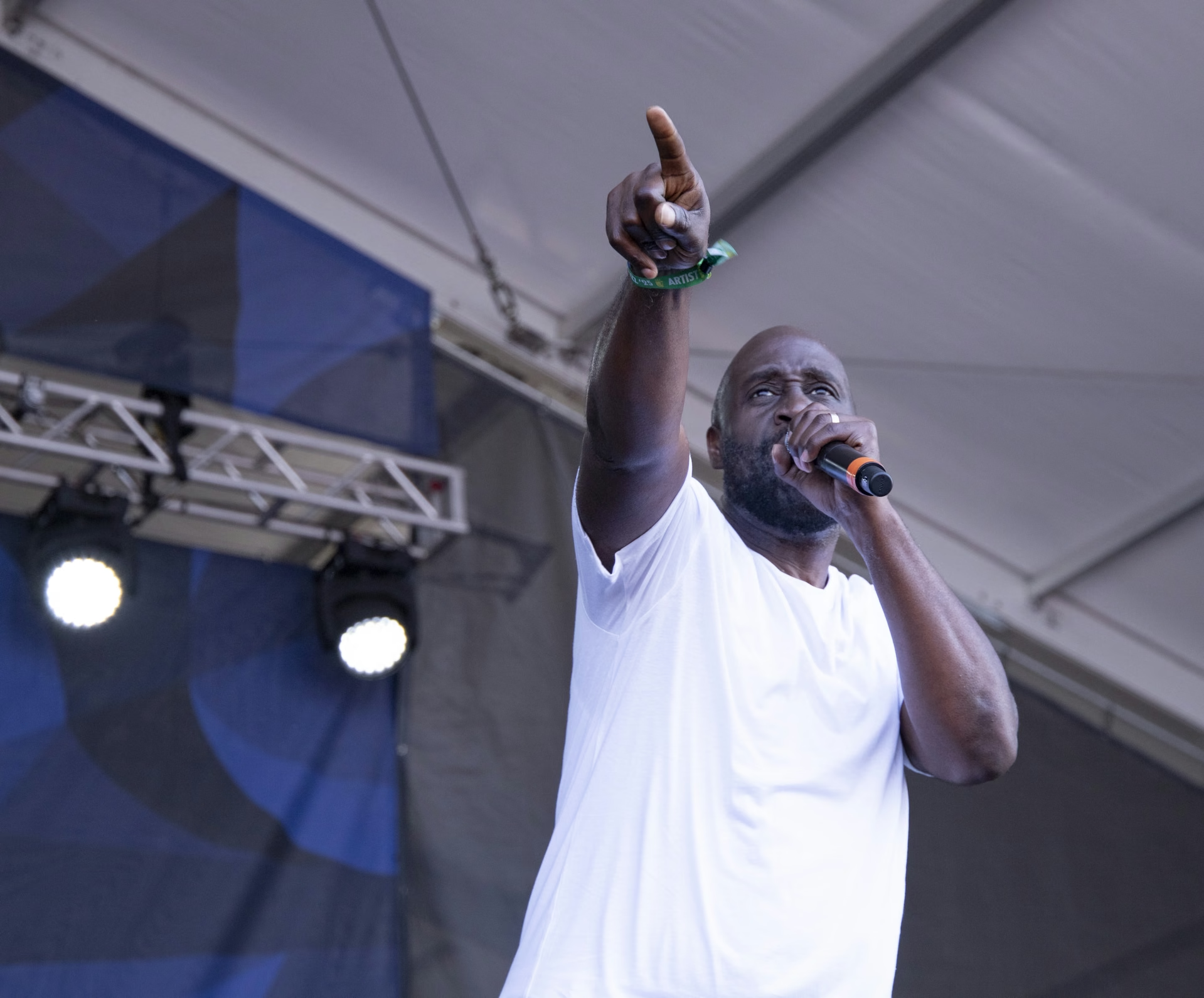
De La Soul emerged from Long Island, New York, in the late 1980s with a sound that fundamentally rewired what hip-hop could be. Posdnuos (Kelvin Mercer), Trugoy the Dove (David Jude Jolicoeur), and Maseo (Vincent Mason) met in high school in Amityville and formed a group that would become the most unclassifiable force in rap history. Their debut album, "3 Feet High and Rising" (1989), produced by Prince Paul, was unlike anything the genre had ever heard — a kaleidoscopic collage of psychedelic samples, schoolyard chants, surreal humor, and conscious lyrics that rejected the gangsta posturing dominating late-80s rap.

They called themselves the D.A.I.S.Y. Age (Da Inner Sound, Y'all) and built an entire aesthetic around peace, positivity, and creative weirdness.

The album was a commercial and critical phenomenon, selling over a million copies and spawning the hit singles "Me Myself and I," "The Magic Number," and "Buddy." But the success came with a cost. A lawsuit over an uncleared sample from The Turtles' "You Showed Me" (used in their single "Transmitting Live from Mars") set a legal precedent that changed how sampling worked in hip-hop forever. The resulting settlement and the chilling effect on sample-based production forced De La Soul to evolve, but they never lost their creative edge. Their follow-up, "De La Soul Is Dead" (1991), was a deliberately darker, more abrasive record that confounded fans expecting more D.A.I.S.Y. Age cheerfulness — a bold pivot that demonstrated their refusal to be pigeonholed.

The 1990s saw De La Soul continue their creative evolution with "Buhloone Mindstate" (1993), a jazz-infused album that featured contributions from Maceo Parker and the JB Horns, and "Stakes Is High" (1996), a grittier, more street-oriented record that reflected their frustration with the direction of mainstream hip-hop. Throughout their career, they maintained a fiercely independent artistic vision, collaborating with fellow Native Tongues affiliates like A Tribe Called Quest and Queen Latifah while carving their own distinctive path through the genre.

De La Soul's catalog suffered from a notorious digital distribution problem for decades — sample clearance issues kept much of their early work off streaming services until 2023, when they finally reached a deal with Tommy Boy Records. The long-overdue arrival of their classic albums on streaming platforms introduced a new generation to their groundbreaking music. Their legacy is immeasurable: they expanded hip-hop's sonic vocabulary, proved that rap could be playful, intellectual, and experimental without sacrificing authenticity, and remained true to their vision across four decades. In a genre that often rewards conformity, De La Soul chose weirdness, and the weirdness won.

Image Credits

1,414 artist portraits across 5 genres (Rock, Jazz, Soul, Blues, Folk). 1,363 sourced from Wikipedia (Creative Commons / Public Domain), 50 from Deezer (promotional artwork).

Full attribution breakdown →

De La Soul

De La Soul emerged from Long Island, New York, in the late 1980s with a sound that fundamentally rewired what hip-hop could be. Posdnuos (Kelvin Mercer), Trugoy the Dove (David Jude Jolicoeur), and Maseo (Vincent Mason) met in high school in Amityville and formed a group that would become the most unclassifiable force in rap history. Their debut album, "3 Feet High and Rising" (1989), produced by Prince Paul, was unlike anything the genre had ever heard — a kaleidoscopic collage of psychedelic samples, schoolyard chants, surreal humor, and conscious lyrics that rejected the gangsta posturing dominating late-80s rap.

They called themselves the D.A.I.S.Y. Age (Da Inner Sound, Y'all) and built an entire aesthetic around peace, positivity, and creative weirdness.

The album was a commercial and critical phenomenon, selling over a million copies and spawning the hit singles "Me Myself and I," "The Magic Number," and "Buddy." But the success came with a cost. A lawsuit over an uncleared sample from The Turtles' "You Showed Me" (used in their single "Transmitting Live from Mars") set a legal precedent that changed how sampling worked in hip-hop forever. The resulting settlement and the chilling effect on sample-based production forced De La Soul to evolve, but they never lost their creative edge. Their follow-up, "De La Soul Is Dead" (1991), was a deliberately darker, more abrasive record that confounded fans expecting more D.A.I.S.Y. Age cheerfulness — a bold pivot that demonstrated their refusal to be pigeonholed.

The 1990s saw De La Soul continue their creative evolution with "Buhloone Mindstate" (1993), a jazz-infused album that featured contributions from Maceo Parker and the JB Horns, and "Stakes Is High" (1996), a grittier, more street-oriented record that reflected their frustration with the direction of mainstream hip-hop. Throughout their career, they maintained a fiercely independent artistic vision, collaborating with fellow Native Tongues affiliates like A Tribe Called Quest and Queen Latifah while carving their own distinctive path through the genre.

De La Soul's catalog suffered from a notorious digital distribution problem for decades — sample clearance issues kept much of their early work off streaming services until 2023, when they finally reached a deal with Tommy Boy Records. The long-overdue arrival of their classic albums on streaming platforms introduced a new generation to their groundbreaking music. Their legacy is immeasurable: they expanded hip-hop's sonic vocabulary, proved that rap could be playful, intellectual, and experimental without sacrificing authenticity, and remained true to their vision across four decades. In a genre that often rewards conformity, De La Soul chose weirdness, and the weirdness won.

3 Feet High and Rising (1989) 3 Feet High and Rising (1989)
De La Soul Is Dead (1991) De La Soul Is Dead (1991)
Buhloone Mindstate (1993) Buhloone Mindstate (1993)
Stakes Is High (1996) Stakes Is High (1996)
3 Feet High and Rising (1989)
De La Soul Is Dead (1991)
Buhloone Mindstate (1993)
Stakes Is High (1996)
alternative hip-hopjazz rapconscious
The Sunday Drop
One song. One story. Every Sunday.

No algorithms. No trending sections. Just a song someone loved and the story behind it. Delivered Sunday morning.

Free. No spam. Unsubscribe anytime.

Image Credits

1,414 artist portraits across 5 genres (Rock, Jazz, Soul, Blues, Folk). 1,363 sourced from Wikipedia (Creative Commons / Public Domain), 50 from Deezer (promotional artwork).

Full attribution breakdown →

0:00
0:00