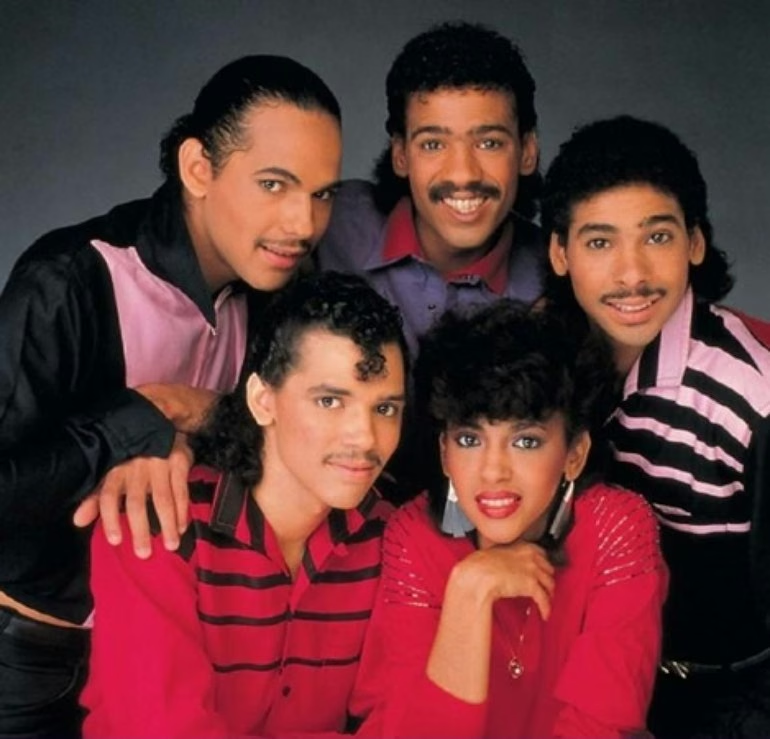
DeBarge

DeBarge emerged from Grand Rapids, Michigan in the late 1970s, a family act that would become one of Motown's most beloved groups of the 1980s. The seven DeBarge siblings -- led by the soaring falsetto of El DeBarge -- brought a blend of gospel-rooted harmonies, polished R&B, and pop sheen that made them immediate stars. Their breakthrough came with 1982's "All This Love," a slow-burning ballad that showcased the group's vocal chemistry and El's aching tenor.

It was the sound of a family singing together, and the world heard something real in it.

The group's commercial peak arrived in 1985 with "Rhythm of the Night," a shimmering, synthesizer-driven anthem that became a top-ten pop hit and a defining track of mid-80s R&B. The song's music video was everywhere on MTV, and the album of the same name went platinum. But even as the hits kept coming -- "Love Me in a Special Way," "I Like It," "Who's Holding Donna Now" -- tensions within the family and between the group and their label were mounting. The DeBarges had grown up in a strict Jehovah's Witness household, and the pressures of fame, industry politics, and personal struggles began to pull at the seams.

Behind the glossy production and pristine harmonies lay a family story marked by tragedy and turmoil. El DeBarge battled addiction for years, and siblings like Bobby and Tommy faced their own demons. The group disbanded in the late 80s, but their influence never faded. El launched a solo career that produced hits like "Who's Johnny" and "Love Always," and the group's catalog found new life through sampling -- most notably on Mary J.

All This Love (1982)

Blige, J. Cole, and countless hip-hop tracks built on their warm, melodic grooves.

DeBarge's legacy is one of bittersweet beauty: a family blessed with extraordinary musical gifts, fractured by the very industry that celebrated them, yet leaving behind a body of work that still sounds timeless. "Rhythm of the Night" remains a staple of 80s playlists, "All This Love" continues to be rediscovered by new generations, and the DeBarge name represents both the heights of Motown's second golden era and the human cost of achieving them.

Image Credits

1,414 artist portraits across 5 genres (Rock, Jazz, Soul, Blues, Folk). 1,363 sourced from Wikipedia (Creative Commons / Public Domain), 50 from Deezer (promotional artwork).

Full attribution breakdown →

DeBarge

DeBarge emerged from Grand Rapids, Michigan in the late 1970s, a family act that would become one of Motown's most beloved groups of the 1980s. The seven DeBarge siblings -- led by the soaring falsetto of El DeBarge -- brought a blend of gospel-rooted harmonies, polished R&B, and pop sheen that made them immediate stars. Their breakthrough came with 1982's "All This Love," a slow-burning ballad that showcased the group's vocal chemistry and El's aching tenor.

It was the sound of a family singing together, and the world heard something real in it.

The group's commercial peak arrived in 1985 with "Rhythm of the Night," a shimmering, synthesizer-driven anthem that became a top-ten pop hit and a defining track of mid-80s R&B. The song's music video was everywhere on MTV, and the album of the same name went platinum. But even as the hits kept coming -- "Love Me in a Special Way," "I Like It," "Who's Holding Donna Now" -- tensions within the family and between the group and their label were mounting. The DeBarges had grown up in a strict Jehovah's Witness household, and the pressures of fame, industry politics, and personal struggles began to pull at the seams.

Behind the glossy production and pristine harmonies lay a family story marked by tragedy and turmoil. El DeBarge battled addiction for years, and siblings like Bobby and Tommy faced their own demons. The group disbanded in the late 80s, but their influence never faded. El launched a solo career that produced hits like "Who's Johnny" and "Love Always," and the group's catalog found new life through sampling -- most notably on Mary J.

All This Love (1982)

Blige, J. Cole, and countless hip-hop tracks built on their warm, melodic grooves.

DeBarge's legacy is one of bittersweet beauty: a family blessed with extraordinary musical gifts, fractured by the very industry that celebrated them, yet leaving behind a body of work that still sounds timeless. "Rhythm of the Night" remains a staple of 80s playlists, "All This Love" continues to be rediscovered by new generations, and the DeBarge name represents both the heights of Motown's second golden era and the human cost of achieving them.

All This Love (1982) All This Love (1982)
In a Special Way (1983) In a Special Way (1983)
Rhythm of the Night (1985) Rhythm of the Night (1985)
All This Love (1982)
In a Special Way (1983)
Rhythm of the Night (1985)
soulfunkmotown
The Sunday Drop
One song. One story. Every Sunday.

No algorithms. No trending sections. Just a song someone loved and the story behind it. Delivered Sunday morning.

Free. No spam. Unsubscribe anytime.

Image Credits

1,414 artist portraits across 5 genres (Rock, Jazz, Soul, Blues, Folk). 1,363 sourced from Wikipedia (Creative Commons / Public Domain), 50 from Deezer (promotional artwork).

Full attribution breakdown →

0:00
0:00