Bobby McFerrin tracklist updated 07/2026
He walked onto the world stage in 1988 with a song that had no instruments on it -- just his voice, some vocal percussion, a whistled hook, and the phrase "Don't Worry, Be Happy" repeated until it became the most recognizable pop chorus of the decade. The song won Record of the Year and Song of the Year at the Grammys. It was played everywhere. It still is.
He was born in 1950 in New York City to a father who was the first Black male singer to perform at the Metropolitan Opera. Robert McFerrin Sr. sang in Aida and Porgy and Bess, becoming part of a lineage that was still being written, and he passed to his son a voice that could do things most voices cannot. But Bobby did not follow his father into opera. He studied piano, played in clubs as a lounge pianist, and did not begin singing professionally until his late twenties.
When he finally opened his mouth, the sound that came out was not the sound of a conservatory. It was the sound of a man who had spent years listening to how many different noises a human body could make and decided he wanted to make all of them at once.
The technique he developed had no formal name for years. He called them Circle Songs -- improvisational vocal pieces built in real time, where he would record a bassline with his voice, loop it, add a percussion track with his mouth, then sing a melody over the layers he had just created.
When he finally opened his mouth, the sound that came out was not the sound of a conservatory. It was the sound of a man who had spent years listening to how many different noises a human body could make and decided he wanted to make all of them at once.
The technique he developed had no formal name for years. He called them Circle Songs -- improvisational vocal pieces built in real time, where he would record a bassline with his voice, loop it, add a percussion track with his mouth, then sing a melody over the layers he had just created.
Onstage, he did this without loops or electronics. He simply sang the bassline, held it, sang the percussion over it, then the harmony, then the lead, switching between roles so fast that the ear could not separate them. The effect was not a singer performing songs. It was a singer building a band out of air, dismantling it, and building another, all within the same breath.
Ten Grammys, three categories -- most artists need three separate careers to pull that off. McFerrin did not change identities. He just kept making sounds that did not fit a single category and let the award shows sort out which box to put him in.
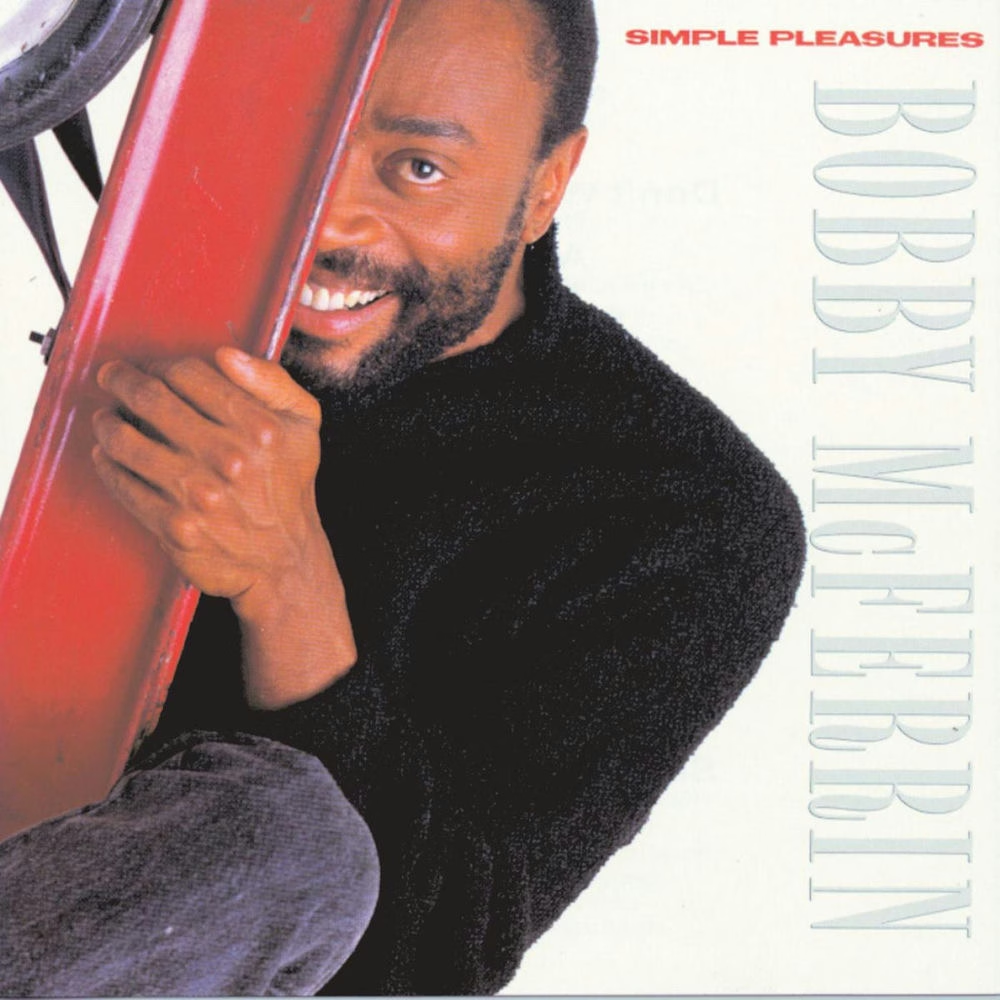
He conducted major orchestras including the St. Paul Chamber Orchestra with no formal conducting training, leading them through repertoire using gestures that were instinctive rather than academic. The orchestras followed because the conviction was unmistakable.
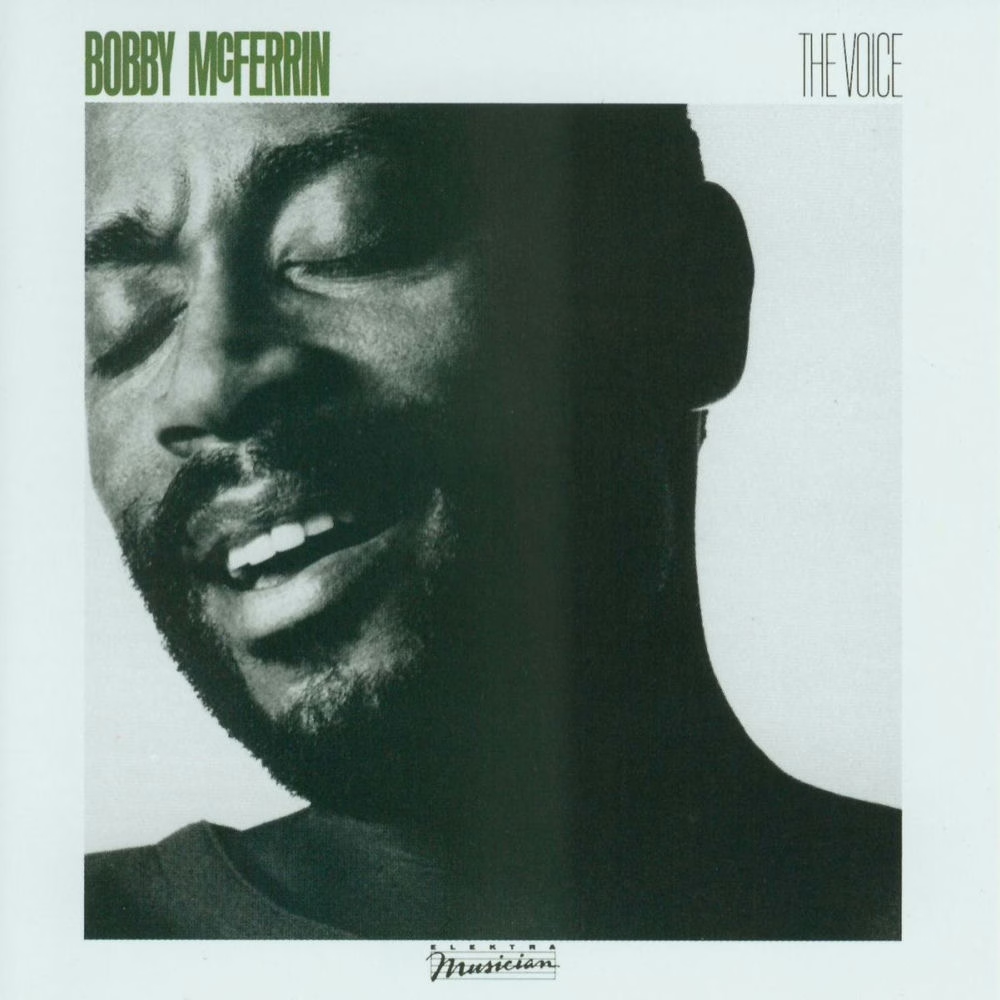
He collaborated with Chick Corea on the album Play, a duet record for piano and voice that won a Grammy for Best Jazz Vocal Performance. He collaborated with Yo-Yo Ma on pieces that blended classical cello with his vocal textures. He collaborated with Herbie Hancock, with the Yellowjackets, with symphony orchestras around the world. But his most powerful recordings were the ones where he was alone -- The Voice, a 1984 solo album that contained no instruments at all, just McFerrin singing, clicking, breathing, and proving that a single human voice was an orchestra waiting to be unlocked.
He is still alive, still performing, still conducting, still making Circle Songs in front of audiences who watch him loop his own voice with nothing but his memory and his lungs. The legacy is unusual because the instrument is unusual: a voice that does not belong to any genre, a technique that cannot be taught in a classroom, a career built on the proposition that the human body contains more music than most people ever access. McFerrin accessed it all. He just opened his mouth and let it out.
Sources: Hotsupper research, AllMusic, Biography.com, BlackPast.org, DownBeat archives, Grammy.com, Wikipedia ---