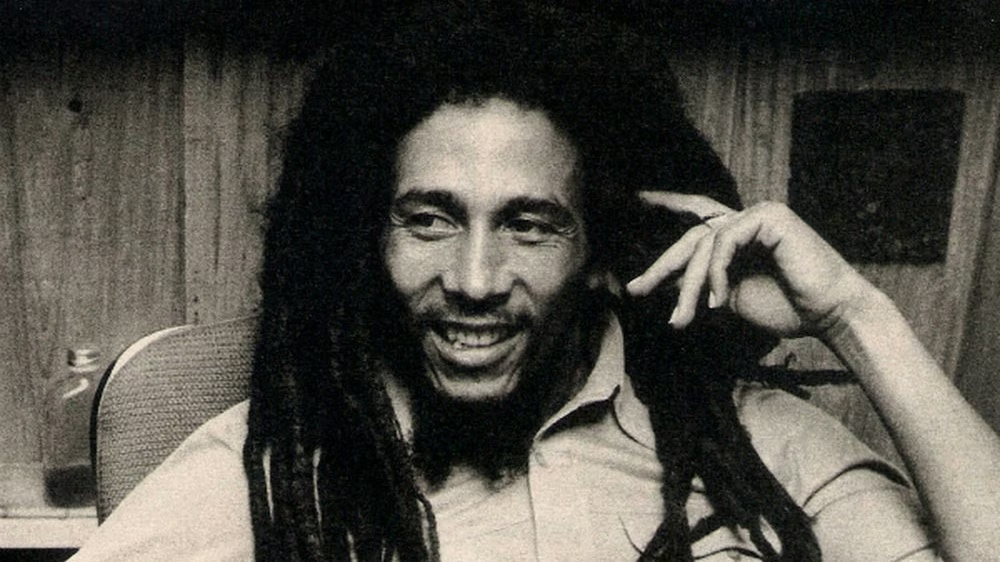
Bob Marley & The Wailers
1970 – 1981 (11)
He was a teenager from Nine Mile, a rural village in Jamaica, who walked into Kingston's recording studios in 1962 and found a sound that did not yet have a name. Skank. Rocksteady.
The offbeat guitar, the walking bass, the drum pattern that imitated a heartbeat. Bob Marley, Peter Tosh, and Bunny Wailer had been singing together since school, and by the late 1960s they had absorbed American R&B, Jamaican mento, and the militant energy of the Rastafari movement, then distilled it into something the island had never heard. The Wailers did not create reggae -- the rhythm was already forming in Kingston's sound systems. What they did was give reggae a face, a theology, and a global address.

"One love, one heart
Let's get together and feel all right"

-- from One Love / People Get Ready

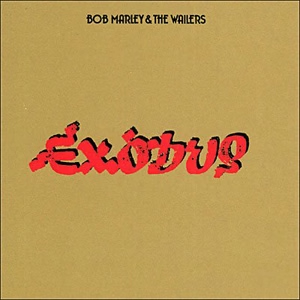
The cost of that address was exacting. Marley survived an assassination attempt in 1976 when gunmen stormed his Kingston home, wounding him and his wife Rita. He performed at the Smile Jamaica concert two days later, telling the crowd, "The people who are trying to make this world worse are not taking a day off. How can I?" He went into exile in London and recorded Exodus (1977), an album that blended the political fury of "Get Up, Stand Up" with the devotional surrender of "Three Little Birds." The cancer that would kill him was discovered in 1977, in a toe that had been injured playing soccer. He refused amputation on religious grounds. He kept touring, kept recording, kept believing that the music could outrun the prognosis.

What the Wailers achieved with Catch a Fire (1973) and Burnin' (1973) was the sound of a small island colonizing the world's imagination. The rhythm section of Aston "Family Man" Barrett on bass and his brother Carlton on drums created a pocket so deep that every subsequent reggae record has had to find its way within it. The I-Threes -- Rita Marley, Marcia Griffiths, and Judy Mowatt -- added harmonies that lifted the songs into something close to prayer. "No Woman, No Cry" became a global standard not because of its sorrow but because of its warmth, the way the voice refuses to let the memory fade. "Redemption Song," recorded solo with only an acoustic guitar, proved that Marley could strip away every instrument and still hold a room. The message of Rastafari -- repatriation, resistance, the divinity of Haile Selassie -- reached ears that would never have heard it otherwise, carried by melodies that refused to sound like politics.

He was thirty-six when he died, and the body of work he left behind has not aged a decade. The Wailers continue to tour under the name of the band, but the sound they make is the sound of a man who knew he did not have long and decided that every track needed to be worth leaving behind. "One Love" is played at weddings, funerals, peace rallies, and sporting events. It has become the most universal secular hymn in popular music, and no one remembers a time before it existed. Marley did not just bring reggae to the world. He brought Jamaica itself, in all its complication and beauty, and dared the world to keep up.

Bob Marley & The Wailers were profiled in the documentary, Marley, in 2012.
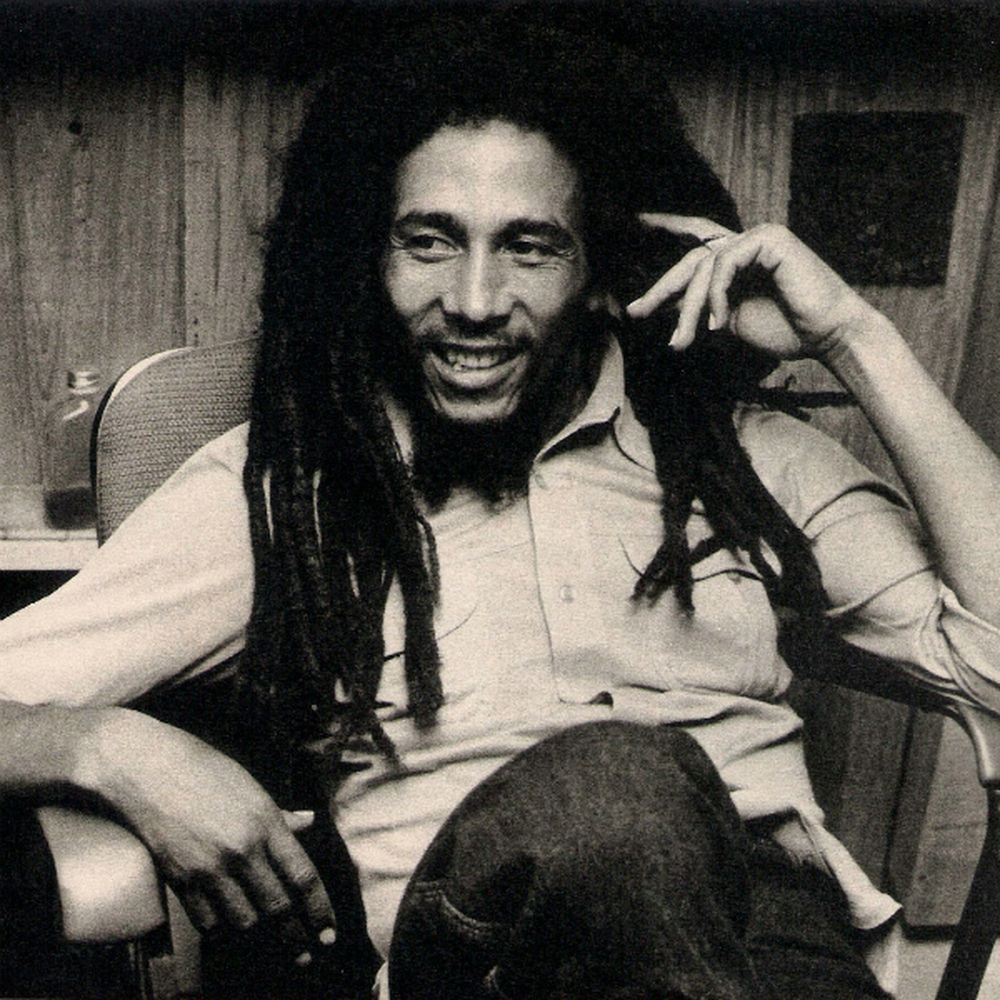
Image Credits

1,414 artist portraits across 5 genres (Rock, Jazz, Soul, Blues, Folk). 1,363 sourced from Wikipedia (Creative Commons / Public Domain), 50 from Deezer (promotional artwork).

Full attribution breakdown →

Bob Marley & The Wailers

1970 – 1981 (11)
He was a teenager from Nine Mile, a rural village in Jamaica, who walked into Kingston's recording studios in 1962 and found a sound that did not yet have a name. Skank. Rocksteady.
The offbeat guitar, the walking bass, the drum pattern that imitated a heartbeat. Bob Marley, Peter Tosh, and Bunny Wailer had been singing together since school, and by the late 1960s they had absorbed American R&B, Jamaican mento, and the militant energy of the Rastafari movement, then distilled it into something the island had never heard. The Wailers did not create reggae -- the rhythm was already forming in Kingston's sound systems. What they did was give reggae a face, a theology, and a global address.

"One love, one heart
Let's get together and feel all right"

-- from One Love / People Get Ready

The cost of that address was exacting. Marley survived an assassination attempt in 1976 when gunmen stormed his Kingston home, wounding him and his wife Rita. He performed at the Smile Jamaica concert two days later, telling the crowd, "The people who are trying to make this world worse are not taking a day off. How can I?" He went into exile in London and recorded Exodus (1977), an album that blended the political fury of "Get Up, Stand Up" with the devotional surrender of "Three Little Birds." The cancer that would kill him was discovered in 1977, in a toe that had been injured playing soccer. He refused amputation on religious grounds. He kept touring, kept recording, kept believing that the music could outrun the prognosis.

What the Wailers achieved with Catch a Fire (1973) and Burnin' (1973) was the sound of a small island colonizing the world's imagination. The rhythm section of Aston "Family Man" Barrett on bass and his brother Carlton on drums created a pocket so deep that every subsequent reggae record has had to find its way within it. The I-Threes -- Rita Marley, Marcia Griffiths, and Judy Mowatt -- added harmonies that lifted the songs into something close to prayer. "No Woman, No Cry" became a global standard not because of its sorrow but because of its warmth, the way the voice refuses to let the memory fade. "Redemption Song," recorded solo with only an acoustic guitar, proved that Marley could strip away every instrument and still hold a room. The message of Rastafari -- repatriation, resistance, the divinity of Haile Selassie -- reached ears that would never have heard it otherwise, carried by melodies that refused to sound like politics.

He was thirty-six when he died, and the body of work he left behind has not aged a decade. The Wailers continue to tour under the name of the band, but the sound they make is the sound of a man who knew he did not have long and decided that every track needed to be worth leaving behind. "One Love" is played at weddings, funerals, peace rallies, and sporting events. It has become the most universal secular hymn in popular music, and no one remembers a time before it existed. Marley did not just bring reggae to the world. He brought Jamaica itself, in all its complication and beauty, and dared the world to keep up.

Bob Marley & The Wailers were profiled in the documentary, Marley, in 2012.
Exodus (Deluxe Edition) (2022) Exodus (Deluxe Edition) (2022)
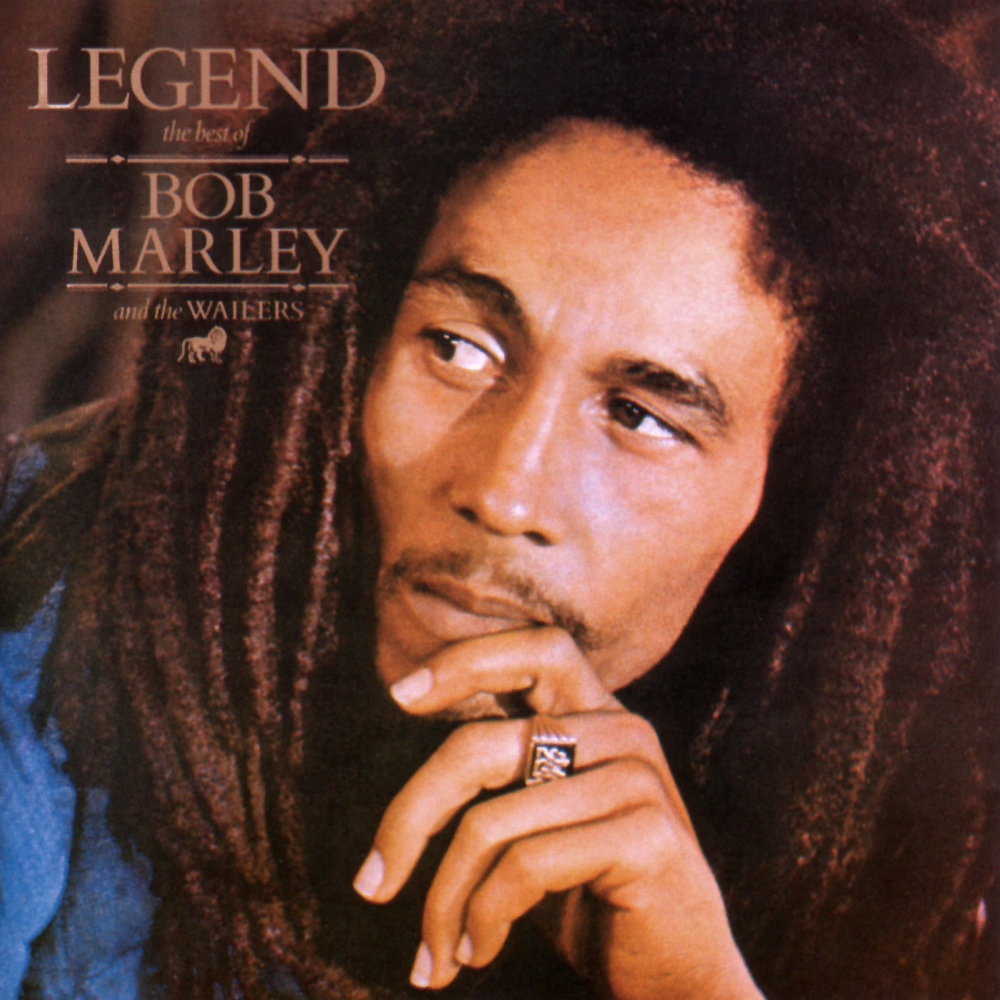
Legend - The Best Of Bob Marley And The Wailers (2002) Legend - The Best Of Bob Marley And The Wailers (2002)
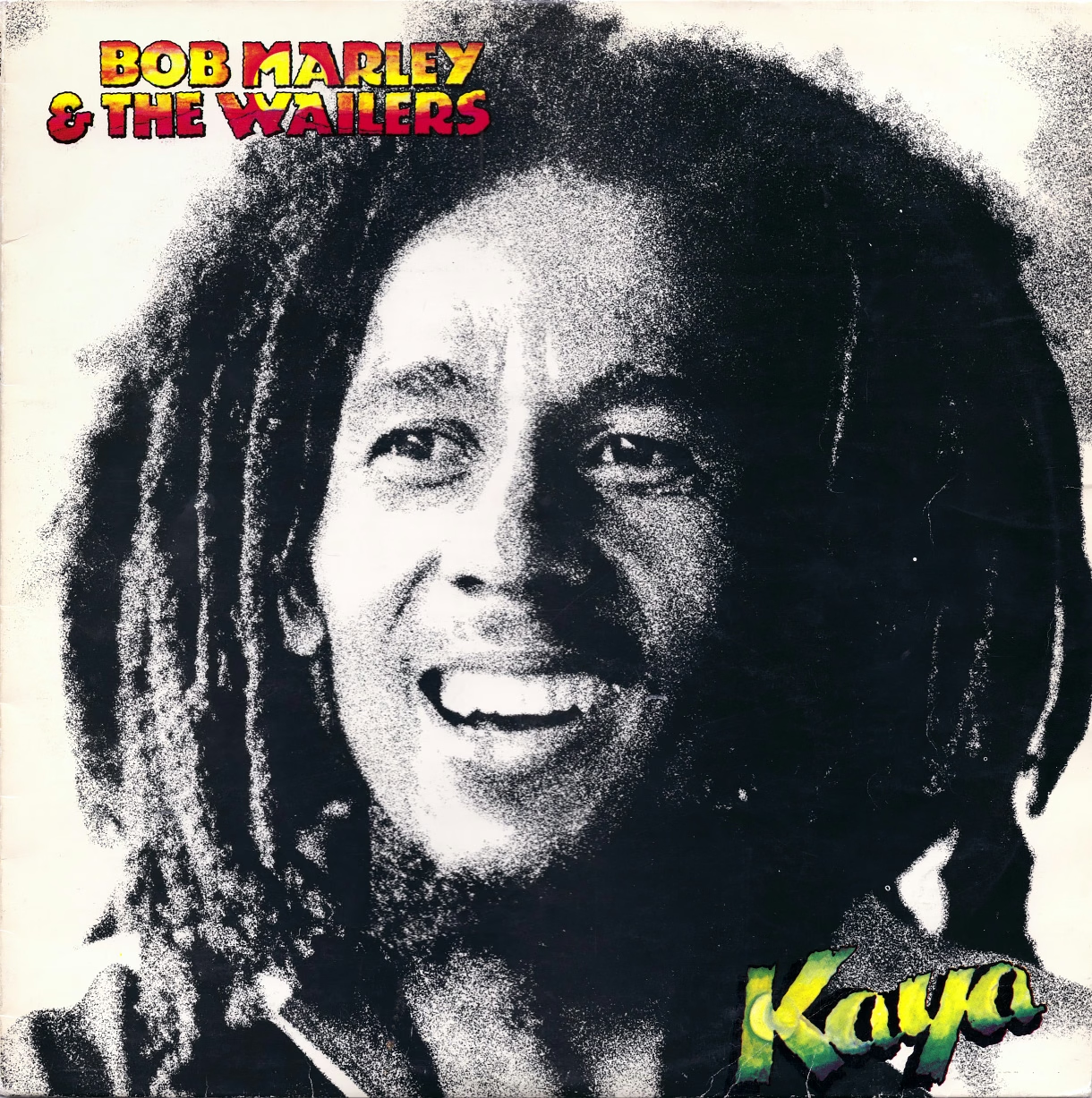
Kaya (2001) Kaya (2001)
One Love (Original Motion Picture Soundtrack) (2024)
Africa Unite (2023)
Bob Marley with the Chineke! Orchestra (2022)
Exodus (Deluxe Edition) (2022)
Live At The Rainbow, 3rd June 1977 (2022)
Live At The Rainbow, 2nd June 1977 (2022)
Live At The Rainbow, 1st June 1977 (2022)
The Capitol Session '73 (Live) (2021)
Bob Marley Legacy: Punky Reggae Party (2020)
Bob Marley Legacy: Freedom Fighter (2020)
I Know A Place: The Remixes (Pt. 1) (2020)
I Know A Place: The Remixes (Pt. 2) (2020)
Live At The Rainbow, 4th June 1977 (Remastered 2020) (2020)
Easy Skanking In Boston '78 (2015)
Legend Remixed (2013)
Marley (The Original Soundtrack) (2012)
Live Forever: The Stanley Theatre, Pittsburgh, PA, 9/23/1980 (2011)
In Dub Vol. 1 (2010)
B Is For Bob (2009)
Collections (2007)
Gold (2005)
Live At The Roxy - The Complete Concert (2003)
Chant Down Babylon (1999)
Dreams Of Freedom (Ambient Translations Of Bob Marley In Dub) (1997)
Natural Mystic (2014)
Why Should I/Exodus (2020)
Songs Of Freedom Rarities (2020)
Talkin' Blues (2002)
Rebel Music (2002)
Legend - The Best Of Bob Marley And The Wailers (2002)
Legend (Deluxe Edition) (2020)
Confrontation (2001)
Uprising (2001)
Survival (2001)
Kaya (2001)
Kaya - Deluxe Edition (2013)
Kaya (40th Anniversary Edition) (2018)
Babylon By Bus (1978)
Exodus 30th Anniversary Edition (2007)
Exodus 40 (2018)
Exodus (2022)
Rastaman Vibration (2001)
Rastaman Vibration (2002)
Live! (Deluxe Edition) (2016)
Live! (2001)
Natty Dread (2001)
Burnin' (2001)
Catch A Fire (2001)
Catch A Fire (50th Anniversary) (2023)
Bob Marley Legacy: Rhythm of the Game (2020)
ambient dubreggaeroots reggaesoulsplit or merge to “the wailers” (keeping ac)
The Sunday Drop
One song. One story. Every Sunday.

No algorithms. No trending sections. Just a song someone loved and the story behind it. Delivered Sunday morning.

Free. No spam. Unsubscribe anytime.

Image Credits

1,414 artist portraits across 5 genres (Rock, Jazz, Soul, Blues, Folk). 1,363 sourced from Wikipedia (Creative Commons / Public Domain), 50 from Deezer (promotional artwork).

Full attribution breakdown →

0:00
0:00
The Sunday Drop One song. One story. Every Sunday.