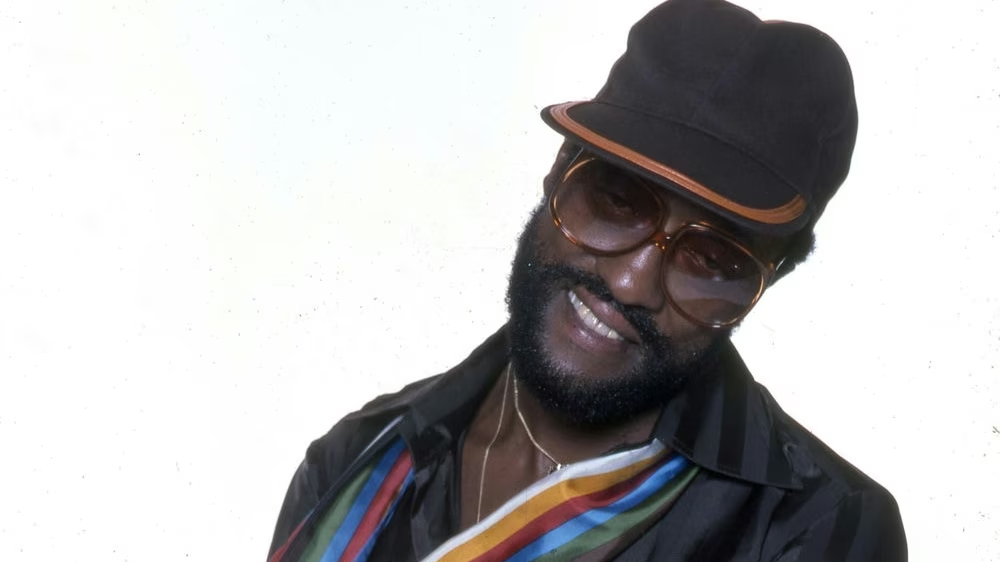
Billy Paul
1934 – 2016 (82)

He walked into Sigma Sound Studios in Philadelphia in 1972 and recorded a song about infidelity that was so beautiful radio did not know whether to ban it or put it on heavy rotation. Billy Paul was born Paul Williams in Philadelphia in 1934, grew up in the church singing gospel, and trained as a jazz vocalist before he ever approached R&B as a genre. He studied at the Philadelphia School of Music, developed a voice that could glide from baritone to falsetto without breaking, and was discovered by Kenny Gamble and Leon Huff, the architects of the Philadelphia soul sound that defined the early 1970s.

Being too sophisticated for commercial radio was a strange kind of curse. Billy Paul was not a typical soul singer of his era. His influences were Nat King Cole and Miles Davis, not the shouters and screamers that dominated Black radio at the time. Me and Mrs. Jones spent three weeks at number one on the Billboard Hot 100 and won a Grammy for Best Male R&B Vocal Performance, but the follow-up singles did not match its commercial success. The label wanted another cheating anthem to follow the success, but Paul refused to repeat himself artistically and risk becoming a one-note curiosity. He recorded political songs like Am I Black Enough for You and East, which radio programmers largely ignored but which showed a depth that the hits did not hint at.

Me and Mrs. Jones is the one. The song is built around a delicate piano figure that sets the tone for a confession rather than a boast. Paul's vocal is restrained, almost conspiratorial, as though he is telling the listener a secret he cannot share with anyone else.
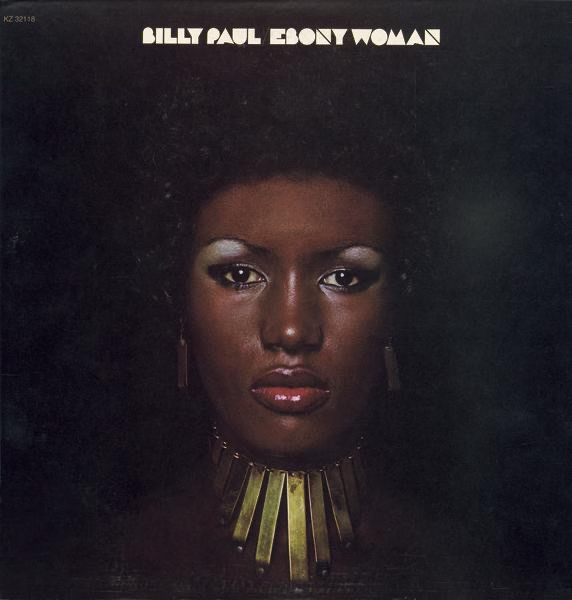
Ebony Woman (1970)

The strings swell behind him, the bass walks slowly beneath the arrangement, and the whole track creates an atmosphere of quiet guilt and undeniable tenderness. It is the most elegant song about an affair ever recorded. He continued recording through the 1970s and 1980s, building a catalog that never replicated the commercial peak but never compromised the artistic standard. Billy Paul proved that soul music could be subtle and sophisticated, could whisper instead of shout, and could still reach number one.
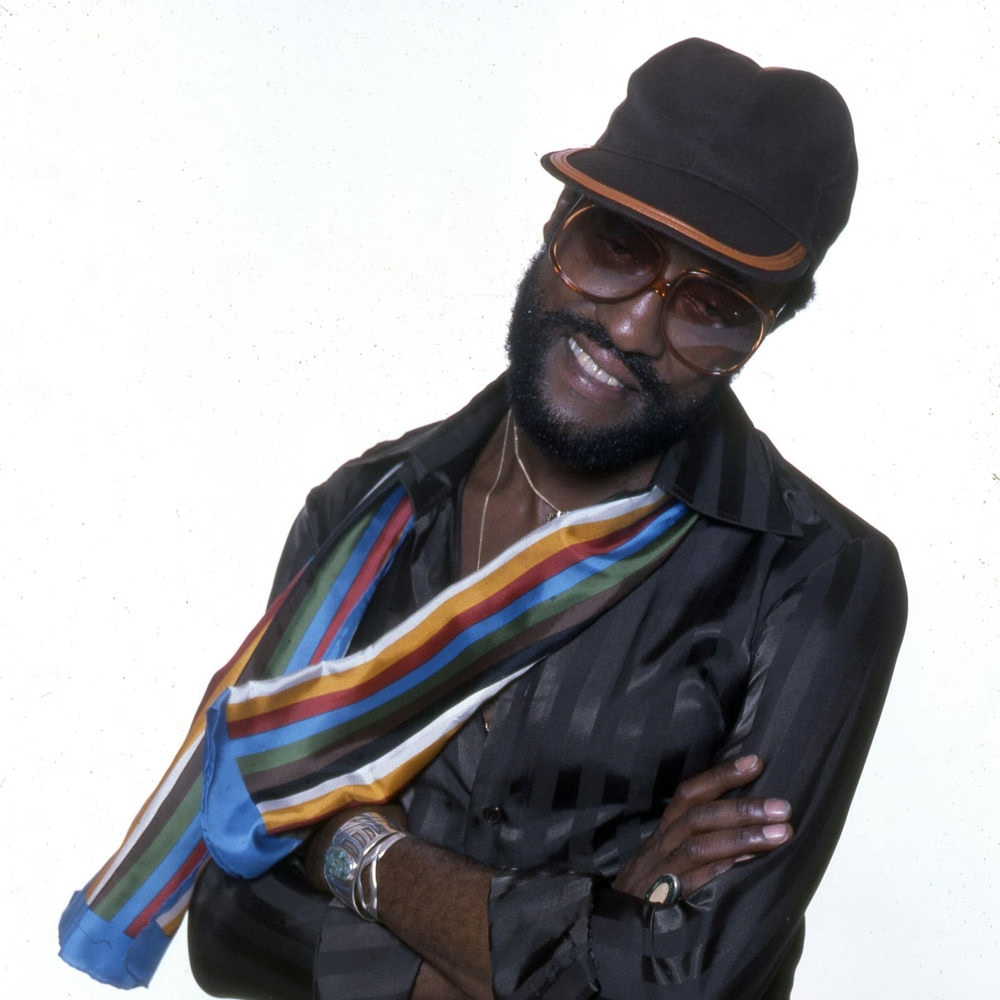
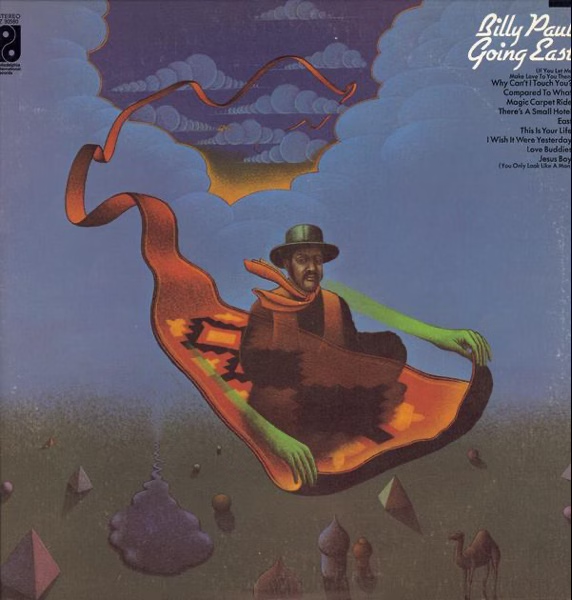
Image Credits

1,414 artist portraits across 5 genres (Rock, Jazz, Soul, Blues, Folk). 1,363 sourced from Wikipedia (Creative Commons / Public Domain), 50 from Deezer (promotional artwork).

Full attribution breakdown →

Billy Paul

1934 – 2016 (82)

He walked into Sigma Sound Studios in Philadelphia in 1972 and recorded a song about infidelity that was so beautiful radio did not know whether to ban it or put it on heavy rotation. Billy Paul was born Paul Williams in Philadelphia in 1934, grew up in the church singing gospel, and trained as a jazz vocalist before he ever approached R&B as a genre. He studied at the Philadelphia School of Music, developed a voice that could glide from baritone to falsetto without breaking, and was discovered by Kenny Gamble and Leon Huff, the architects of the Philadelphia soul sound that defined the early 1970s.

Being too sophisticated for commercial radio was a strange kind of curse. Billy Paul was not a typical soul singer of his era. His influences were Nat King Cole and Miles Davis, not the shouters and screamers that dominated Black radio at the time. Me and Mrs. Jones spent three weeks at number one on the Billboard Hot 100 and won a Grammy for Best Male R&B Vocal Performance, but the follow-up singles did not match its commercial success. The label wanted another cheating anthem to follow the success, but Paul refused to repeat himself artistically and risk becoming a one-note curiosity. He recorded political songs like Am I Black Enough for You and East, which radio programmers largely ignored but which showed a depth that the hits did not hint at.

Me and Mrs. Jones is the one. The song is built around a delicate piano figure that sets the tone for a confession rather than a boast. Paul's vocal is restrained, almost conspiratorial, as though he is telling the listener a secret he cannot share with anyone else.

Ebony Woman (1970)

The strings swell behind him, the bass walks slowly beneath the arrangement, and the whole track creates an atmosphere of quiet guilt and undeniable tenderness. It is the most elegant song about an affair ever recorded. He continued recording through the 1970s and 1980s, building a catalog that never replicated the commercial peak but never compromised the artistic standard. Billy Paul proved that soul music could be subtle and sophisticated, could whisper instead of shout, and could still reach number one.
Ebony Woman (1970) Ebony Woman (1970)
Going East (1971) Going East (1971)
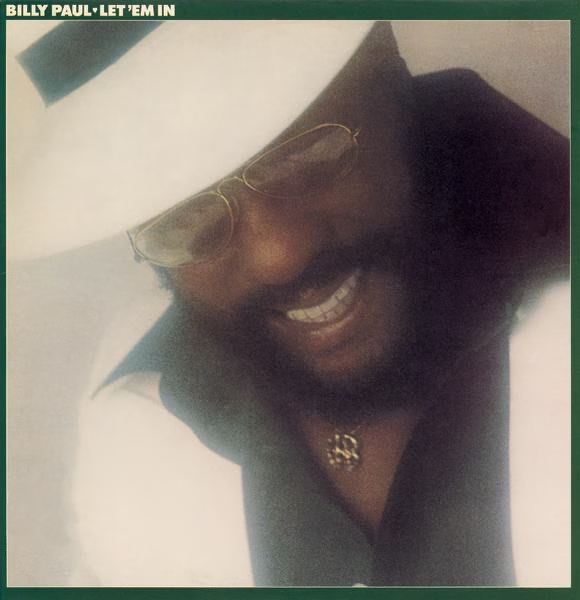
Let 'em In (1976) Let 'em In (1976)
Feelin' Good at the Cadillac Club (1968)
Ebony Woman (1970)
Going East (1971)
360 Degrees of Billy Paul (1972)
War of the Gods (1973)
Got My Head On Straight (1975)
When Love Is New (1975)
Let 'em In (1976)
Only The Strong Survive (1977)
First Class (1979)
Lately (1985)
Wide Open (1988)
soulr&bphilly soul
The Sunday Drop
One song. One story. Every Sunday.

No algorithms. No trending sections. Just a song someone loved and the story behind it. Delivered Sunday morning.

Free. No spam. Unsubscribe anytime.

Image Credits

1,414 artist portraits across 5 genres (Rock, Jazz, Soul, Blues, Folk). 1,363 sourced from Wikipedia (Creative Commons / Public Domain), 50 from Deezer (promotional artwork).

Full attribution breakdown →

0:00
0:00
The Sunday Drop One song. One story. Every Sunday.