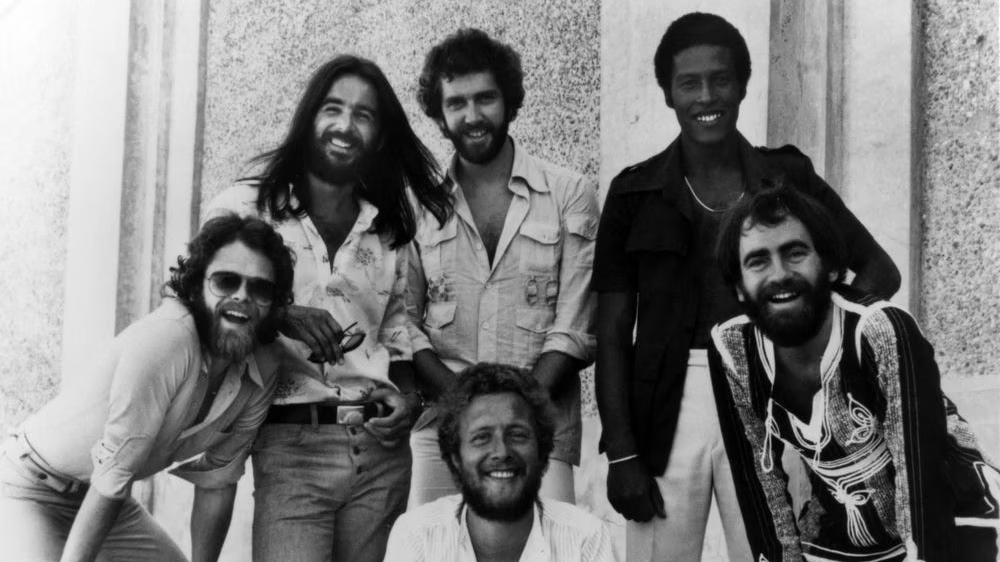
Average White Band
1971 –
They walked into the American music scene in the early 1970s with a sound so deep and funky that nobody believed they were from Scotland when they first heard the records. Average White Band formed in Dundee, Scotland in 1971, a group of Scottish musicians who had grown up listening to James Brown, Booker T. & the M.G.'s, and Stax Records from across the Atlantic Ocean.
Alan Gorrie and Onnie McIntyre met in a local band, recruited Roger Ball and Molly Duncan on saxophones, and created a rhythm section that could lock into a pocket tighter than most American bands. They moved to London, got signed to Atlantic Records, and set out to prove that funk was not limited by geography or nationality.

The band's greatest success arrived alongside its greatest tragedy. Robbie McIntosh died of a heroin overdose at a Los Angeles party in 1974, just days after the album AWB had been released to massive acclaim. The band was devastated and came close to breaking up. McIntosh had been the engine of the rhythm section, and his loss could have ended the group entirely. They regrouped with Steve Ferrone on drums, released Cut the Cake the following year, and managed to keep the sound intact despite the personal loss. The tragedy gave their success a bittersweet edge that never fully faded.

Pick Up the Pieces is the one. Released in 1974, the instrumental went to number one on the Billboard Hot 100 and became one of the most recognizable funk tracks of the decade and beyond. The groove is built around a horn riff that locks into a pocket so deep it sounds effortless, and the rhythm section's precision made the track a favorite for every funk DJ and hip-hop sampler who followed in the years after. The album AWB sold over two million copies and established the band as one of the most successful white funk acts in history.
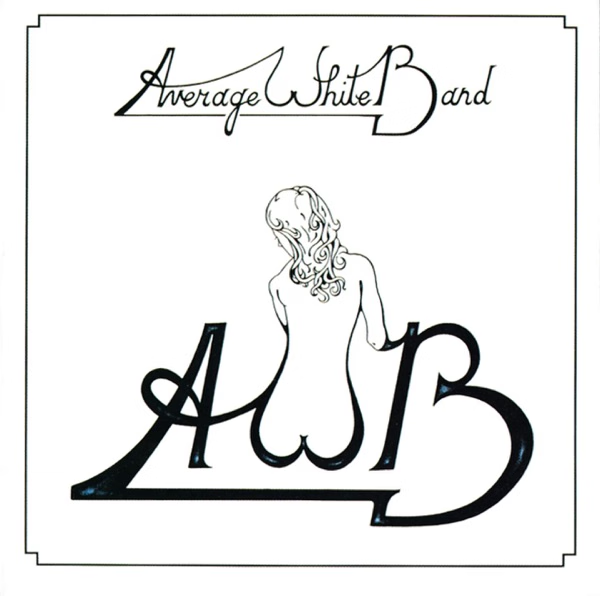
AWB (1974)

They influenced everyone from the Roots to the Brand New Heavies to Daft Punk. Their Scottish origin eventually became a point of pride rather than a curiosity, and the band continued touring and recording for decades after their 1970s peak.
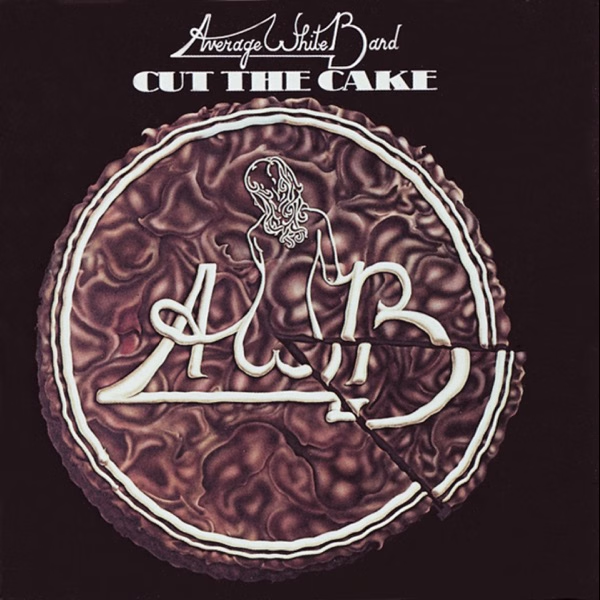
Image Credits

1,414 artist portraits across 5 genres (Rock, Jazz, Soul, Blues, Folk). 1,363 sourced from Wikipedia (Creative Commons / Public Domain), 50 from Deezer (promotional artwork).

Full attribution breakdown →

Average White Band

1971 –
They walked into the American music scene in the early 1970s with a sound so deep and funky that nobody believed they were from Scotland when they first heard the records. Average White Band formed in Dundee, Scotland in 1971, a group of Scottish musicians who had grown up listening to James Brown, Booker T. & the M.G.'s, and Stax Records from across the Atlantic Ocean.
Alan Gorrie and Onnie McIntyre met in a local band, recruited Roger Ball and Molly Duncan on saxophones, and created a rhythm section that could lock into a pocket tighter than most American bands. They moved to London, got signed to Atlantic Records, and set out to prove that funk was not limited by geography or nationality.

The band's greatest success arrived alongside its greatest tragedy. Robbie McIntosh died of a heroin overdose at a Los Angeles party in 1974, just days after the album AWB had been released to massive acclaim. The band was devastated and came close to breaking up. McIntosh had been the engine of the rhythm section, and his loss could have ended the group entirely. They regrouped with Steve Ferrone on drums, released Cut the Cake the following year, and managed to keep the sound intact despite the personal loss. The tragedy gave their success a bittersweet edge that never fully faded.

Pick Up the Pieces is the one. Released in 1974, the instrumental went to number one on the Billboard Hot 100 and became one of the most recognizable funk tracks of the decade and beyond. The groove is built around a horn riff that locks into a pocket so deep it sounds effortless, and the rhythm section's precision made the track a favorite for every funk DJ and hip-hop sampler who followed in the years after. The album AWB sold over two million copies and established the band as one of the most successful white funk acts in history.

AWB (1974)

They influenced everyone from the Roots to the Brand New Heavies to Daft Punk. Their Scottish origin eventually became a point of pride rather than a curiosity, and the band continued touring and recording for decades after their 1970s peak.
AWB (1974) AWB (1974)
Cut the Cake (1975) Cut the Cake (1975)
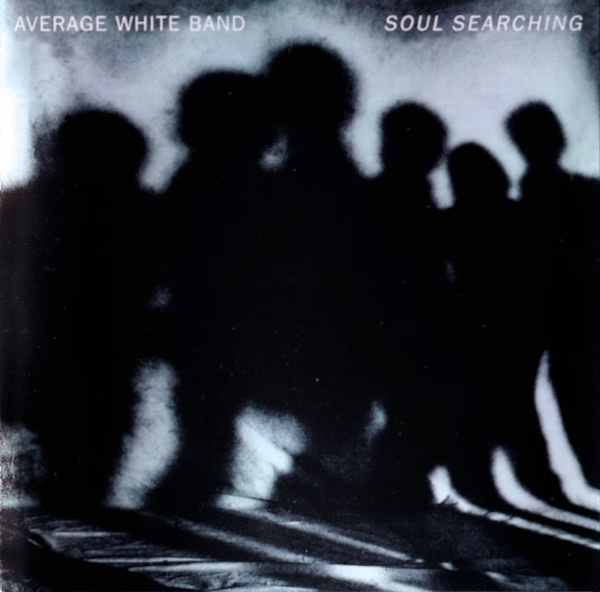
Soul Searching (1976) Soul Searching (1976)
Show Your Hand (1973)
How Sweet Can You Get? (1973)
AWB (1974)
Cut the Cake (1975)
Put It Where You Want It (1975)
Soul Searching (1976)
Benny and Us (1977)
Warmer Communications (1978)
Feel No Fret (1979)
Shine (1980)
Cupid’s in Fashion (1982)
Aftershock (1988)
Soul Tattoo (1996)
Living in Colour (2003)
AWB R&B (2016)
Inside Out (2017)
funksouljazz fusion
The Sunday Drop
One song. One story. Every Sunday.

No algorithms. No trending sections. Just a song someone loved and the story behind it. Delivered Sunday morning.

Free. No spam. Unsubscribe anytime.

Image Credits

1,414 artist portraits across 5 genres (Rock, Jazz, Soul, Blues, Folk). 1,363 sourced from Wikipedia (Creative Commons / Public Domain), 50 from Deezer (promotional artwork).

Full attribution breakdown →

0:00
0:00
The Sunday Drop One song. One story. Every Sunday.