Art Blakey did not play the drums like a timekeeper. He played them like a prosecuting attorney. His left hand was always moving, always shaping, always throwing accents where they were not expected, and the band followed because the alternative was being left behind.
He came up in Pittsburgh's Hill District in the 1930s, a neighborhood that produced more jazz musicians per square mile than most cities produced total, and he started on piano before switching to drums because somebody had to sit behind that kit and he discovered he could make more noise there than anywhere else. The noise became a philosophy.
He studied the aggressive swing of Chick Webb and Sid Catlett, but what he synthesized from them was not a technique -- it was an attitude. The drums were not the rhythm section. They were the argument. And every band he ever led would be organized around that argument.
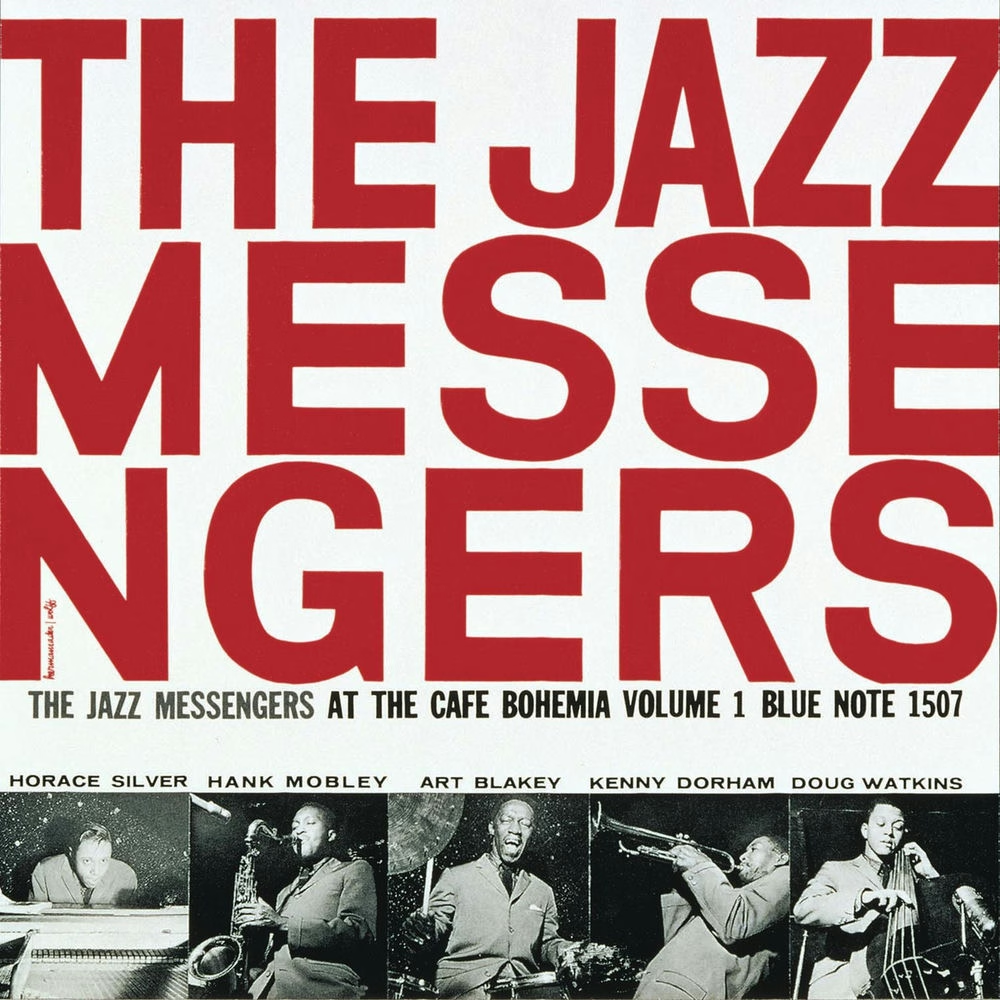
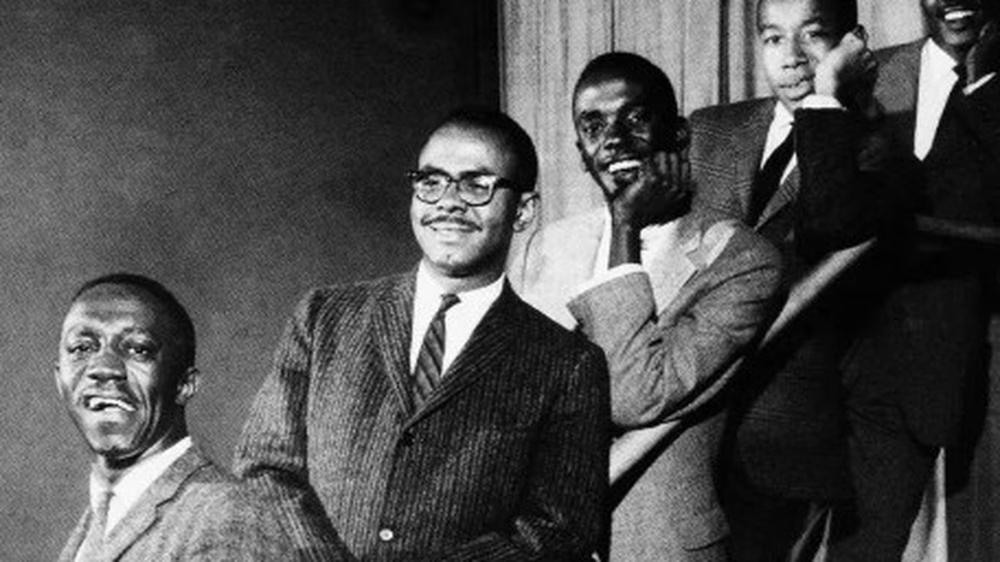
The argument had a name: hard bop. In the early 1950s, when cool jazz had turned cerebral and West Coast jazz had turned polite, Blakey and Horace Silver formed the Jazz Messengers as a response -- a band that brought the blues back into the music, that let the gospel harmonies ring, that swung with a physicality that intellectual jazz had abandoned.
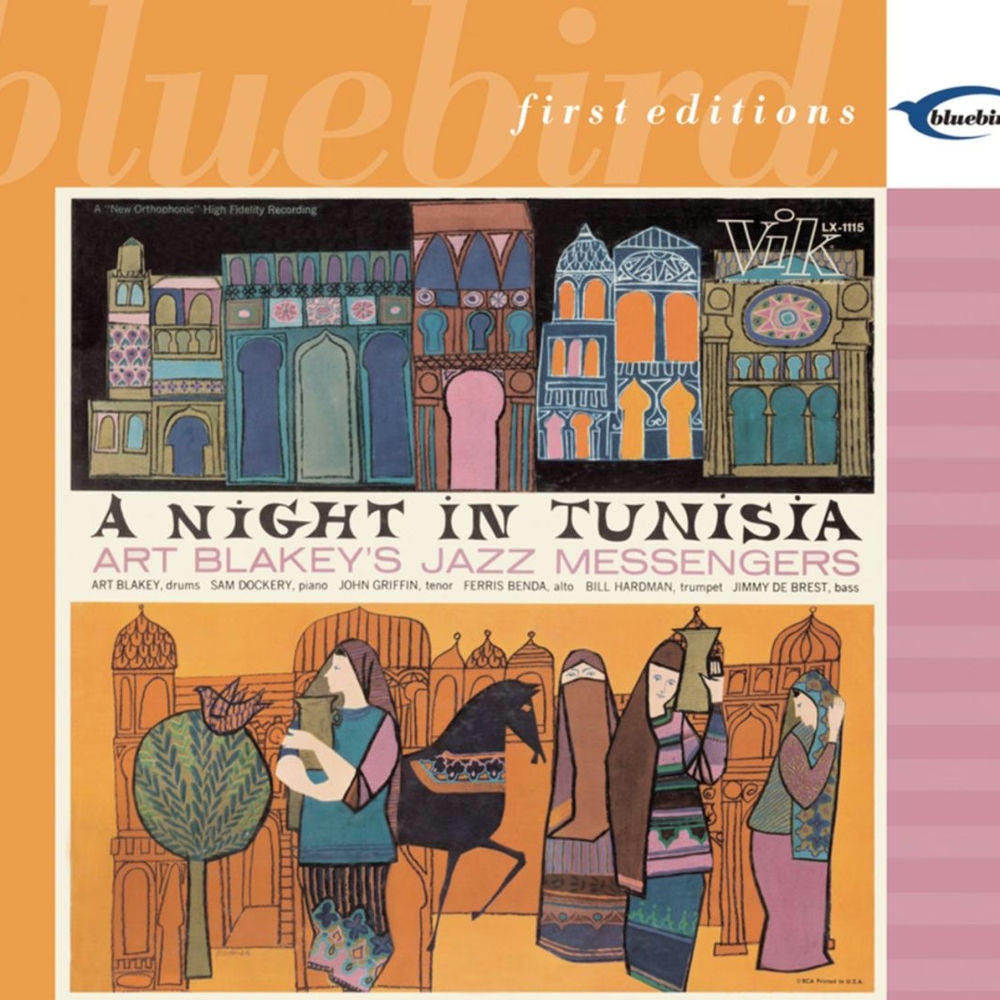
Silver left after a few years, but the name stayed, and Blakey carried it forward for the next thirty-five years. The Jazz Messengers became a rotating academy of young talent, a proving ground where the curriculum was simple: play hard, swing harder, and do not mistake complexity for depth. Wayne Shorter came through. Lee Morgan.
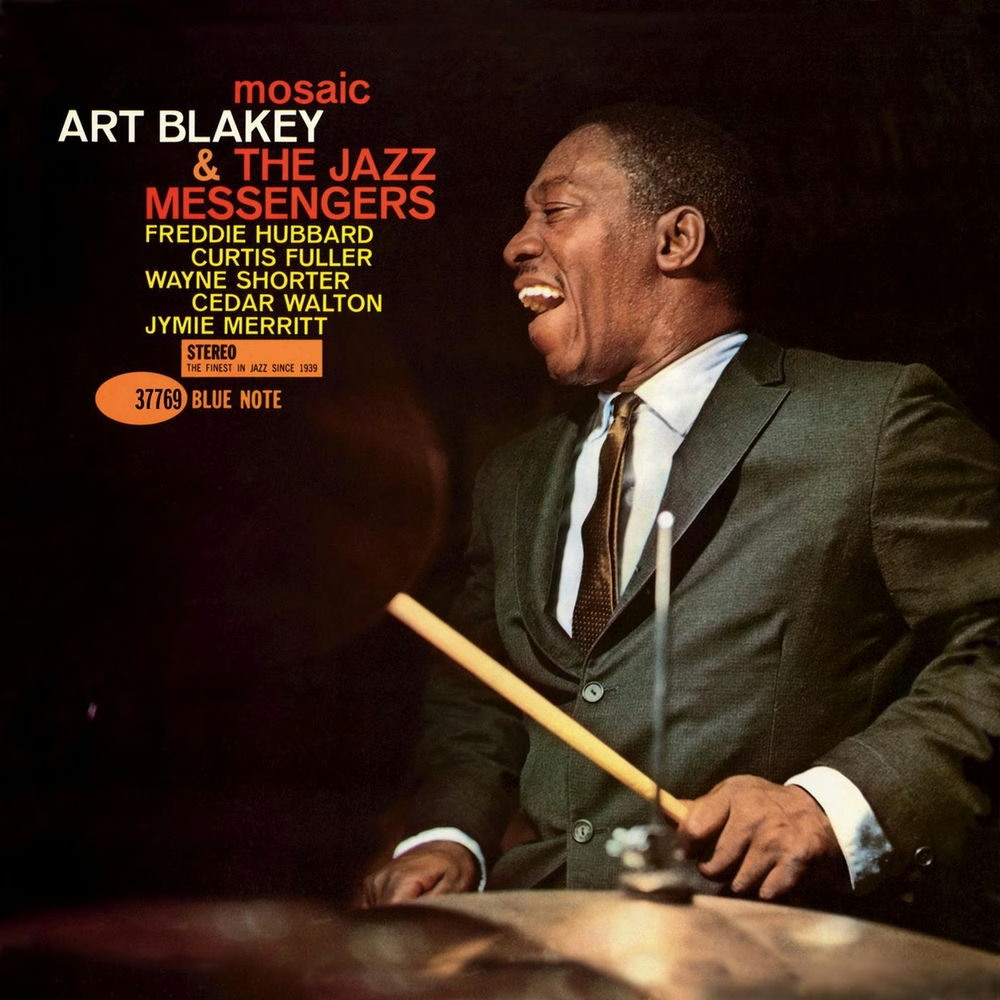
Freddie Hubbard. Bobby Timmons. Benny Golson. Cedar Walton. Wynton Marsalis. Terence Blanchard. The list is not a list of sidemen. It is a lineage.
The argument had a name: hard bop. In the early 1950s, when cool jazz had turned cerebral and West Coast jazz had turned polite, Blakey and Horace Silver formed the Jazz Messengers as a response -- a band that brought the blues back into the music, that let the gospel harmonies ring, that swung with a physicality that intellectual jazz had abandoned.
Silver left after a few years, but the name stayed, and Blakey carried it forward for the next thirty-five years. The Jazz Messengers became a rotating academy of young talent, a proving ground where the curriculum was simple: play hard, swing harder, and do not mistake complexity for depth. Wayne Shorter came through. Lee Morgan. Freddie Hubbard. Bobby Timmons. Benny Golson. Cedar Walton. Wynton Marsalis. Terence Blanchard. The list is not a list of sidemen. It is a lineage.
Blakey ran a finishing school for the best young musicians in jazz, and every graduate left with the same stamp: the ability to make a band sound like a single organism.
The music they made was not subtle. The album Moanin', recorded in 1958, opens with a Bobby Timmons blues riff so simple and so undeniable that it has been covered by every jazz group that has existed since. The track is called "Moanin'" and it is exactly what the title promises -- a blues that refuses to stay sad, a gospel shout disguised as a horn line, a piece of music that sounds like it was not composed but discovered in the act of playing.
That was the Messengers' method. They did not write tunes that required analysis. They wrote tunes that required a response. The best response was the one you did not plan.
Blakey converted to Islam in the 1940s and took the name Abdullah Ibn Buhaina, and though he did not remain a practicing Muslim, the discipline of that period stayed with him.
He ran his bands with an authority that was not authoritarian but pedagogical. He did not tell his musicians what to play. He told them to find what they had to say and say it with conviction. If a soloist played something timid, Blakey would raise his volume, push harder, force the player to either commit or get swallowed by the drums. Nobody got swallowed more than once. The graduates of the Messengers went on to lead their own bands, produce their own catalogs, and train their own students. The academy never closed.
He died on October 16, 1990, at seventy-one, in New York City. The DownBeat Jazz Hall of Fame had inducted him in 1981. The Modern Drummer Hall of Fame followed in 1991. The Grammy Hall of Fame inducted two of his recordings. But the real monument is not the awards.
It is the thirty-plus albums he recorded for Blue Note, the decades of live performances where the bandstand felt like a revival meeting, and the hundreds of musicians who walked through the Messengers and came out the other side changed.
Hard bop was not a genre. It was a delivery system for a particular kind of truth -- that jazz was not supposed to be comfortable, that the blues belonged at the center of the music, and that a drummer could lead a band not by being the loudest but by being the most present. Blakey was the present tense of jazz for thirty-five years. The band kept time. He kept the message.
Sources: Hotsupper research, AllMusic, Pennsylvania Center for the Book, All About Jazz, Wikipedia ---