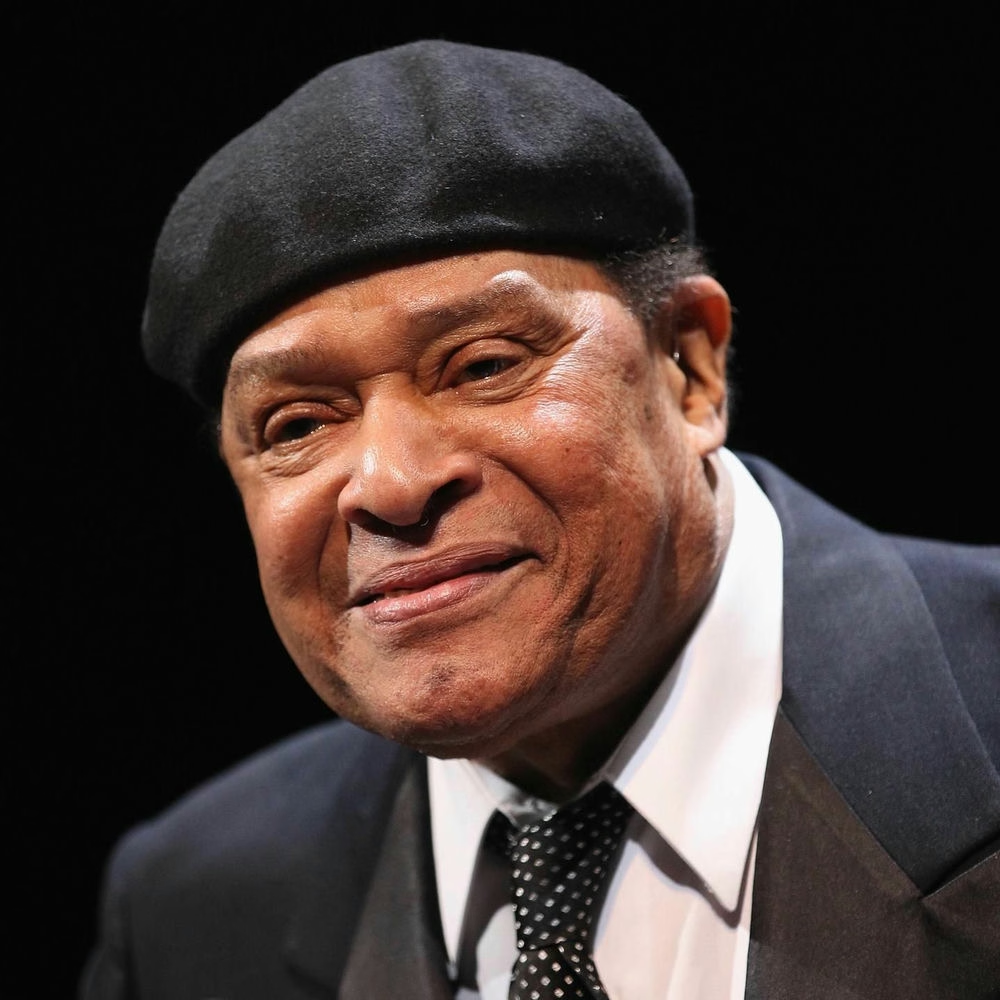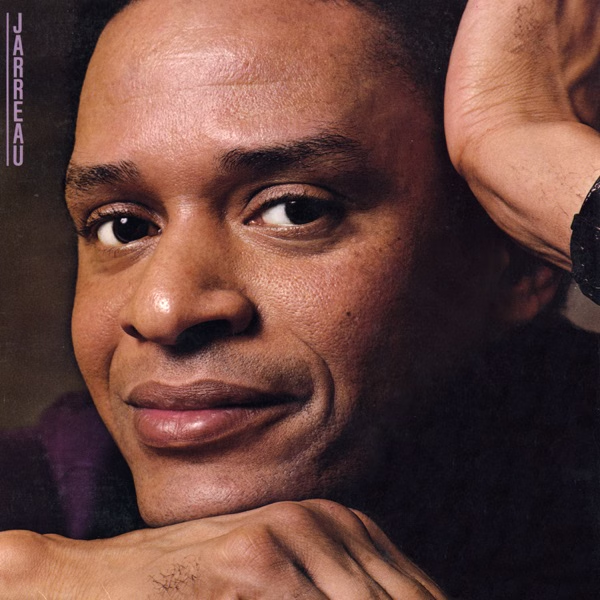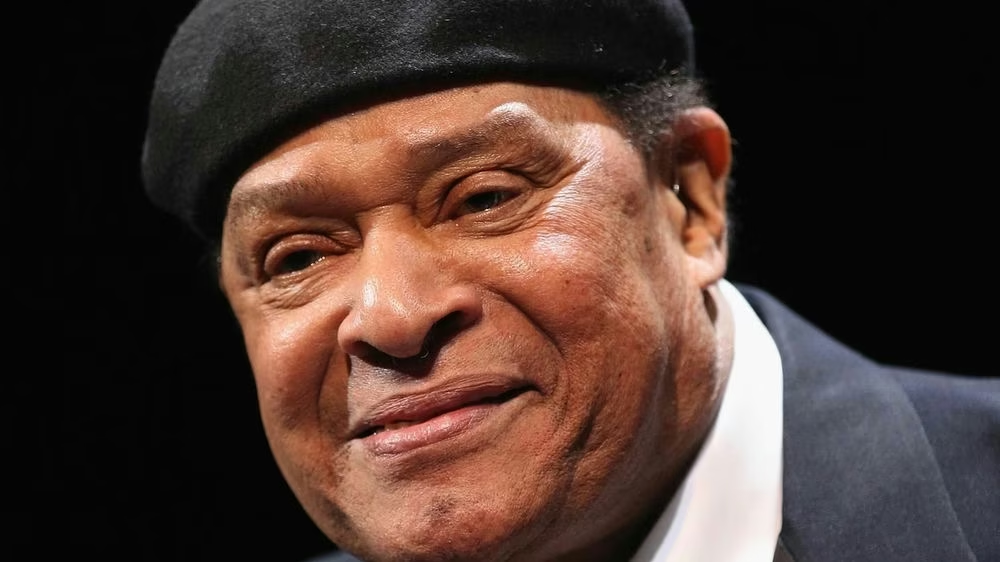
The road to that voice was not direct and never easy. Jarreau grew up in Milwaukee, the son of a minister, and the church was his first training ground -- the place where he learned to project, to testify, to let the voice carry emotion without strain. He earned a degree in psychology and worked as a rehabilitation counselor, singing on the side because the music would not leave him alone no matter how many practical choices he made. It was not until his late twenties that he fully committed, and even then the path was slow. He moved to San Francisco, then Los Angeles, building a reputation as a live performer who could do things with his voice that other singers could not touch -- the vocal percussion he created with just his mouth, the multi-track harmonies he built on the spot, the falsetto that could jump from a whisper to a cry without breaking.
We're in This Love Together is the song that broke through. That opening melody, the way Jarreau's voice glides over the arrangement like it is discovering the notes for the first time -- it is not a pop song dressed in jazz. It is jazz disguised as a pop song, and it worked because the disguise was not hiding anything. The album Breakin' Away won him a Grammy in 1981, the first of seven.
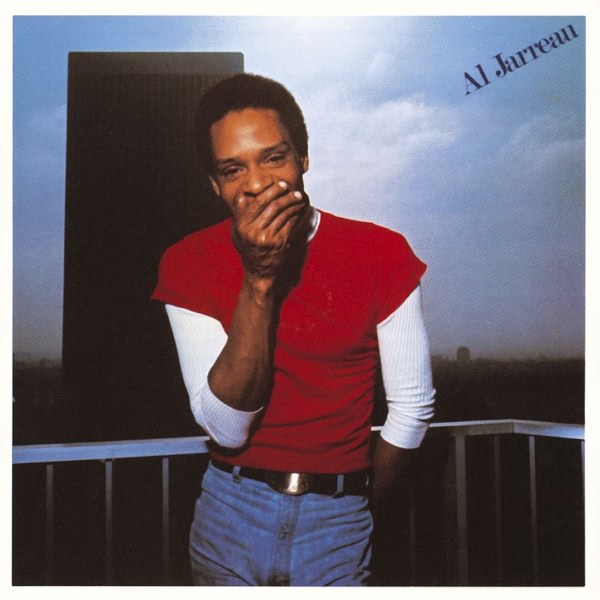
He won in three different categories across his career: pop, jazz, and R&B. No other male vocalist has done that. He recorded with George Duke, Kathleen Battle, and Miles Davis. He sang the theme song for Moonlighting. He performed at Nelson Mandela's birthday celebration. The voice was the constant through every style change.
Al Jarreau proved that virtuosity and accessibility did not have to be opposites. He could scat like a bebop horn player and sing a ballad that made grown adults cry in the same set. His voice was not a trained instrument in the conservatory sense -- it was a gift that he spent a lifetime learning how to use, a process that never ended. When he died in 2017 at seventy-six, the tributes came from every corner of music, not because he was the best at any one thing, but because he was the only one who could do what he did at all. The voice that did not fit a category became its own category, and the door he opened stayed open.
Al Jarreau was profiled in the documentary, Al Jarreau: A Singing Life, in 2018.