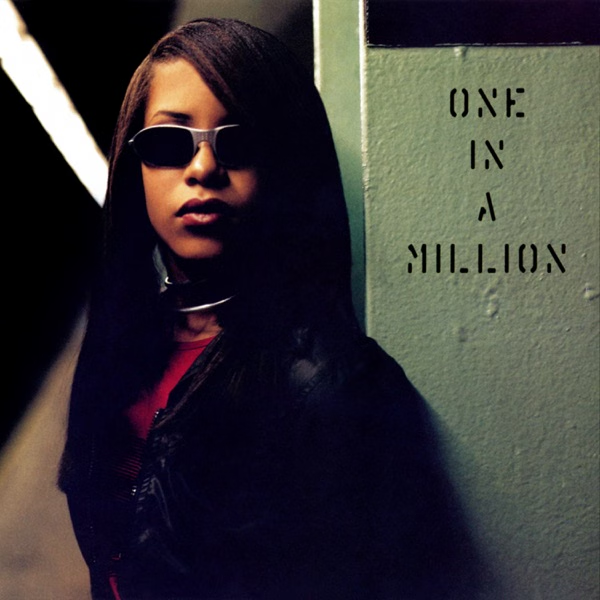
The album Age Ain't Nothing but a Number was produced by R. Kelly, who she married illegally at fifteen in a relationship that the adults around her enabled. She never spoke publicly about what that cost her. She simply erased it. She switched labels, switched producers, switched everything about her sound. She found Timbaland and Missy Elliott, two outsiders making beats nobody else understood, and together they built a new vocabulary for R&B. One in a Million sounded like nothing else on radio in 1996. The beats were off-kilter. The bass slid in places where bass was not supposed to go. Aaliyah did not fight the beat -- she floated on top of it, whispering verses that landed harder than any shout.
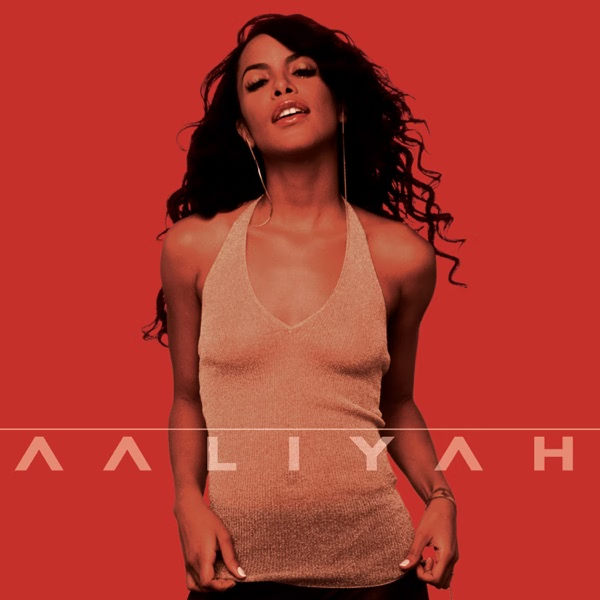
Are You That Somebody? was the announcement. That baby-cry sample, the stuttering rhythm, the way her voice slipped between the drums like a secret -- the track announced that R&B had a new direction and Aaliyah was already there. She followed it with her 2001 self-titled album, a record that perfected the sound she had been building since she was a teenager. Try Again became the first song to win a Grammy based on radio and video play alone.
She died on August 25, 2001, in a plane crash in the Bahamas. She was twenty-two. Three studio albums, ten years in the industry, and a catalog that R&B has been catching up to ever since. Every singer who learned to sing low instead of high, to trust the production, to let the silence between words mean as much as the words themselves -- they are all working in the space she cleared.
Aaliyah was profiled in the documentary, Aaliyah: The Princess of R&B, in 2021.